
Smoke and Soot Damage After a Fire: What New Jersey Homeowners Should Know
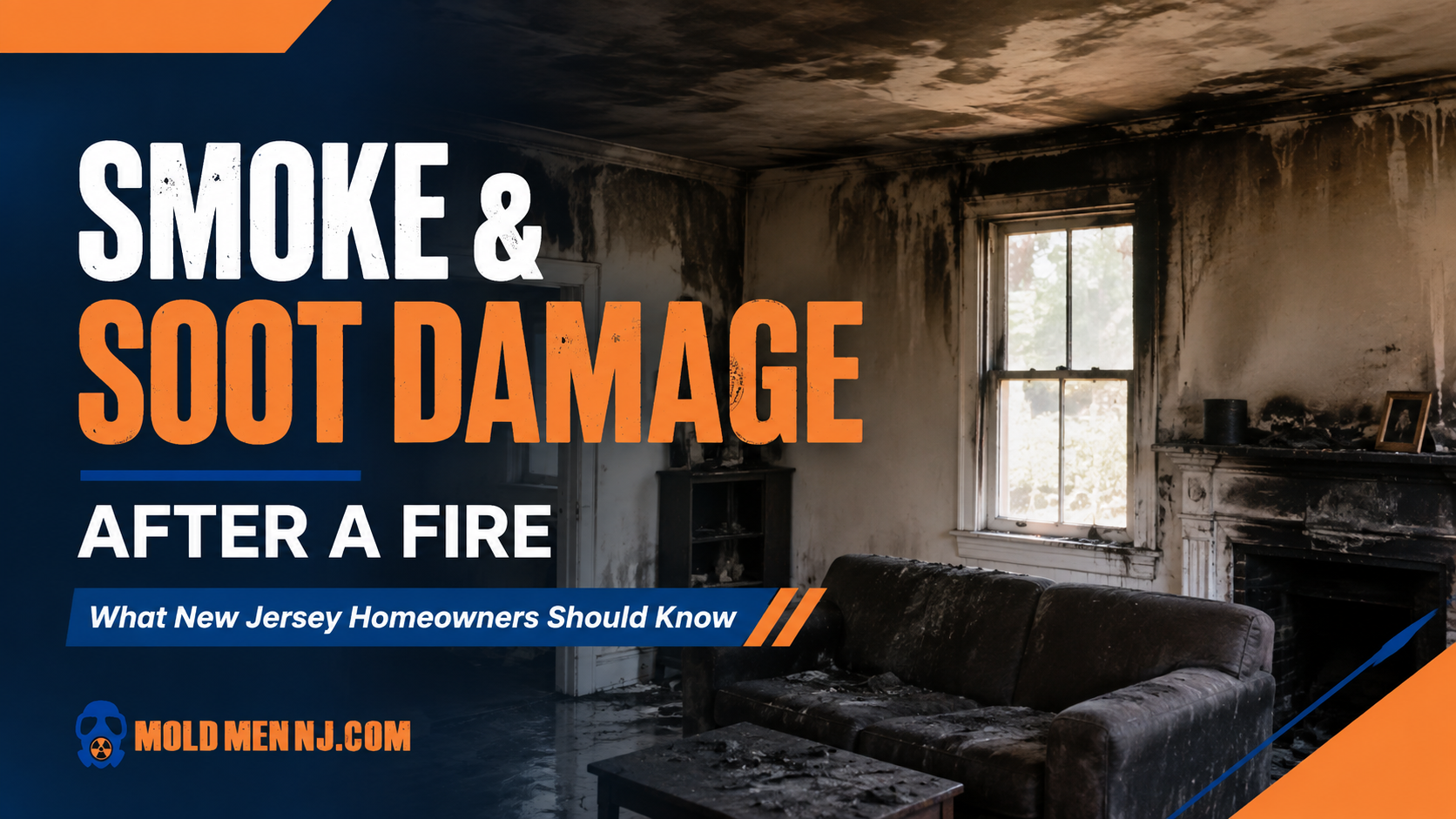
After a house fire, the most obvious damage is often the material that burned. However, flames are only one part of the problem.
Smoke and soot can travel beyond the room where the fire started, settling on walls, ceilings, furniture, flooring, HVAC components, and belongings throughout the property. Even areas that appear untouched by flames may require evaluation and cleaning.
For New Jersey homeowners, understanding how smoke and soot behave after a fire can help prevent rushed cleanup decisions and make it easier to determine which areas and materials may require professional attention.
Mold Men NJ provides fire damage restoration, water damage restoration, and mold remediation services throughout New Jersey. Our team helps property owners evaluate fire-related damage, address smoke and soot residue, remove damaged materials when necessary, and begin restoring affected areas.
What Is the Difference Between Smoke and Soot Damage?
Smoke and soot are related, but they are not exactly the same thing.
Smoke is produced when materials burn and can contain gases, vapors, and very small particles. It can move throughout a building and enter areas far from the original fire.
Soot is the dark particulate residue created by incomplete combustion. It may appear as black or gray deposits on walls, ceilings, cabinets, furniture, vents, and other surfaces.
The type and amount of residue left behind can vary depending on:
- What materials burned
- How long the fire lasted
- The temperature of the fire
- How smoke moved through the property
- Which rooms were directly or indirectly affected
- Ventilation during and after the fire
This is one reason two rooms in the same house can require very different restoration approaches.
Smoke Can Travel Beyond the Fire-Damaged Room
A fire does not need to reach a room for smoke residue to affect it.
Smoke can move through open doorways, hallways, wall openings, stairwells, and ventilation systems. Small particles may settle onto surfaces throughout the home.
Homeowners may notice:
- Dark staining around ceilings or walls
- Soot around vents
- Persistent smoke odors
- Residue on cabinets or countertops
- Discoloration around doors
- Deposits on furniture or fabrics
- Smoke odors inside closets and closed rooms
Because smoke moves through the air, the visible burn area does not always represent the full restoration area.
A professional fire damage restoration assessment should consider both directly burned materials and areas affected by smoke, soot, and related contamination.
Why Soot Should Not Simply Be Wiped Away
Seeing soot on a wall or cabinet may make cleaning appear straightforward.
However, aggressively wiping dry soot can sometimes spread residue across a larger surface or push particles into porous materials.
Different surfaces may also respond differently to cleaning.
Painted walls, unfinished wood, fabrics, electronics, metal, stone, flooring, and other materials can require different techniques.
Fire residue may also contain substances produced by whatever burned during the fire. For that reason, heavily contaminated materials should not automatically be treated like ordinary household dust.
The appropriate cleaning method should depend on the material, extent of contamination, and conditions inside the property.
Smoke Odors Can Remain After Visible Soot Is Gone
A room may look clean while still smelling strongly of smoke.
That is because smoke residue and odors can become trapped in porous materials such as:
- Drywall
- Insulation
- Upholstery
- Carpet
- Wood
- Curtains
- Clothing
- Mattresses
- Other fabrics
Simply covering an odor with fragrance does not address the source.
Professional restoration may involve cleaning affected surfaces, removing materials that cannot be restored, treating remaining materials, improving air filtration, and addressing areas where smoke residue has accumulated.
The correct process depends on what burned and how extensively smoke traveled through the property.
Can Smoke Affect the HVAC System?
Heating and cooling systems deserve attention after a fire because they move air throughout a building.
Depending on where the fire occurred and whether the HVAC system was operating, smoke or soot may reach:
- Supply vents
- Return vents
- Registers
- Filters
- Air-handling components
- Ductwork
Visible soot around a vent or a smoke odor that becomes stronger when the HVAC system runs can be signs that the system should be evaluated.
Homeowners should avoid assuming that changing an air filter alone will correct every smoke-related HVAC issue.
The system may need to be inspected to determine whether additional cleaning, filter replacement, or other work is appropriate.
What Materials Can Be Saved After Smoke Damage?
Not everything exposed to smoke automatically needs to be discarded.
Some hard, nonporous surfaces may be cleanable. Certain furniture, structural materials, and belongings may also be restorable depending on their condition.
Other materials can be more difficult to restore if smoke, soot, heat, or water has significantly affected them.
Factors that influence whether an item can be saved include:
- Material type
- Amount of soot or smoke exposure
- Whether the material is porous
- Heat damage
- Water damage
- Odor penetration
- Cost and practicality of restoration
The decision should be based on the actual condition of the material rather than assuming everything must either be thrown away or saved.
Water Damage Can Be Part of Fire Restoration Too
Smoke and soot are often only part of the post-fire damage.
Water used during firefighting may soak into drywall, insulation, flooring, ceilings, cabinets, and structural materials.
That creates a second restoration concern.
Wet areas may require:
- Water extraction
- Drying
- Dehumidification
- Moisture monitoring
- Removal of materials that cannot be adequately dried
Water can also move into areas that are not immediately visible, including behind walls and underneath flooring.
If damp materials remain wet for an extended period, they can create conditions that support mold growth.
This is why a complete fire restoration project may involve fire damage restoration, water damage restoration, and mold prevention rather than treating each problem in isolation.
Why Painting Over Smoke Damage Is Not a Complete Solution
Smoke-stained walls and ceilings may look like something that can simply be covered with fresh paint.
Painting before the affected surface has been properly evaluated and cleaned can leave the underlying problem unresolved.
Smoke staining or odors may remain beneath the new finish, and residue can sometimes interfere with the final appearance.
The better sequence is generally to determine the extent of the smoke and soot damage, clean or remove affected materials as appropriate, address remaining odor concerns, and then complete refinishing or reconstruction.
Cosmetic repairs should come after the underlying fire damage has been addressed.
Do Belongings Need to Be Cleaned?
Fire residue can affect more than the building itself.
Furniture, clothing, electronics, artwork, photographs, kitchen items, and other belongings may be exposed to smoke or soot.
Whether an item can be cleaned depends on its material and the level of damage.
Before discarding significant belongings, homeowners should also consider their insurance company’s documentation requirements. Photographs, inventories, and other records may be needed during the claims process.
Items with substantial fire, heat, or contamination damage may require specialized handling.
What Does Professional Smoke and Soot Restoration Involve?
Every fire is different, so the exact restoration process will depend on the property.
A professional project may involve:
- Evaluating the fire-damaged and smoke-affected areas
- Identifying materials that cannot be restored
- Removing debris and severely damaged materials
- Cleaning appropriate surfaces
- Addressing soot deposits
- Evaluating smoke odors
- Checking HVAC-related areas when appropriate
- Extracting water left from firefighting efforts
- Drying wet building materials
- Preparing damaged areas for repair or reconstruction
The goal is not simply to make the room look cleaner. Restoration should address the different forms of damage created by the fire.
Homeowners who are still in the early stages of recovery can also review our guide, What to Do After a House Fire in New Jersey: First Steps for Homeowners, for a broader overview of safety, insurance documentation, property protection, and restoration planning.
When Should You Call a Fire Damage Restoration Company?
Professional evaluation becomes particularly important when:
- Smoke or soot affects several rooms
- The fire involved significant building materials
- Smoke odors remain throughout the property
- HVAC components may have been exposed
- Firefighting left substantial water damage
- Drywall, insulation, flooring, or ceilings are affected
- The extent of the damage is difficult to determine
Even when a fire is relatively contained, smoke may have traveled farther than expected.
Mold Men NJ provides fire damage restoration services in New Jersey for residential and commercial properties affected by fire, smoke, soot, and related water damage.
FAQ
Can smoke damage occur in rooms where there was no fire?
Yes. Smoke can travel through doorways, hallways, openings, and ventilation systems, allowing residue and odors to reach areas that were not directly exposed to flames.
Can I clean soot off walls myself?
Minor surface residue may sometimes be manageable, but cleaning methods depend on the material and extent of contamination. Aggressive wiping or ordinary household cleaning methods may spread residue or damage certain surfaces. Significant soot contamination should be evaluated before cleanup begins.
Why does my house still smell like smoke after cleaning?
Smoke residue and odors can penetrate porous materials such as drywall, insulation, carpet, wood, upholstery, and fabrics. Removing visible soot does not necessarily remove all sources of odor.
Can firefighting cause water damage?
Yes. Water used to extinguish a fire can soak into drywall, flooring, ceilings, insulation, cabinets, and structural materials. Extraction, drying, dehumidification, and moisture monitoring may become part of the fire restoration process.
Does everything exposed to smoke need to be thrown away?
No. Some materials and belongings may be successfully cleaned or restored. Whether something should be saved depends on the material, severity of smoke or soot exposure, heat damage, water damage, and overall condition.
Key Takeaway
Fire damage does not stop where the flames stop.
Smoke and soot can travel throughout a home, affect surfaces and belongings, enter porous materials, create persistent odors, and potentially reach HVAC-related areas. Water used during firefighting can add another layer of property damage.
A thorough restoration process should evaluate the entire affected area rather than focusing only on visibly burned materials.
Addressing smoke, soot, odors, water damage, and damaged building materials in the proper order can help New Jersey homeowners move from emergency cleanup toward safe restoration and rebuilding.
About Mold Men NJ
Mold Men NJ is a veteran-owned, licensed, certified, and insured company serving residential and commercial customers throughout New Jersey. Services include mold remediation, water damage restoration, fire restoration, and lead remediation.
Contact Mold Men NJ
Mold Men NJ
36 Banta Rd, Kinnelon NJ 07405
(201) 729-3220
moldmennewjersey@gmail.com
https://moldmennj.com/contact/
Disclaimer: This article is informational only. Mold and indoor moisture conditions may affect people differently. For health concerns, contact a licensed healthcare provider. For mold, moisture, or property concerns, contact Mold Men NJ.
