
Water Damage After a Fire: Why Firefighting Can Cause Hidden Moisture Problems
When homeowners think about damage after a house fire, flames, smoke, and soot usually come to mind first.
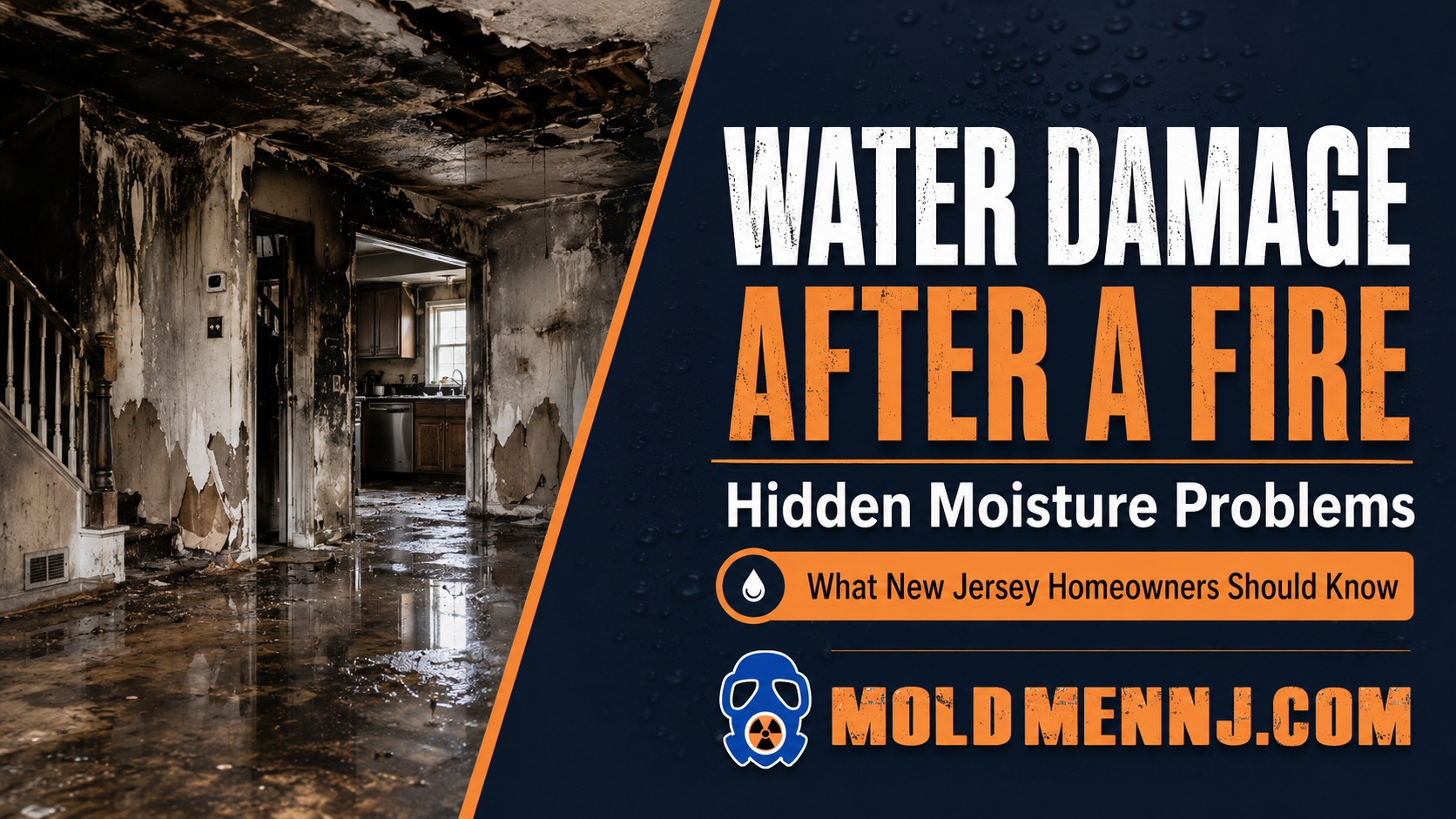
But another problem can develop during the effort to extinguish the fire: water damage.
Large amounts of water may be needed to control a structure fire. That water can soak into flooring, drywall, insulation, ceilings, cabinets, wall cavities, and other building materials. In some cases, the most important moisture problems are not immediately visible.
For New Jersey homeowners, addressing this water quickly is an important part of the overall fire restoration process.
Mold Men NJ provides fire damage restoration, water damage restoration, and mold remediation services throughout New Jersey. Our team helps property owners evaluate fire-related damage, identify moisture problems, dry affected areas, and prepare damaged properties for restoration.
Why Is There Water Damage After a House Fire?
Firefighters may need substantial amounts of water to extinguish a structure fire and prevent it from spreading.
While that water is necessary to control the emergency, it can create additional property damage.
Water may affect:
- Drywall
- Insulation
- Flooring
- Subflooring
- Ceilings
- Cabinets
- Wood framing
- Furniture
- Carpeting
- Wall cavities
- Basements and lower levels
Water can also move away from the original fire area because of gravity, openings in the structure, and the way building materials absorb moisture.
This means the area that burned and the area that became wet are not always the same.
Water Damage May Be Hidden
Some post-fire water damage is obvious.
Homeowners may see standing water, soaked carpet, wet drywall, damaged ceilings, or puddles throughout the property.
Other moisture can be much harder to see.
Water may become trapped:
- Behind drywall
- Under flooring
- Inside insulation
- Beneath cabinets
- Within ceiling assemblies
- Around structural framing
- In wall cavities
- In lower levels beneath the fire area
A surface can sometimes appear dry while moisture remains inside or underneath the material.
This is why visual inspection alone may not provide a complete picture of the water damage after a fire.
EPA guidance emphasizes the importance of paying attention to hidden areas that may have become wet, including areas behind walls and ceilings.
Why Does Hidden Moisture Matter?
Moisture trapped inside building materials can create several restoration problems.
Wet drywall can deteriorate. Insulation may lose effectiveness or become difficult to dry. Wood and other materials can remain damp even after surface water has disappeared.
Persistent moisture can also create conditions that support mold growth.
The EPA recommends drying water-damaged areas and items within approximately 24–48 hours when possible to help prevent mold growth. That timeframe is a general guideline rather than a guarantee that mold will or will not develop.
For a fire-damaged property, this means water cleanup should not automatically wait until every other restoration issue has been completed.
Smoke, soot, structural damage, and water damage often need to be considered together.
Can Mold Develop After Firefighting Water Damage?
It can.
Mold requires moisture, so wet building materials left damp after firefighting can create conditions where mold may begin growing.
The risk can depend on several factors, including:
- How much water entered the property
- Which materials became wet
- How long they remained damp
- Indoor temperature and humidity
- Whether moisture became trapped in hidden spaces
- How quickly drying began
EPA guidance identifies moisture control as the key to mold control and recommends prompt drying of water-damaged materials.
This does not mean every property that experiences firefighting water will develop mold.
It does mean that moisture should be taken seriously and addressed as part of the restoration process.
Why Drying the Surface May Not Be Enough
One common mistake after water damage is assuming that a material is dry because its surface feels dry.
Building materials can hold moisture internally or allow water to move underneath them.
For example, water may:
- Travel beneath finished flooring
- Enter wall cavities through openings
- Saturate insulation
- Collect beneath cabinets
- Move between floors
- Remain inside porous materials
This is why restoration work may include moisture evaluation and monitoring rather than relying only on appearance or touch.
The goal is to determine whether affected areas have actually dried sufficiently—not simply whether visible water is gone.
What Happens to Wet Drywall and Insulation?
Drywall and insulation can be particularly important after firefighting.
Drywall is porous and can absorb water. Depending on the amount of water, duration of exposure, contamination, and physical damage, some sections may be capable of drying while others may need to be removed.
Insulation can also hold moisture inside walls or ceilings.
When damaged materials prevent effective drying or cannot reasonably be restored, removal may be necessary so the underlying area can be evaluated and dried.
The appropriate decision depends on the condition of the materials and the circumstances of the property.
What About Water Under Flooring?
Flooring can hide significant moisture after a fire.
Water may move beneath:
- Hardwood
- Laminate
- Vinyl flooring
- Tile assemblies
- Carpet and padding
- Subflooring
The visible flooring surface may not reveal what is happening underneath.
Trapped moisture can affect adhesives, underlayment, subflooring, and structural materials.
Some materials may be dried and restored, while others may require removal depending on the severity and duration of the water exposure.
Smoke, Soot, and Water Damage Can Overlap
Fire restoration rarely involves only one type of damage.
A single room may contain:
- Burned materials
- Smoke residue
- Soot deposits
- Firefighting water
- Wet drywall or insulation
- Damaged flooring
- Persistent odors
That overlap can make post-fire cleanup more complicated than ordinary water damage.
For example, a surface may be both wet and contaminated with smoke or soot residue.
Our previous guide, Smoke and Soot Damage After a Fire: What New Jersey Homeowners Should Know, explains why smoke residue and soot may also extend beyond the visibly burned portion of a home.
Considering these problems together helps create a more complete restoration plan.
What Does Water Damage Restoration After a Fire Involve?
The exact process depends on the property and severity of the damage, but restoration may involve:
- Evaluating the affected areas
- Identifying visible and potentially hidden moisture
- Removing standing water when present
- Determining which materials can be dried
- Removing severely damaged materials when necessary
- Using drying and dehumidification equipment
- Monitoring moisture levels during drying
- Checking concealed spaces when appropriate
- Addressing mold growth if it is discovered
- Preparing the property for repairs or reconstruction
EPA guidance notes that professional assistance may be necessary when an area cannot be dried quickly and thoroughly with available resources.
Why Dehumidification Matters
Removing standing water is only one part of the drying process.
Water absorbed by building materials can gradually evaporate into the indoor air, increasing humidity.
Dehumidification helps remove moisture from the air while affected materials continue drying.
Depending on the situation, restoration professionals may use a combination of extraction equipment, air movement, dehumidification, and moisture monitoring.
The equipment and drying approach should be based on the actual conditions inside the property.
Should You Start Cleaning Immediately After a Fire?
Safety comes first.
Do not enter or begin work inside a fire-damaged property until emergency officials have indicated that it is safe to do so.
Fire-damaged buildings may contain structural, electrical, chemical, air-quality, and other hazards. Ready.gov advises homeowners to check with the fire department before returning and not to attempt to reconnect utilities themselves.
Once the property can be safely evaluated, documenting the damage and contacting the appropriate insurance representatives and restoration professionals can help establish the next steps.
Should Water Damage Be Documented for Insurance?
Documenting post-fire damage can be important.
Fire-related insurance claims may involve more than materials that were directly burned. Water, smoke, soot, and fire-suppression efforts can all contribute to property loss.
The U.S. Fire Administration specifically includes damage caused by smoke, water, and fire-suppression efforts when discussing fire property loss.
When it is safe to do so, homeowners may want to photograph affected areas and damaged belongings before cleanup or removal, while following instructions from their insurance company.
For broader information about the first steps after a fire, see What to Do After a House Fire in New Jersey: First Steps for Homeowners.
When Should You Call a Restoration Company?
Professional evaluation may be appropriate when:
- Significant water was used to extinguish the fire
- Several rooms became wet
- Drywall or insulation was saturated
- Water traveled between floors
- Moisture may be trapped behind walls or beneath flooring
- Smoke and water damage overlap
- The property cannot be dried quickly
- Mold growth or musty odors become apparent
- The extent of the damage is difficult to determine
The sooner moisture problems are identified, the sooner appropriate drying decisions can be made.
Mold Men NJ provides fire damage restoration services in New Jersey and can help property owners address fire, smoke, soot, water, and moisture-related restoration concerns.
FAQ
Why is there water damage after a house fire?
Water used by firefighters to suppress a structure fire can enter flooring, walls, ceilings, insulation, furniture, and other materials. The resulting water damage may extend beyond the area directly affected by flames.
Can water from firefighting cause mold?
Wet materials can create conditions that support mold growth if they remain damp. EPA guidance recommends drying water-damaged materials within approximately 24–48 hours when possible to help prevent mold growth.
How can you tell if water is trapped behind walls after a fire?
Hidden moisture is not always visible from the surface. Depending on the situation, restoration professionals may evaluate affected areas and use appropriate moisture-detection and monitoring methods to determine whether materials remain wet.
Does wet drywall always have to be removed?
Not necessarily. Whether drywall can be dried or should be removed depends on factors such as the amount of water, duration of exposure, contamination, physical damage, and whether the material can be thoroughly dried.
Is fire damage restoration different from water damage restoration?
The services address different types of damage, but they may overlap after a structure fire. Fire restoration can involve burned materials, smoke, soot, odors, and reconstruction, while water restoration focuses on water removal, drying, dehumidification, moisture monitoring, and related damage. After firefighting, a property may require both.
Key Takeaway
A house fire can create serious water damage even when the original emergency was fire.
Water used during firefighting can travel through a property and become trapped behind walls, beneath flooring, inside insulation, and within other building materials.
Because moisture is not always visible, removing standing water alone may not be enough.
Prompt evaluation, drying, dehumidification, and moisture monitoring can help identify hidden problems and reduce the chance that prolonged dampness will contribute to additional property damage or mold growth.
When fire, smoke, soot, and water damage occur together, treating the property as one connected restoration project can provide a clearer path toward recovery.
About Mold Men NJ
Mold Men NJ is a veteran-owned, licensed, certified, and insured company serving residential and commercial customers throughout New Jersey. Services include mold remediation, water damage restoration, fire restoration, and lead remediation.
Contact Mold Men NJ
Mold Men NJ
36 Banta Rd, Kinnelon NJ 07405
(201) 729-3220
moldmennewjersey@gmail.com
https://moldmennj.com/contact/
Disclaimer: This article is informational only. Mold and indoor moisture conditions may affect people differently. For health concerns, contact a licensed healthcare provider. For mold, moisture, or property concerns, contact Mold Men NJ.
