24/7 Emergency Service in NJ
Roof Leak Water Damage Cleanup & Restoration NJ
A roof leak can move water into ceilings, walls, insulation, attic spaces, and flooring before the damage is obvious. Mold Men NJ provides roof leak water damage cleanup and restoration for residential and commercial properties throughout New Jersey, with a primary focus on North Jersey. Call for 24/7 emergency service when water is actively entering your property.
Roof Leak Damage
Water From a Roof Leak Can Travel Fast
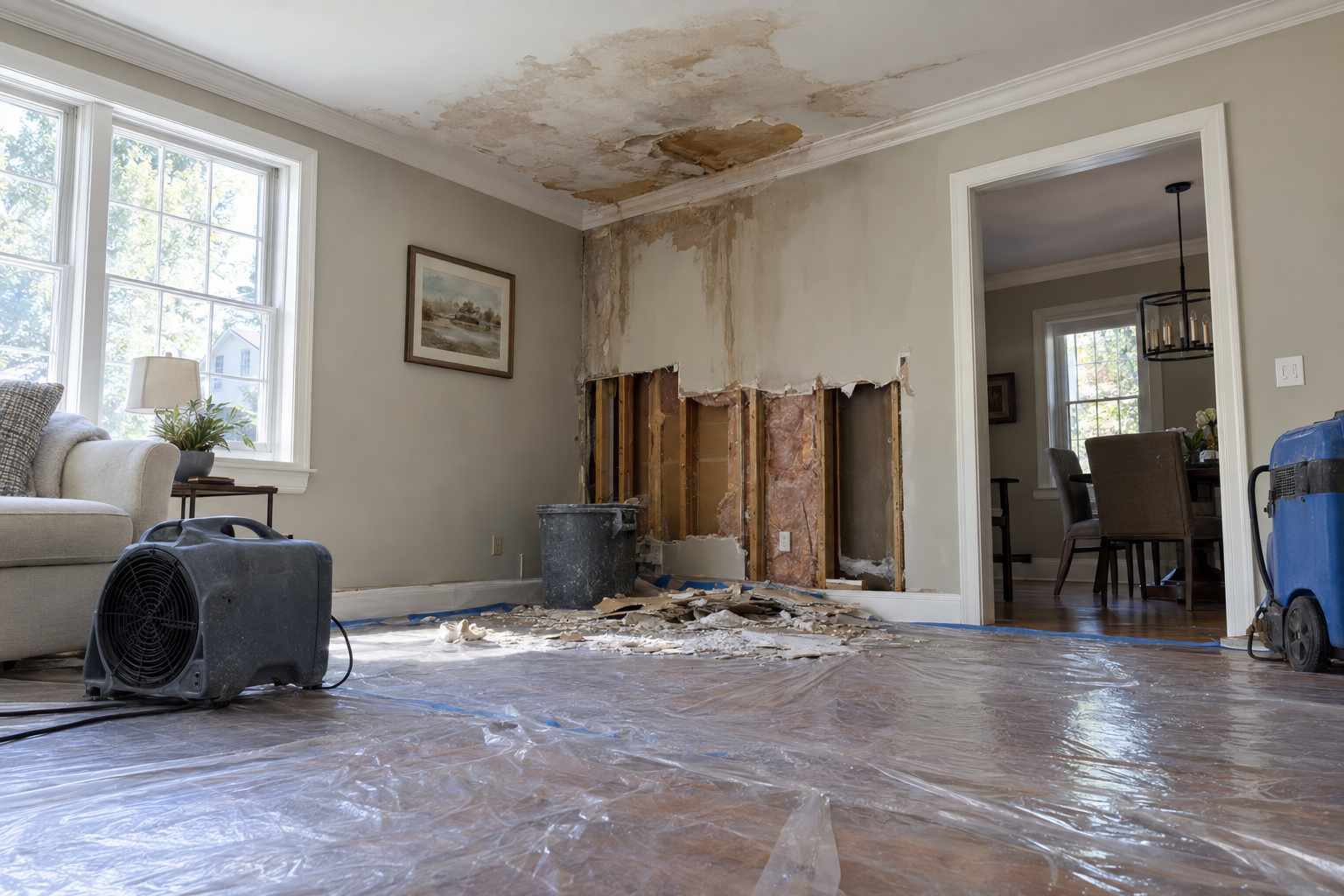
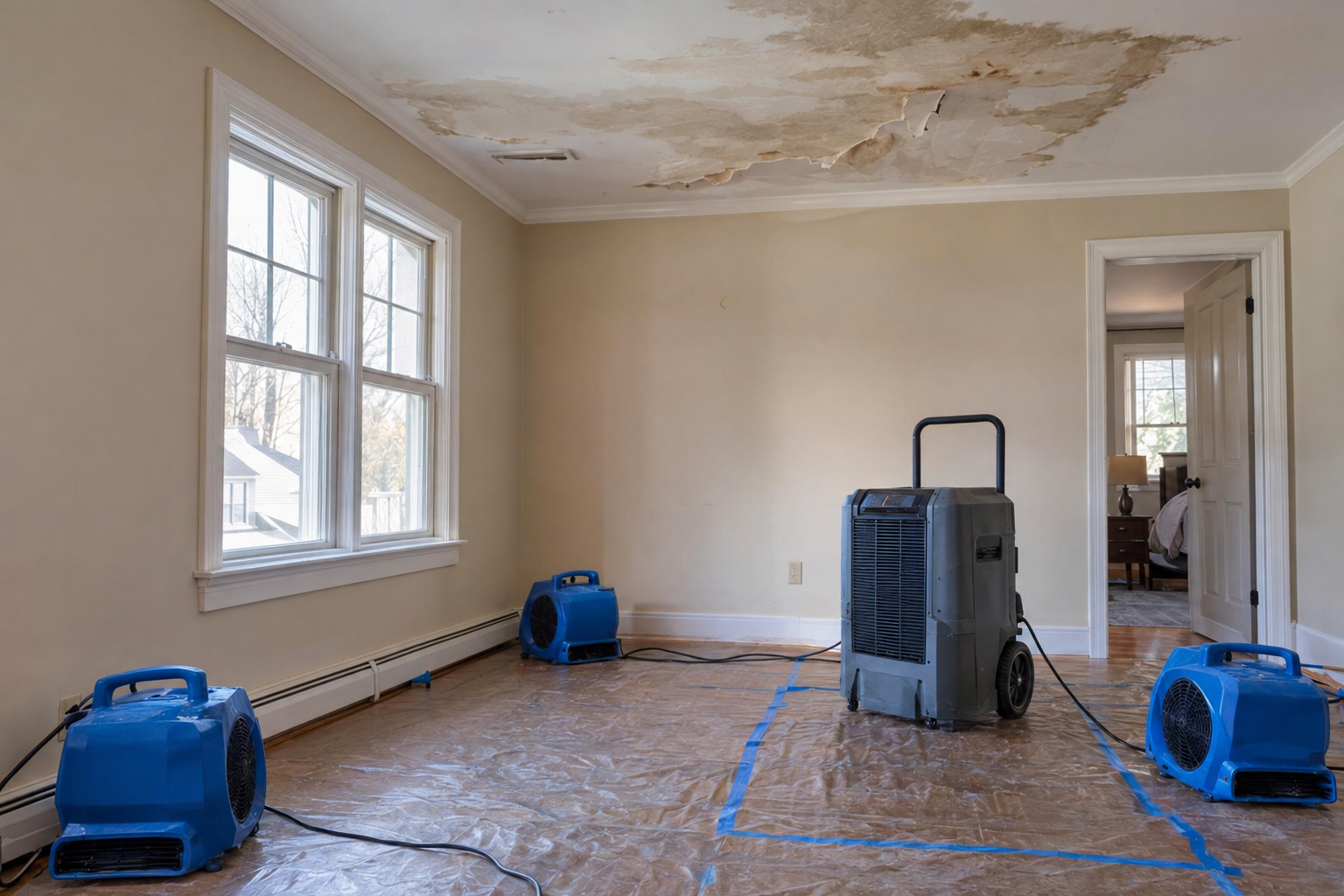
Roof leaks often start above the visible stain. Water may follow rafters, wiring, wall cavities, or ceiling framing before appearing in a room below. Even a small opening around flashing, shingles, vents, skylights, or storm-damaged roofing can leave building materials wet.
Prompt cleanup matters because trapped moisture can affect drywall, plaster, insulation, trim, subfloors, and contents. If materials remain damp, mold may begin developing, especially in enclosed spaces with limited airflow. Mold Men NJ helps identify affected areas, remove standing or trapped water where present, and dry the structure properly.
Warning Signs
Signs You May Have Roof Leak Water Damage
Roof leak damage is not always limited to the area directly below the leak. These signs are good reasons to request a professional water damage evaluation.
Ceiling Stains or Sagging
Brown or yellow staining, bubbling paint, peeling tape, or sagging drywall can indicate water has entered the ceiling assembly.
Musty Odors After Rain
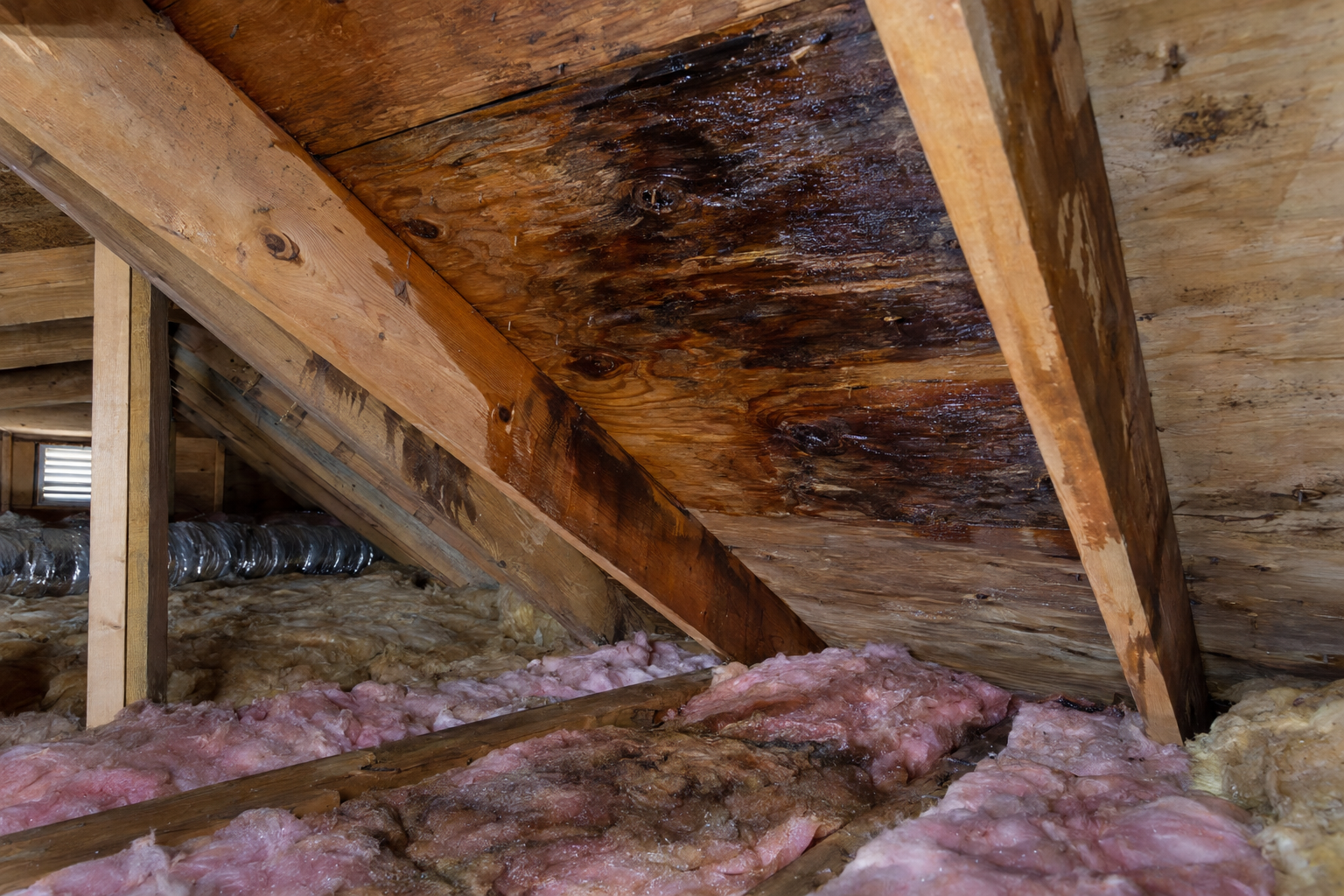
A musty smell after rain may point to damp insulation, attic moisture, or hidden wet materials that need professional attention.
Drips or Damp Spots
Water can collect around light fixtures, upper walls, window headers, or trim. Electrical hazards should be treated carefully and evaluated by qualified professionals when needed.
Wet Attic Insulation
Wet insulation can hold moisture against wood framing and drywall, slowing drying and increasing the chance of secondary damage.
Hidden Wall Moisture
Leaks around roof edges, chimneys, vents, or skylights may show up as damp walls, warped trim, or staining far from the actual roof opening.
Our Process
Roof Leak Cleanup and Restoration Steps
Every roof leak is different. Mold Men NJ focuses on practical mitigation, drying, and cleanup steps that fit the affected materials and severity of the water intrusion.
We evaluate the affected areas to determine where water has traveled, which materials are wet, and whether moisture has reached the attic, ceilings, walls, insulation, flooring, or other concealed areas. We also review visible staining, damaged materials, and moisture conditions so the cleanup and drying plan is based on the actual conditions at the property.
If water is still entering the property, the source of the roof leak should be addressed as soon as possible so additional interior damage can be limited. Temporary protection or roof repairs by the appropriate professional may be needed before interior extraction, cleanup, and structural drying can be fully effective.
Standing water and excess moisture are removed where accessible and appropriate. Materials that are heavily saturated, damaged, or unable to be properly dried may need to be removed, including certain insulation, ceiling materials, drywall, flooring, or other porous materials affected by the roof leak.
Air movement and dehumidification may be used to help reduce moisture in structural materials and enclosed areas affected by the leak. Drying needs depend on how long the water was present, how far it traveled, and whether moisture has entered wall cavities, attic materials, ceilings, or other hidden spaces.
After extraction, cleanup, and drying are completed, we review the affected areas and explain any remaining repair or restoration steps that may be appropriate. If prolonged moisture has created concerns involving damaged materials or potential mold growth, those conditions can also be evaluated as part of the next phase of restoration.
Moisture Control
Drying Matters After a Roof Leak
Surface cleanup alone may not be enough after a roof leak. Moisture can remain behind paint, above ceilings, inside insulation, and along framing. Structural drying and dehumidification help bring affected areas back toward normal moisture conditions and reduce the chance of ongoing damage.
Because damp materials may support mold growth, roof leak water damage can also connect to mold inspection or remediation needs. Mold Men NJ does not identify mold species by appearance, and not every water damage project requires testing. When mold concerns are present, the team can recommend appropriate next steps based on the situation.
Frequently Asked Questions About Roof Leak Water Damage
If water is actively entering the property, the source should be controlled or repaired as soon as possible when it is safe to do so. Interior water should also be addressed promptly because moisture can travel into ceilings, walls, insulation, and other concealed materials.
Yes. Water from a roof leak can travel beyond the visible stain and affect attic materials, insulation, ceilings, wall cavities, framing, or flooring. Moisture assessment can help identify areas that may not appear wet from the surface.
Not always. Some materials may be able to dry in place, while others that are heavily saturated, damaged, or unable to be properly dried may need to be removed. The appropriate approach depends on the extent of the water damage and the materials affected.
Yes. If materials remain damp after a roof leak, the excess moisture can create conditions that support mold growth. Drying the affected areas and correcting the source of the leak are important parts of reducing the chance of additional mold problems.
After extraction and drying, affected areas are reviewed to determine whether any additional cleanup, material removal, repair, or restoration work may be needed. The next steps depend on how far the water traveled and which parts of the structure were affected.
Request Emergency Service
Need Roof Leak Water Damage Cleanup in NJ?
Mold Men NJ is a veteran-owned, licensed, certified, IICRC-certified restoration company serving New Jersey homeowners, landlords, property managers, and businesses. For urgent roof leak water damage, call for 24/7 emergency service or email to request help. Coverage for water damage can vary by policy and cause of loss, so property owners should verify details with their insurer.
Mold Men NJ
(201) 279-6078
moldmennewjersey@gmail.com
36 Banta Rd, Kinnelon NJ, 07405