Can Mold Grow Behind Drywall? What New Jersey Homeowners Should Know
Many homeowners notice a musty smell, peeling paint, or unexplained stains on a wall and ask the same question: can mold grow behind drywall?
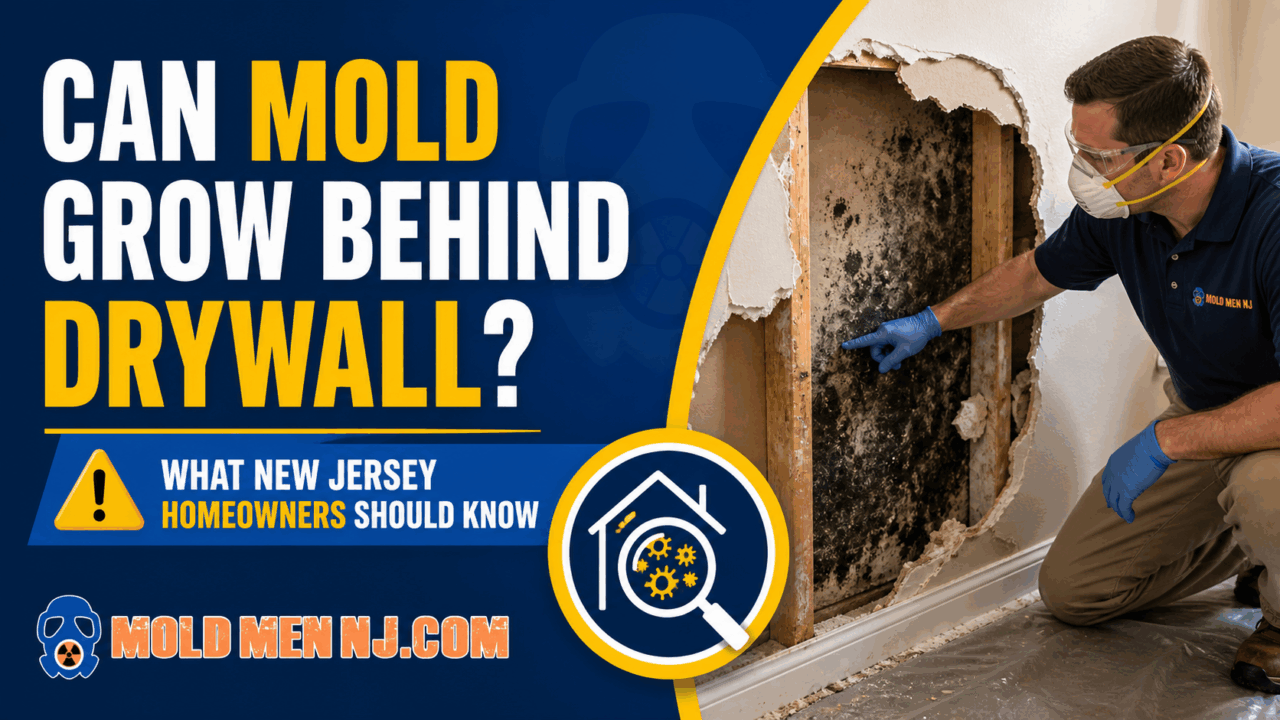
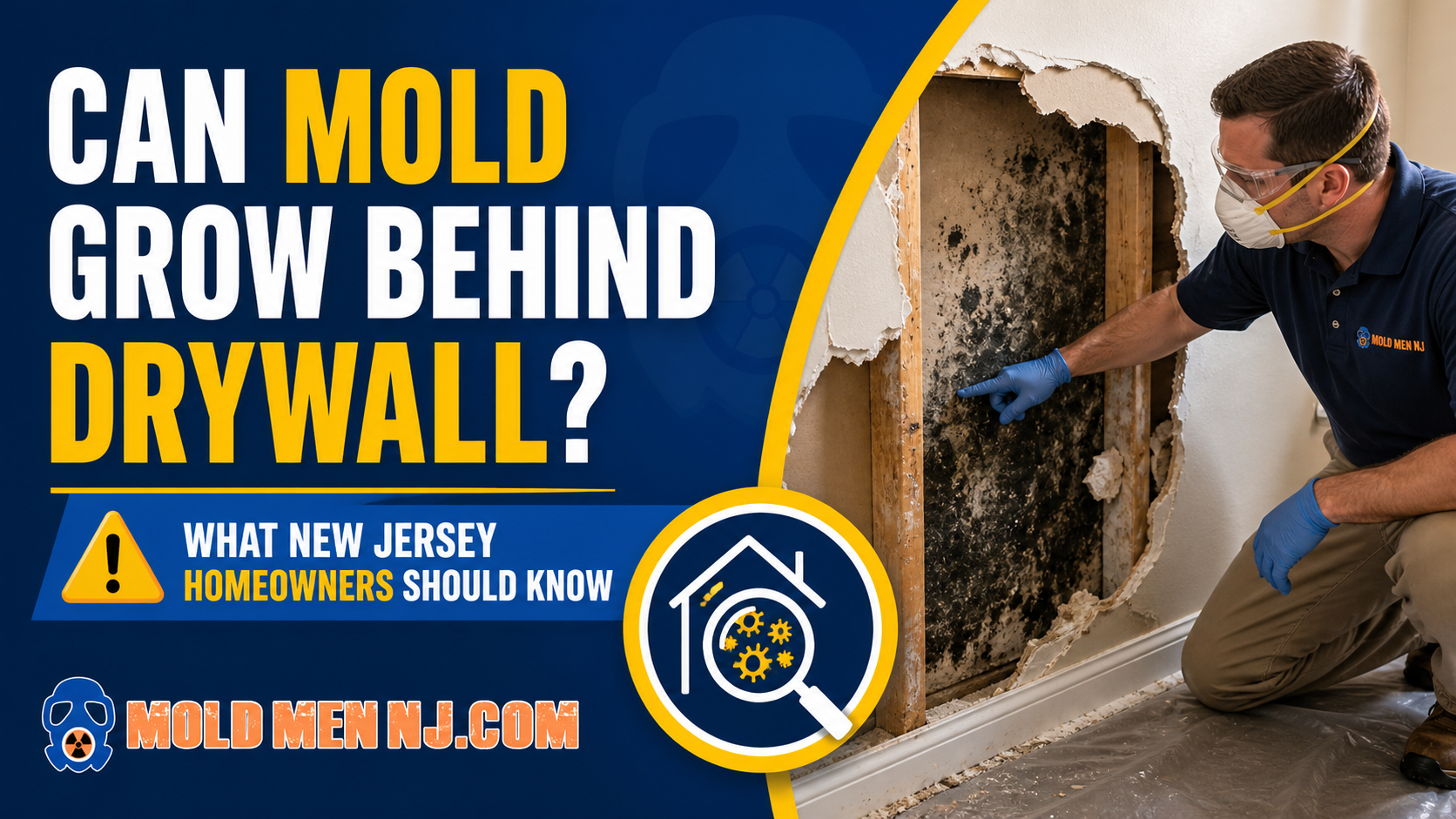
The answer is yes. Drywall is one of the most common places hidden mold can develop when moisture gets trapped inside walls. Because the surface may look normal at first, mold behind drywall often goes unnoticed until odors, staining, or damage appear.
For New Jersey homeowners, hidden wall moisture can result from plumbing leaks, roof leaks, basement seepage, condensation, or storm-related water intrusion. Understanding the warning signs early can help reduce larger repair costs later.
Mold Men NJ helps residential and commercial property owners throughout New Jersey locate hidden mold, identify moisture sources, and restore safer indoor environments.
Why Mold Can Grow Behind Drywall
Drywall is made with paper-faced materials that can support mold growth when damp. If water enters a wall cavity and remains trapped, mold may begin developing on drywall backing, wood framing, insulation, or nearby materials.
Common moisture sources include:
- Plumbing leaks inside walls
- Roof leaks traveling downward
- Window leaks
- Basement foundation moisture
- Condensation on cold pipes
- Bathroom steam and humidity
- Appliance leaks
- Flooding or storm damage
According to United States Environmental Protection Agency guidance, moisture control is one of the most important parts of preventing indoor mold growth.
Common Signs of Mold Behind Drywall
Because mold may stay hidden, homeowners often notice indirect warning signs first.
1. Musty Odors
A persistent earthy or damp smell is one of the most common clues.
If one room smells musty without an obvious source, hidden wall moisture may be present.
2. Stains on Walls or Ceilings
Brown, yellow, or dark discoloration can signal past or active water intrusion.
3. Bubbling Paint or Peeling Surfaces
Moisture trapped behind drywall may cause paint to bubble, crack, or peel.
4. Soft or Swollen Drywall
Walls that feel soft, warped, or swollen may have absorbed water.
5. Recurring Mold on Surface Areas
If mold keeps returning after cleaning, the real source may be behind the wall.
6. Allergy-Like Symptoms Indoors
Some homeowners notice coughing, congestion, or irritation that seems worse inside the property.
Where Mold Behind Drywall Commonly Happens
Bathrooms
Shower plumbing leaks, failed caulk, or steam buildup may create wall moisture.
Kitchens
Leaks from sinks, refrigerators, or dishwashers may spread into surrounding walls.
Basements
Finished basements in New Jersey often hide seepage or condensation behind drywall.
Laundry Rooms
Washing machine leaks or humidity can affect nearby walls.
Around Windows
Failed seals or water intrusion during storms may damage drywall.
Can Mold Grow Behind Drywall After a Leak?
Yes. Even a small leak can create enough moisture over time for mold growth.
Many homeowners focus on visible dripping water, but slow leaks are often more dangerous because they continue unnoticed for long periods.
Examples include:
- Pinhole pipe leaks
- Loose supply lines
- Toilet seal leaks
- Window flashing failures
- Small roof leaks
How Fast Can Mold Grow Behind Walls?
Growth may begin relatively quickly when moisture remains trapped and airflow is limited. The longer materials stay damp, the greater the risk of mold spreading.
That is why drying and repair after leaks are so important.
Can You Just Paint Over It?
Painting over a moisture-damaged wall usually does not solve the underlying issue.
If mold or damp drywall remains behind the surface, odors, staining, or damage may return later.
How Professionals Check for Mold Behind Drywall
Depending on the situation, professionals may use:
- Visual inspection
- Moisture meters
- Thermal imaging in some cases
- Odor detection
- Reviewing leak history
- Limited exploratory access when necessary
The goal is to locate the moisture source and determine how much material is affected.
What Happens If Mold Is Found Behind Drywall?
Next steps depend on severity and extent. Professional remediation may include:
- Correcting the leak or moisture source
- Containment of affected areas
- Removing damaged drywall
- Drying framing or cavities
- HEPA air filtration when appropriate
- Replacing removed materials after clearance
Why Local New Jersey Homes See This Problem
Homes in Kinnelon, Wayne, Parsippany, Montville, Butler, Pequannock, and surrounding North Jersey communities often deal with:
- Basement moisture
- Older plumbing systems
- Roof wear
- Winter condensation
- Heavy rainstorms
- Humid summers
These regional conditions can increase hidden drywall moisture risk.
How To Help Prevent Mold Behind Drywall
Fix Leaks Quickly
Do not delay plumbing or roof repairs.
Use Bathroom Fans
Vent moisture outside after showers.
Control Basement Humidity
Use dehumidifiers where needed.
Inspect After Storms
Look for stains or damp odors after heavy rain.
Address Window Leaks
Small window issues can become larger wall problems.
FAQ
Can mold grow behind drywall?
Yes. Drywall is one of the most common places mold grows when moisture becomes trapped inside walls.
How do I know if mold is behind my wall?
Musty odors, stains, bubbling paint, soft drywall, or recurring surface mold can all be warning signs.
Can a small leak cause mold behind drywall?
Yes. Slow leaks often create hidden damage over time.
Do I need to remove drywall if mold is behind it?
That depends on how much material is affected. Professional evaluation is recommended.
Is mold behind drywall dangerous?
Hidden mold can damage building materials and may affect indoor comfort or air quality for some individuals.
Key Takeaway
Can mold grow behind drywall? Yes, and it is one of the most common hidden mold issues homeowners face. Acting quickly after leaks, watching for warning signs, and getting a professional inspection can help prevent larger damage and costly repairs.
About Mold Men NJ
Mold Men NJ is a veteran-owned, licensed, certified, and insured company serving residential and commercial customers throughout New Jersey. Services include mold remediation, water damage restoration, fire restoration, and lead remediation.
Contact Mold Men NJ
Mold Men NJ
36 Banta Rd, Kinnelon NJ 07405
(201) 729-3220
moldmennewjersey@gmail.com
Disclaimer: Mold may affect people differently. This article is informational only. For health concerns, contact a healthcare provider. For mold concerns, contact Mold Men NJ.
