Signs of Hidden Mold in Your Home: What New Jersey Homeowners Should Watch For
Many homeowners think mold is easy to spot. In reality, some of the most serious mold issues are hidden behind walls, under flooring, inside basements, attics, or crawlspaces. That is why learning the signs of hidden mold in your home is important.
For homeowners across New Jersey, moisture problems caused by humidity, storms, plumbing leaks, or basement seepage can create ideal conditions for mold growth out of sight. By the time visible damage appears, the issue may already be spreading.
Mold Men NJ helps residential and commercial property owners throughout New Jersey locate hidden mold, address moisture sources, and restore safer indoor environments.
Why Hidden Mold Is a Common Problem
Mold needs moisture and an organic surface to grow. Drywall, wood, insulation, carpet backing, and ceiling materials can all support growth when damp.
Because many leaks happen inside walls, behind appliances, under sinks, or below flooring, mold can develop in places homeowners rarely inspect.
Homes in New Jersey often face:
- Basement humidity
- Heavy rain and storm leaks
- Roof issues
- Condensation in winter
- Plumbing leaks
- Poor ventilation in bathrooms
- Flooding or sump pump failures
These conditions can allow hidden mold to develop over time.
Top Signs of Hidden Mold in Your Home
1. Musty or Earthy Odors
One of the most common hidden mold signs is a persistent musty smell. If a room smells damp even after cleaning, mold may be growing behind walls, under carpet, or inside nearby materials.
Strong odors in basements, closets, laundry rooms, or bathrooms are especially common warning signs.
2. Water Stains on Walls or Ceilings
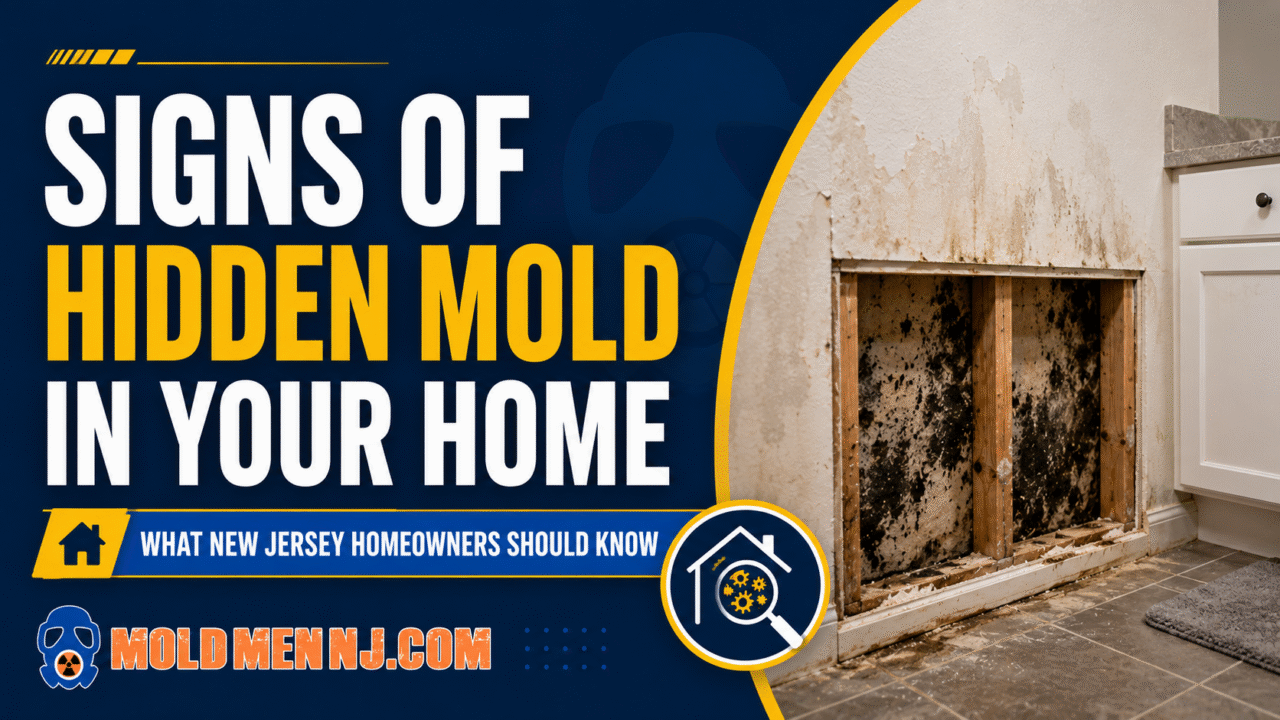
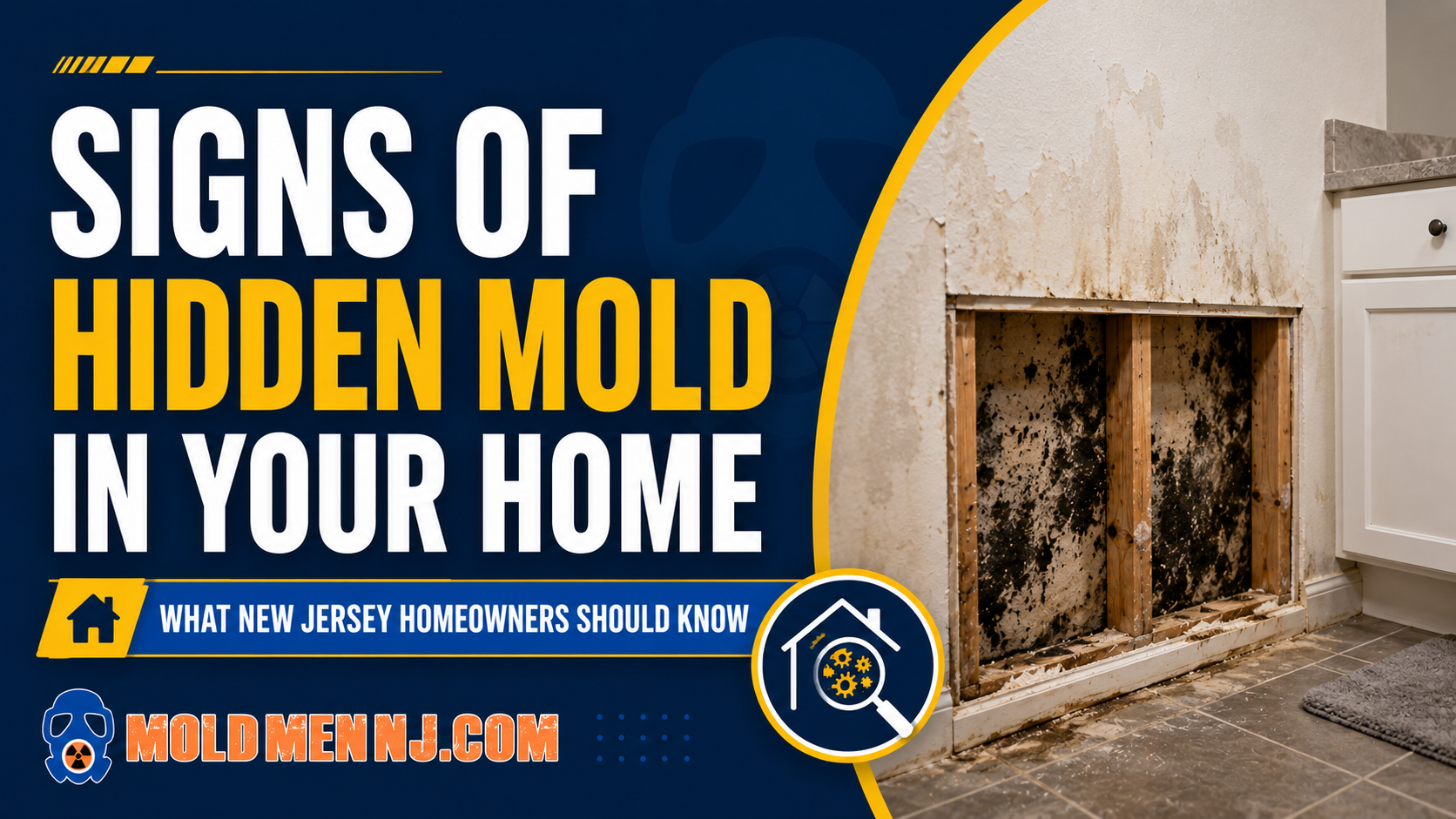
Brown stains, discoloration, or rings on drywall often indicate past or active moisture problems. Even if the area feels dry now, hidden mold may be present behind the surface.
3. Peeling Paint or Bubbling Drywall
When moisture gets trapped inside walls, paint may bubble, crack, or peel. Drywall may swell or soften. These issues often signal a leak that can also support mold growth.
4. Allergy Like Symptoms Indoors
Some homeowners notice sneezing, congestion, coughing, watery eyes, or irritation that seems worse at home and improves when away from the property.
According to Centers for Disease Control and Prevention and United States Environmental Protection Agency guidance, indoor moisture and mold should be addressed promptly.
5. Warped Flooring or Loose Baseboards
Moisture under laminate, hardwood, or vinyl flooring may cause swelling, buckling, or soft spots. This can also create hidden mold beneath the surface.
6. Recurring Bathroom Mold
If mold keeps returning around showers, caulking, or ceilings, there may be a deeper ventilation or hidden moisture issue inside walls.
7. Basement Dampness
Persistent dampness, condensation, or musty smells in a basement may signal hidden mold behind finished basement walls or stored materials.
Finished basements in North Jersey homes are especially common areas for concealed mold.
Where Hidden Mold Commonly Grows
Behind Drywall
Leaks from plumbing lines, windows, roofs, or appliances can feed mold growth behind walls.
Under Flooring
Past flooding, spills, or moisture seepage may trap water under flooring materials.
Inside Attics
Roof leaks, poor insulation, and ventilation issues may lead to attic mold.
In Crawlspaces
Ground moisture and poor airflow can create long-term hidden growth.
Behind Cabinets or Appliances
Dishwashers, refrigerators, washing machines, and sinks may leak slowly without immediate notice.
Why Hidden Mold Matters
Hidden mold is often missed because surfaces may look clean while moisture remains behind them. Left untreated, mold may continue spreading and damage surrounding materials.
Some homeowners also worry about indoor air quality, especially when children, older adults, or people with allergies live in the property.
What To Do If You Suspect Hidden Mold
1. Check for Moisture Sources
Look for leaks, condensation, roof damage, plumbing issues, or poor drainage around the home.
2. Use Your Senses
Persistent musty smells or damp areas often provide early clues.
3. Avoid Opening Walls Yourself
Breaking into walls without proper containment can spread dust and spores.
4. Document Visible Issues
Take photos of stains, bubbling paint, or warped flooring.
5. Schedule a Professional Inspection
A professional inspection can help locate hidden moisture and determine whether mold is present.
Why Professional Help Can Save Money
Many homeowners wait until visible damage becomes severe. Catching hidden mold early may help reduce repair costs and prevent larger restoration work later.
Professional teams can identify the moisture source, determine the affected areas, and recommend proper next steps.
Why Local Experience Helps in New Jersey
Homes in Kinnelon, Wayne, Parsippany, Montville, Butler, Pequannock, and surrounding North Jersey communities often deal with basement moisture, roof wear, storm runoff, and humidity shifts.
A local New Jersey company understands these common regional conditions and how to inspect them efficiently.
FAQ
What is the most common sign of hidden mold?
A musty odor is one of the most common early warning signs.
Can mold be behind walls without visible damage?
Yes. Mold may grow inside walls before stains or surface damage appear.
Is hidden mold dangerous?
Hidden mold can damage materials and may affect indoor comfort or air quality for some people.
How do professionals find hidden mold?
Professionals may use moisture meters, visual inspection methods, and experience identifying likely problem areas.
Should I test for mold or remove it first?
It depends on the situation. A professional evaluation can help determine the best next step.
Key Takeaway
The signs of hidden mold in your home often begin with moisture, odors, stains, or unexplained indoor discomfort. Addressing water issues early and scheduling a professional inspection can help prevent more serious damage later.
About Mold Men NJ
Mold Men NJ is a veteran-owned, licensed, certified, and insured company serving residential and commercial customers throughout New Jersey. Services include mold remediation, water damage restoration, fire restoration, and lead remediation.
Contact Mold Men NJ
Mold Men NJ
36 Banta Rd, Kinnelon NJ 07405
(201) 729-3220
moldmennewjersey@gmail.com
Disclaimer: Mold may affect people differently. This article is informational only. For health concerns, contact a healthcare provider. For mold concerns, contact Mold Men NJ.
