Signs of Mold in Attics: What New Jersey Homeowners Should Know
Many homeowners rarely enter their attic until they notice a roof leak, musty odor, insulation issue, or home inspection concern. That is why attic mold often goes unnoticed until the problem becomes more serious.
If you are wondering about the signs of mold in attics, understanding what to look for can help you catch hidden moisture issues early and avoid larger repairs later.
For New Jersey homeowners, attics are common places for mold growth because of roof leaks, poor ventilation, winter condensation, and seasonal humidity changes.
Mold Men NJ helps residential and commercial property owners throughout New Jersey locate mold issues, identify moisture sources, and restore safer indoor environments.
Why Mold Grows in Attics
Attics can trap heat, moisture, and stale air. When ventilation is poor or water enters the space, mold may grow on wood sheathing, rafters, insulation, stored items, or other surfaces.
Common causes include:
- Roof leaks
- Poor attic ventilation
- Bathroom fans venting into the attic
- Condensation during winter
- High humidity in summer
- Ice dam issues
- Wet insulation
- Past storm damage
According to United States Environmental Protection Agency guidance, moisture control is one of the most important parts of preventing indoor mold growth.
Top Signs of Mold in Attics
1. Musty or Damp Odors
A persistent musty smell near attic access points, upper hallways, or top-floor rooms can be an early warning sign.
2. Dark Spots on Wood or Sheathing
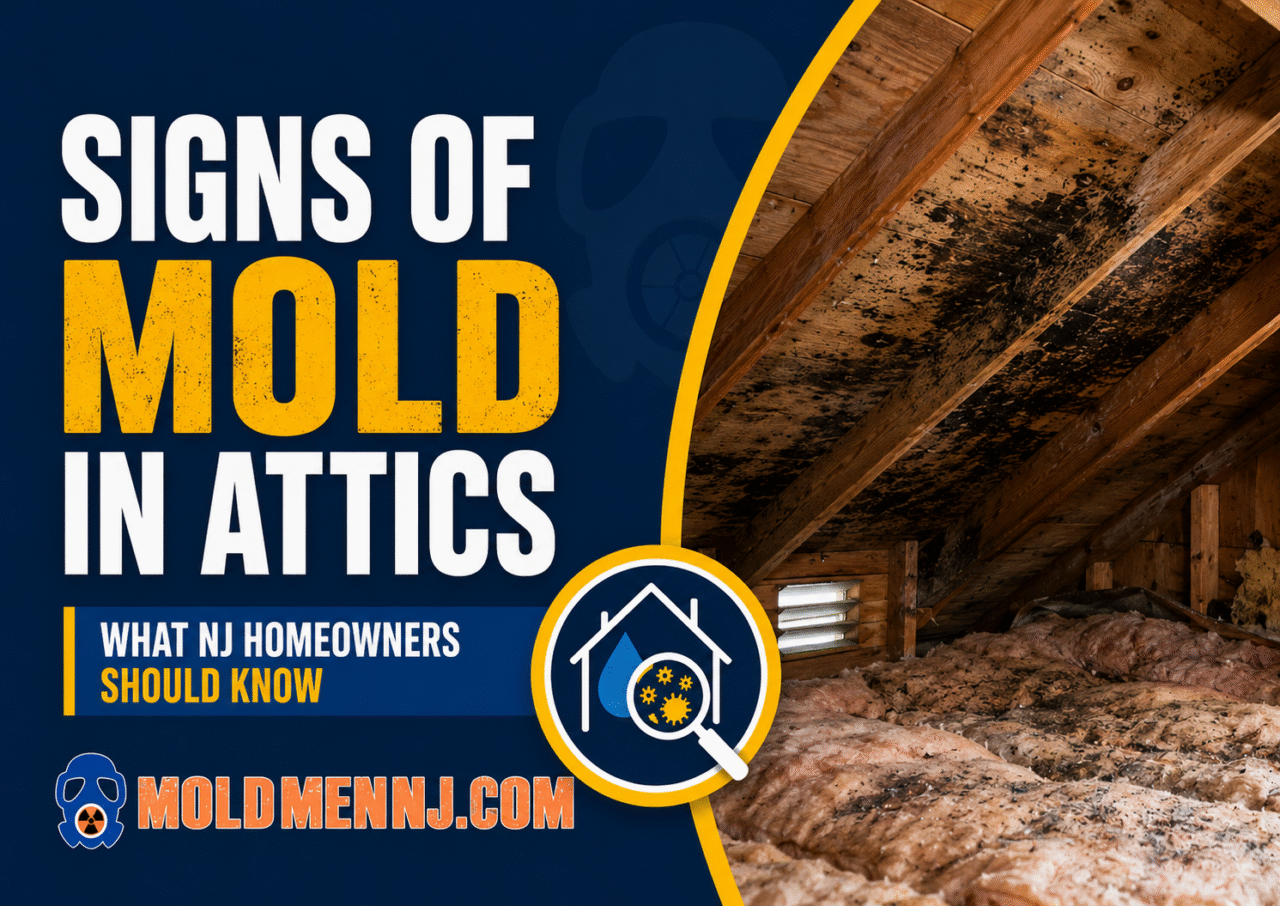
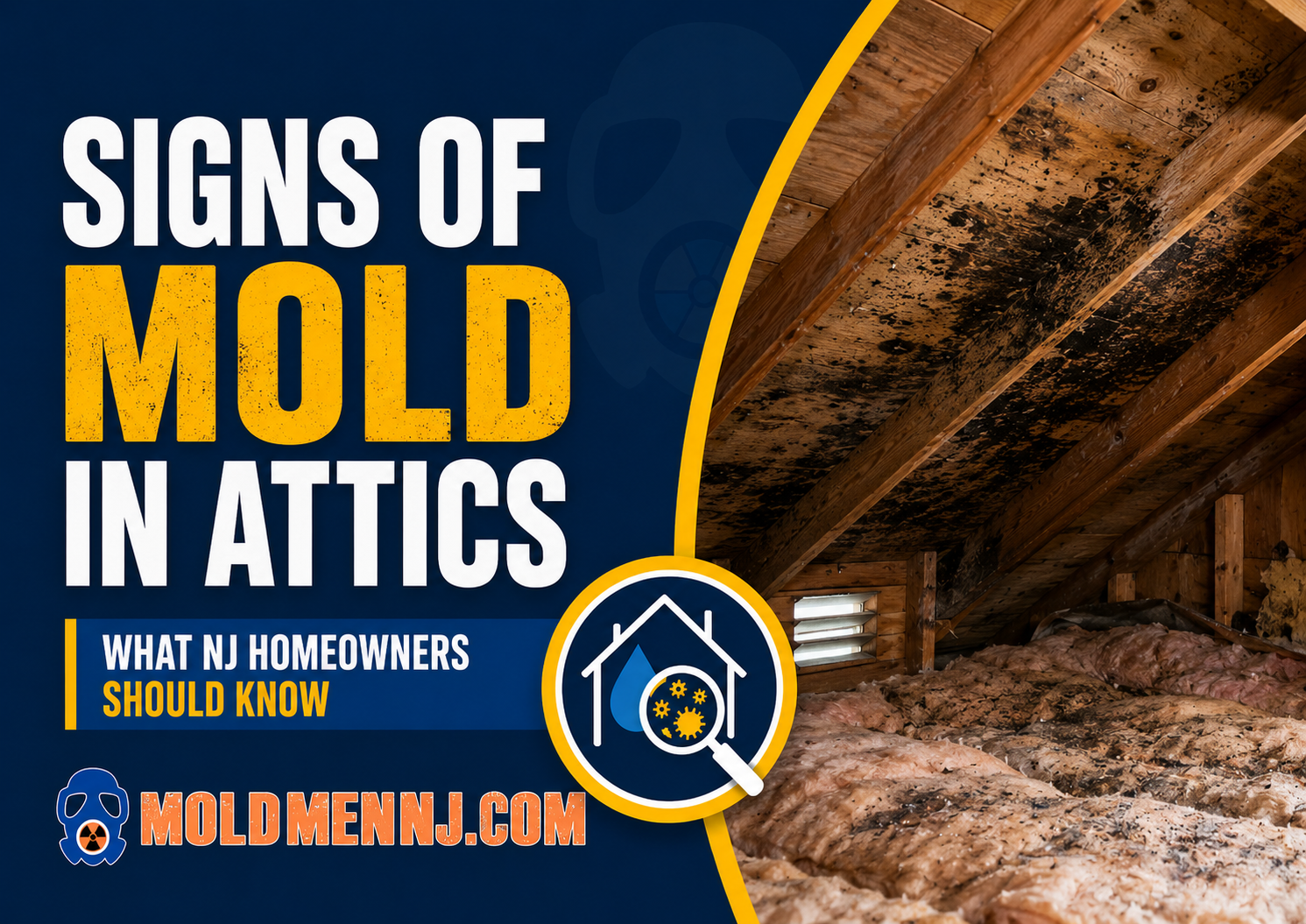
Black, gray, green, or brown spotting on attic wood surfaces may indicate mold growth or long-term moisture exposure.
3. Wet or Compressed Insulation
Insulation that feels damp, flattened, or stained may point to roof leaks or condensation problems.
4. Rusted Nails or Metal Components
Excess attic moisture often causes rust on nails, brackets, or fasteners.
5. Visible Roof Leaks or Water Stains
Stains on rafters, decking, or insulation may suggest active or past water intrusion.
6. Frost or Condensation in Winter
During cold New Jersey winters, warm indoor air leaking into the attic can create condensation on cold surfaces.
7. Higher Indoor Humidity
Some homeowners notice upstairs rooms feel stuffy or humid when attic ventilation is poor.
Common Causes of Attic Mold in New Jersey
Roof Leaks
Missing shingles, flashing failures, or storm damage may allow water into the attic.
Poor Ventilation
Blocked soffit vents or inadequate exhaust ventilation can trap moisture.
Bathroom Fans Exhausting Into the Attic
This is a common issue in older homes. Shower steam released into the attic can feed mold growth.
Winter Condensation
Warm air escaping from living spaces can condense on cold attic surfaces.
Summer Humidity
Humid weather may increase moisture levels in poorly ventilated attics.
Why Attic Mold Should Not Be Ignored
Even when attic mold is out of sight, it may continue spreading if moisture problems remain.
Potential concerns include:
- Damage to wood surfaces
- Wet insulation losing efficiency
- Persistent odors
- Reduced energy performance
- More costly repairs later
- Hidden roof leak progression
How Professionals Evaluate Attic Mold
A professional inspection may include:
- Visual review of attic surfaces
- Looking for roof leak evidence
- Ventilation assessment
- Moisture readings when needed
- Checking insulation condition
- Identifying likely source of humidity or water intrusion
The goal is to find both the mold issue and the reason it developed.
What Happens During Attic Mold Remediation
Depending on the situation, remediation may include:
- Correcting roof leaks
- Improving attic ventilation
- Removing damaged materials when needed
- Surface treatment where appropriate
- HEPA air filtration if required
- Drying wet areas
- Prevention recommendations
Without fixing the moisture source, mold may return.
Why Local Experience Matters in New Jersey
Homes in Kinnelon, Wayne, Parsippany, Montville, Butler, Pequannock, and surrounding North Jersey communities often deal with:
- Snow and ice issues
- Storm-related roof wear
- Older ventilation systems
- Humid summers
- Winter attic condensation
A local company familiar with these regional conditions can often diagnose attic problems faster.
How To Help Prevent Mold in Attics
1. Inspect the Roof Regularly
Address damaged shingles or flashing quickly.
2. Make Sure Bathroom Fans Vent Outside
Fans should not discharge moisture into the attic.
3. Improve Ventilation
Proper intake and exhaust airflow helps reduce trapped moisture.
4. Seal Air Leaks
Warm indoor air leaking upward can create winter condensation.
5. Check After Storms
Inspect attic areas after heavy rain or snow events.
FAQ
What are the first signs of mold in an attic?
Musty odors, dark spotting on wood, wet insulation, and visible staining are common early signs.
Can attic mold come from poor ventilation?
Yes. Poor airflow is one of the most common attic mold causes.
Is attic mold dangerous?
Attic mold can damage materials and may worsen over time if moisture issues continue.
Can roof leaks cause attic mold?
Yes. Even small roof leaks may create enough moisture for mold growth.
Should attic mold be professionally inspected?
Yes, especially when growth is widespread, moisture is ongoing, or the cause is unclear.
Key Takeaway
The signs of mold in attics often begin with moisture, musty odors, stains, or dark spotting on wood surfaces. Addressing leaks and ventilation issues early can help prevent larger damage and costly repairs later.
Contact Mold Men NJ
Mold Men NJ
36 Banta Rd, Kinnelon NJ 07405
(201) 729-3220
moldmennewjersey@gmail.com
Disclaimer: Mold may affect people differently. This article is informational only. For health concerns, contact a healthcare provider. For mold concerns, contact Mold Men NJ.
