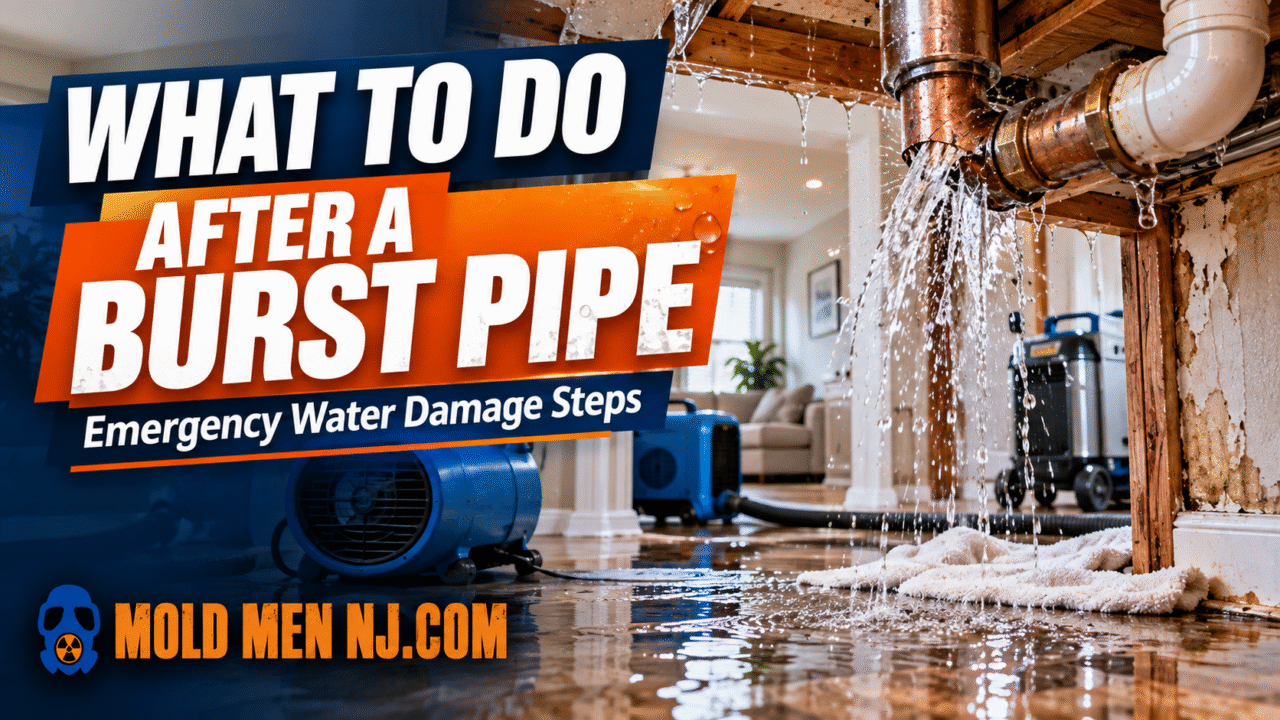
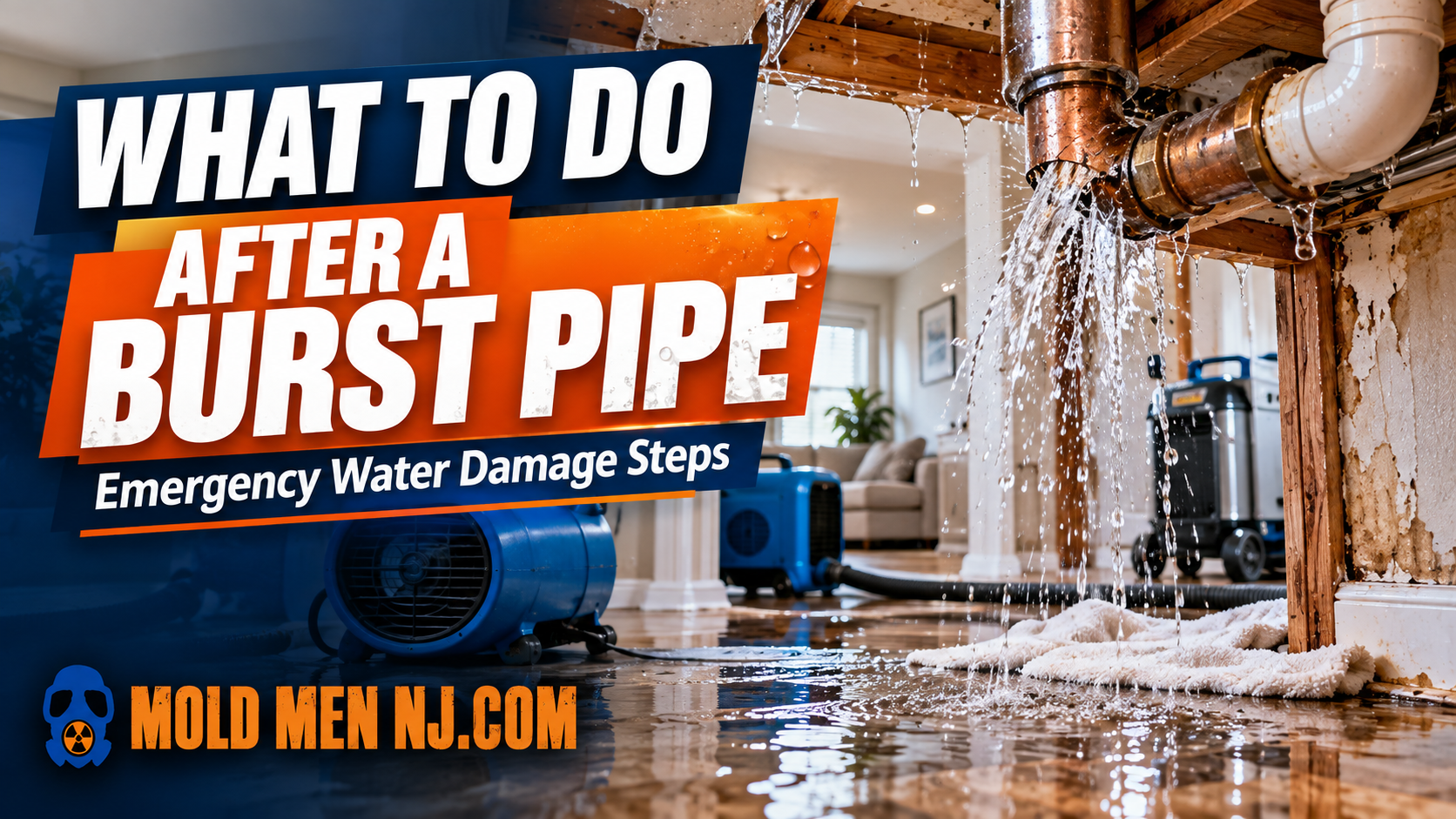
What to Do After a Burst Pipe: Emergency Water Damage Steps
A burst pipe can release a large amount of water into a home or business in a short period of time. Flooring, drywall, insulation, ceilings, cabinetry, furniture, and structural materials can all be affected depending on where the pipe breaks and how long the water continues flowing.
Knowing what to do immediately after discovering a burst pipe can help limit additional damage and make the cleanup process easier. The most important priorities are stopping the water when it is safe to do so, avoiding electrical hazards, removing standing water, and making sure affected materials are properly dried.
1. Shut Off the Water Supply
If you can safely reach the main water shutoff valve, turn off the water supply as soon as possible.
Stopping the flow of water can significantly reduce the amount of damage caused by the broken pipe. After the water is shut off, the damaged plumbing will still need to be repaired before the water supply is restored.
If you do not know where the shutoff valve is located or cannot safely access it, contact a plumber or other appropriate professional for assistance.
2. Watch for Electrical Hazards
Water and electricity can create a serious safety hazard.
If water has reached electrical outlets, appliances, wiring, an electrical panel, or other powered equipment, avoid entering the affected area until it has been determined that doing so is safe.
Do not walk through standing water to reach an electrical panel or attempt to handle electrical equipment that has been exposed to water.
Safety should come before cleanup.
3. Find Out Where the Water Traveled
The visible water may only represent part of the problem.
Water released from a burst pipe can travel:
- Behind drywall
- Beneath flooring
- Into insulation
- Through ceilings
- Inside wall cavities
- Under cabinets
- Into basements or lower floors
- Around framing and structural materials
Even after standing water has been removed, moisture can remain inside materials that appear dry from the surface.
A moisture assessment can help determine how far the water traveled and which areas need additional drying.
4. Remove Standing Water
Standing water should be removed as soon as practical once the water source has been controlled and the area is safe to enter.
Depending on the amount of water present, cleanup may involve professional water extraction equipment rather than household towels or a wet vacuum alone.
Prompt water extraction can help reduce the amount of time flooring, drywall, trim, furniture, and other materials remain saturated.
For significant water losses, professional emergency water extraction may be appropriate.
5. Move Belongings Away From the Affected Area
If it is safe to do so, move furniture, boxes, electronics, rugs, and other belongings away from standing water or wet surfaces.
Items that remain in contact with moisture may sustain additional damage and can also make it more difficult to access wet flooring and walls.
Avoid moving contaminated or unsafe materials without appropriate precautions.
6. Document the Damage
Before major cleanup or material removal begins, take photographs and videos of the affected areas when possible.
Document:
- Standing water
- Wet flooring
- Damaged drywall
- Ceiling stains
- Affected furniture
- Damaged belongings
- The broken pipe
- Water traveling into adjacent rooms
Keep receipts and records related to emergency services, plumbing repairs, water extraction, drying, and restoration.
If you plan to file an insurance claim, contact your insurance provider and ask what documentation they require. Coverage varies depending on the policy and the circumstances surrounding the water loss.
7. Determine Which Materials Can Be Dried
Not every wet material automatically needs to be removed.
Some materials may be able to dry in place depending on:
- How wet they became
- How long they remained wet
- The type of material
- Where the moisture traveled
- Whether the material has been damaged
- Whether contamination is involved
Other materials may become heavily saturated or damaged enough that removal is more appropriate.
Drywall, insulation, carpeting, padding, ceiling materials, flooring, and trim may all need to be evaluated after a major pipe break.
8. Begin Structural Drying and Dehumidification
Removing visible water is only the first part of the cleanup process.
Moisture may remain inside walls, flooring, framing, and other building materials after standing water has been extracted.
Professional structural drying and dehumidification may involve air movement, dehumidification, and moisture monitoring to help reduce moisture throughout the affected area.
The drying process depends on the size of the water loss, the materials involved, indoor conditions, and whether moisture reached concealed areas.
9. Do Not Ignore Hidden Moisture
One of the biggest problems after a burst pipe is moisture that cannot easily be seen.
For example, a wall may look relatively normal from the room while insulation or framing behind it remains wet.
Signs that moisture may still be present include:
- Water stains
- Soft or swollen drywall
- Warped flooring
- Peeling paint
- Bubbling finishes
- Musty odors
- Damp trim or baseboards
- Persistent humidity
A professional water damage assessment can help locate moisture that might otherwise go unnoticed.
10. Address the Damaged Pipe
Water cleanup does not replace the need to repair the actual plumbing failure.
A qualified plumbing professional should determine why the pipe burst and make the necessary repairs.
Possible causes can include freezing temperatures, deterioration, corrosion, excessive pressure, damaged fittings, or other plumbing problems.
The water supply should not be fully restored until the damaged plumbing has been appropriately repaired.
Can a Burst Pipe Lead to Mold?
A burst pipe creates a significant moisture problem, and mold can develop when building materials remain damp.
Removing standing water, drying affected materials, controlling humidity, and correcting the plumbing problem are important steps for reducing conditions that can support mold growth.
If moisture has remained inside walls, insulation, flooring, or other concealed areas, further evaluation may be appropriate.
If visible mold develops after the water damage, mold remediation may become part of the restoration process.
Water Mitigation vs. Water Damage Restoration
These terms are related, but they describe different parts of the recovery process.
Water Mitigation
Water mitigation focuses on limiting additional damage after the water loss.
This may include:
- Water extraction
- Moisture assessment
- Structural drying
- Dehumidification
- Removing materials that cannot be properly dried
- Protecting unaffected areas
Water Damage Restoration
Restoration generally comes after the immediate water problem has been controlled.
It may include repairing or replacing damaged:
- Drywall
- Flooring
- Insulation
- Trim
- Ceilings
- Cabinets
- Other building materials
The goal is to move from emergency cleanup and drying into the repair phase.
When Should You Call a Water Damage Professional?
Professional water damage cleanup may be appropriate when:
- A large amount of water has entered the property
- Water has spread into multiple rooms
- Flooring or drywall is heavily saturated
- Water has entered walls or ceilings
- A basement has flooded
- Moisture is trapped beneath flooring
- Significant structural materials are wet
- You are unsure how far the water traveled
- Professional drying equipment may be needed
Large water losses can be difficult to evaluate based on appearance alone.
Burst Pipe Water Damage Cleanup
Mold Men NJ provides water damage cleanup, emergency water extraction, water mitigation, and structural drying services for properties affected by burst pipes and other water emergencies.
The cleanup process can include removing standing water, evaluating affected materials, drying the structure, monitoring moisture conditions, and identifying additional restoration needs.
For properties in New Jersey dealing with sudden water damage, prompt action can help limit how far the damage spreads and reduce the amount of material that remains wet.
Frequently Asked Questions
What should I do first after a pipe bursts?
If it is safe to do so, shut off the water supply to stop additional water from entering the property. Avoid electrical hazards, document the damage, and begin addressing standing water and wet materials as soon as practical.
Can a burst pipe cause hidden water damage?
Yes. Water can travel behind drywall, beneath flooring, into insulation, through ceilings, and inside wall cavities. Moisture may remain in concealed materials even after visible standing water has been removed.
Do all wet materials need to be removed after a burst pipe?
Not necessarily. Some materials may be able to dry in place, while materials that are heavily saturated, damaged, contaminated, or unable to be properly dried may need to be removed.
How long does structural drying take after a burst pipe?
Drying time varies depending on how much water was released, how long materials remained wet, which materials were affected, indoor conditions, and whether moisture reached concealed areas.
Can a burst pipe lead to mold growth?
Yes. Excess moisture can create conditions that support mold growth when affected materials remain damp. Prompt water removal, structural drying, moisture control, and repair of the damaged plumbing can help reduce that risk.
Key Takeaway
After a burst pipe, the first priorities are to safely stop the water, avoid electrical hazards, remove standing water, and determine how far moisture has traveled.
Visible water may disappear quickly, but moisture can remain behind walls, beneath floors, and inside other building materials. Proper water extraction, drying, and moisture control are important parts of recovering from a burst pipe and preventing additional damage.
About Mold Men NJ
Mold Men NJ is a veteran-owned, licensed, certified, and insured company serving residential and commercial customers throughout New Jersey. Services include mold remediation, water damage restoration, fire restoration, and lead remediation.
Contact Mold Men NJ
Mold Men NJ
36 Banta Rd, Kinnelon NJ 07405
(201) 729-3220
moldmennewjersey@gmail.com
https://moldmennj.com/contact/
Disclaimer: This article is informational only. Mold and indoor moisture conditions may affect people differently. For health concerns, contact a licensed healthcare provider. For mold, moisture, or property concerns, contact Mold Men NJ.
