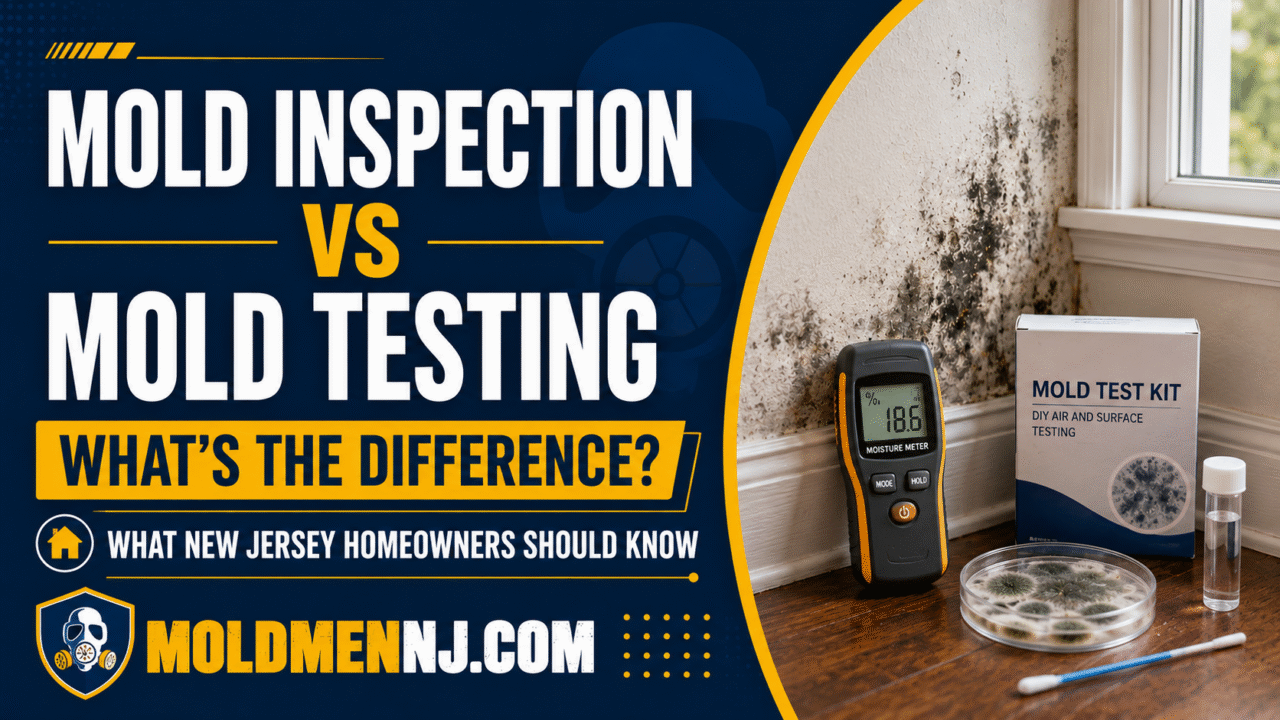
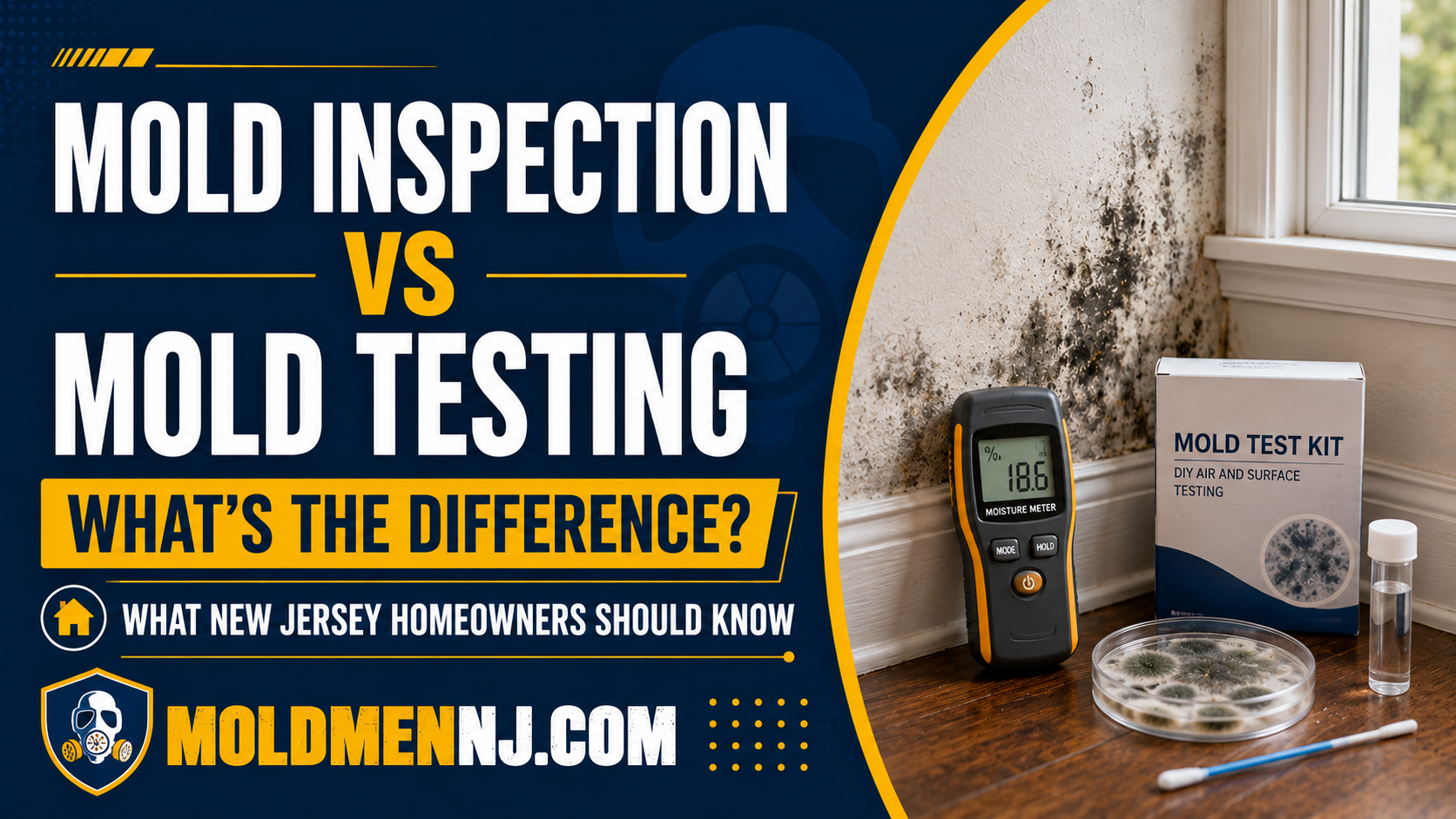
Mold Inspection vs Mold Testing in New Jersey: What’s the Difference?
Many New Jersey homeowners notice a musty smell, recent water damage, or suspicious discoloration and ask the same question: do I need a mold inspection or mold testing?
These two services are often confused, but they are not always the same. Understanding the difference can help you choose the right next step, save money, and address the real problem faster.
In many cases, the goal is not simply to confirm mold exists. The bigger issue is identifying where moisture is coming from, how widespread the problem may be, and what should be done next.
Mold Men NJ helps homeowners and businesses across New Jersey evaluate mold concerns, locate moisture issues, and restore healthier indoor environments.
What Is a Mold Inspection?
A mold inspection is a professional evaluation of a property to identify signs of mold growth, water intrusion, humidity problems, and conditions that may allow mold to develop.
An inspection often includes:
- Visual review of affected areas
- Checking for water stains or damage
- Looking for hidden moisture sources
- Assessing basements, attics, crawlspaces, and bathrooms
- Identifying ventilation issues
- Using moisture meters or similar tools when needed
- Recommending next steps
A mold inspection is often the best starting point when you suspect a problem but are not sure how serious it is.
What Is Mold Testing?
Mold testing usually refers to collecting samples to help identify mold types or measure airborne spore levels. Depending on the situation, testing may involve air samples, surface samples, or material samples.
Testing may be considered when:
- There is a real estate transaction
- A tenant or buyer requests documentation
- There is concern about hidden mold with limited visible signs
- Multiple parties need independent results
- Post-remediation verification is requested
- Indoor air quality concerns continue without obvious cause
Testing can provide data, but it does not fix the moisture source or remove mold.
Mold Inspection vs Mold Testing: Key Difference
The easiest way to understand the difference is this:
Mold Inspection Focuses on the Problem
An inspection looks for where mold may be growing, why it is happening, and what needs to be corrected.
Mold Testing Focuses on Samples
Testing gathers data about mold presence or spore levels.
In many homes, identifying the moisture issue is more important than simply knowing a mold type.
Which One Do Most Homeowners Need First?
For many homeowners, a mold inspection is the more practical first step.
That is because common household mold issues are usually caused by:
- Roof leaks
- Plumbing leaks
- Basement dampness
- Poor ventilation
- Flooding
- Condensation
- Humidity buildup
If the moisture source is not corrected, mold can continue returning even after cleanup.
According to United States Environmental Protection Agency guidance, controlling moisture is one of the most important parts of preventing mold growth indoors.
When Mold Testing May Be Worth It
While every case is different, mold testing may be useful in these situations:
Real Estate Transactions
Buyers and sellers sometimes want documentation before closing.
Ongoing Health Concerns
Some families want additional information when indoor air quality concerns continue.
No Visible Mold, But Strong Suspicion
If odors or symptoms exist without obvious visible growth, testing may help guide next steps.
Clearance or Verification
After remediation, some owners request verification that conditions improved.
When Mold Inspection Is Usually the Better Choice
A mold inspection is often the better first move when:
- You see visible mold
- You had recent flooding
- There are water stains on walls or ceilings
- A basement smells musty
- Bathroom mold keeps returning
- You suspect attic or crawlspace moisture
- You want to know the cause before spending money
Common Mold Problems in New Jersey Homes
Homes across New Jersey face conditions that often lead to mold concerns.
Finished Basements
North Jersey basements often trap moisture behind drywall or flooring.
Humid Summers
Warm humid weather can increase indoor moisture.
Winter Condensation
Cold surfaces and poor insulation can create damp spots.
Storm Damage
Heavy rain may cause roof leaks or sump pump failures.
Older Homes
Some homes may have aging roofs, drainage issues, or outdated ventilation.
Can You Skip Testing If Mold Is Visible?
In some situations, visible mold plus clear moisture damage may make the priority obvious: correct the water source and address the affected materials.
Many homeowners assume testing is always required, but often the more important step is evaluating scope, moisture cause, and remediation needs.
What Happens After an Inspection?
Depending on findings, next steps may include:
- Moisture repairs
- Drying affected materials
- Ventilation improvements
- Professional mold remediation
- Limited removal of damaged materials
- Optional third-party testing if needed
Why Choosing the Right First Step Saves Money
Spending money on testing before understanding the actual moisture problem may delay the real solution.
A practical inspection can often identify:
- Where water is entering
- Whether mold is likely hidden
- Which materials are affected
- Whether remediation is necessary
- Whether testing would add value
Why Local Experience Matters in New Jersey
Homes in Kinnelon, Wayne, Parsippany, Montville, Butler, Pequannock, and surrounding North Jersey communities often deal with basement moisture, grading issues, roof wear, and seasonal humidity shifts.
A local company familiar with common regional conditions can often spot likely causes faster.
FAQ
What is the difference between mold inspection and mold testing?
A mold inspection evaluates the property for moisture issues and visible or hidden mold concerns. Mold testing collects samples for data.
Do I need mold testing if I can already see mold?
Not always. In many cases, addressing the moisture source and evaluating scope may be more important.
Is mold inspection worth it?
Yes, especially when you do not know where moisture is coming from or how large the issue may be.
Can mold be hidden behind walls?
Yes. Mold often develops in concealed areas after leaks or moisture intrusion.
Which costs more, inspection or testing?
Costs vary by property size and service scope. Testing may involve additional lab-related steps depending on the situation.
Key Takeaway
Mold inspection vs mold testing is not an either-or question in every case. For many homeowners, an inspection is the best first step because it helps locate moisture issues, identify likely mold conditions, and guide the smartest next move.
About Mold Men NJ
Mold Men NJ is a veteran-owned, licensed, certified, and insured company serving residential and commercial customers throughout New Jersey. Services include mold remediation, water damage restoration, fire restoration, and lead remediation.
Contact Mold Men NJ
Mold Men NJ
36 Banta Rd, Kinnelon NJ 07405
(201) 729-3220
moldmennewjersey@gmail.com
Disclaimer: Mold may affect people differently. This article is informational only. For health concerns, contact a healthcare provider. For mold concerns, contact Mold Men NJ.
