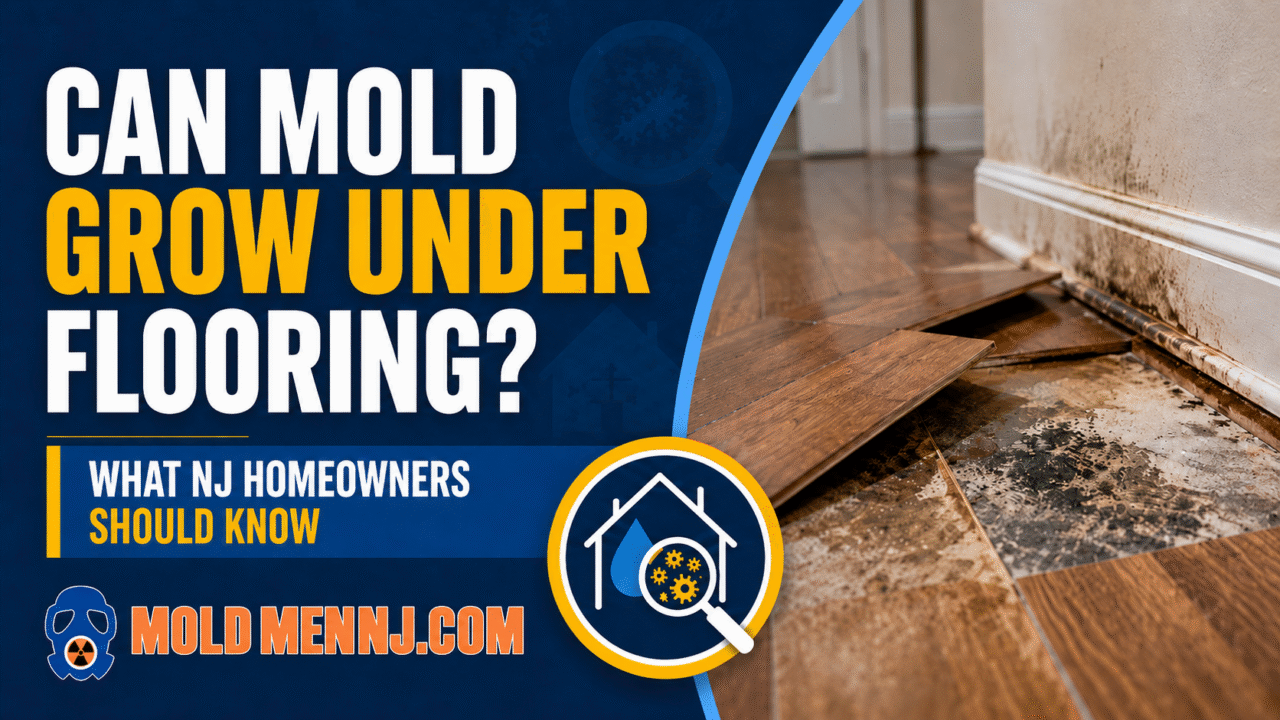
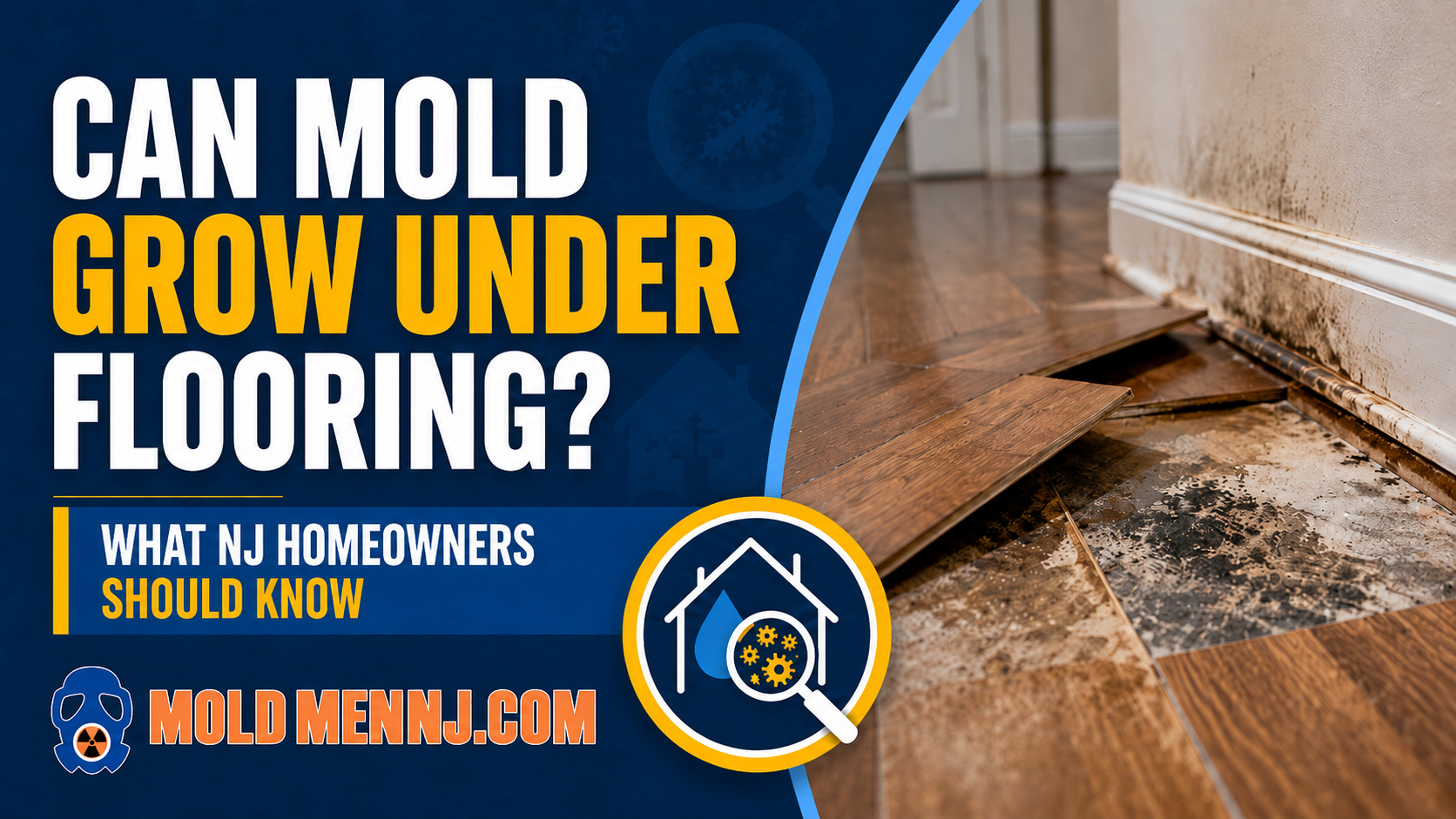
Can Mold Grow Under Flooring? What New Jersey Homeowners Should Know
Many homeowners notice a musty smell, warped floorboards, soft spots, or past water damage and ask the same question: can mold grow under flooring?
The answer is yes. Mold can develop beneath many types of flooring when moisture becomes trapped between the floor surface and the subfloor below. Because the mold is hidden, many people do not realize there is a problem until odors, damage, or discoloration appear.
For New Jersey homeowners, flooring mold often follows appliance leaks, basement moisture, bathroom overflows, storm flooding, sump pump failures, or plumbing problems. Knowing the warning signs early can help reduce larger repair costs later.
Mold Men NJ helps residential and commercial property owners throughout New Jersey identify hidden mold issues, correct moisture sources, and restore safer indoor environments.
Why Mold Can Grow Under Flooring
Mold needs moisture, limited airflow, and a surface to grow on. Under many floors, these conditions can exist after water damage.
Moisture may become trapped beneath:
- Hardwood flooring
- Laminate flooring
- Vinyl plank flooring
- Carpet and padding
- Tile underlayment
- Engineered wood flooring
Once water reaches the subfloor, mold may grow on wood, adhesives, padding, or nearby materials.
According to United States Environmental Protection Agency guidance, moisture control is one of the most important parts of preventing indoor mold growth.
Common Causes of Mold Under Flooring
Appliance Leaks
Slow leaks from refrigerators, dishwashers, washing machines, or water lines may go unnoticed for long periods.
Bathroom Overflows
Toilet leaks, shower overflows, or repeated moisture near tubs can affect nearby flooring.
Basement Moisture
Finished basements in New Jersey often experience seepage or humidity that affects floor systems.
Flooding
Storm water intrusion, sump pump failure, or burst pipes can soak flooring materials quickly.
Plumbing Leaks
Leaks inside walls or under sinks may spread into adjacent flooring.
High Humidity
Persistent moisture in poorly ventilated areas may affect floors over time.
Signs Mold May Be Growing Under Flooring
Because the problem is hidden, homeowners often notice indirect signs first.
1. Musty Odors
A persistent damp or earthy smell is one of the most common warning signs.
2. Warped or Buckling Floors
Hardwood, laminate, or vinyl may lift, swell, or separate after moisture exposure.
3. Soft Spots
Areas that feel spongy or unstable may indicate water damage below.
4. Staining or Discoloration
Dark spots near edges, seams, or corners can signal moisture problems.
5. Recurring Mold Near Baseboards
Surface mold near trim may point to hidden growth below the floor.
6. Allergy-Like Symptoms Indoors
Some homeowners notice coughing, congestion, or irritation that seems worse inside the home.
Which Flooring Types Are Most Vulnerable?
Hardwood Floors
Wood absorbs moisture and may cup, swell, or warp.
Laminate Floors
Water can seep through seams and damage the backing.
Carpet
Padding beneath carpet can hold moisture and remain wet.
Vinyl Flooring
Water may become trapped beneath planks or sheets if seams are compromised.
Tile Floors
Tile itself resists water, but moisture may affect grout, underlayment, or subfloor areas below.
Can Mold Grow Under Flooring After a Small Leak?
Yes. Even a slow leak can create hidden moisture over time.
Many homeowners assume only major floods cause mold, but slow refrigerator leaks or toilet seal failures can create long-term hidden damage.
How Fast Can Mold Grow Under Flooring?
Growth may begin relatively quickly when materials stay damp and airflow is limited. The longer moisture remains, the greater the chance of mold spreading and damaging subfloor materials.
Can You Just Dry the Surface?
Drying the visible floor surface may not be enough.
Moisture can remain trapped:
- Under planks
- Beneath carpet padding
- Inside wood subfloors
- Along wall edges
- Below underlayment materials
That is why hidden moisture checks are important after leaks.
How Professionals Evaluate Flooring Mold
A professional evaluation may include:
- Visual inspection
- Moisture readings
- Identifying leak sources
- Checking surrounding baseboards and walls
- Reviewing flood or leak history
- Determining if flooring removal is needed
The goal is to find both the moisture source and the extent of damage.
What Happens If Mold Is Found Under Flooring?
Next steps depend on severity and materials affected. Professional remediation may include:
- Correcting the leak or moisture source
- Removing damaged flooring materials
- Drying the subfloor
- HEPA air filtration when appropriate
- Treating affected areas where suitable
- Replacing removed flooring after drying
Why Local New Jersey Homes See This Problem
Homes in Kinnelon, Wayne, Parsippany, Montville, Butler, Pequannock, and surrounding North Jersey communities often deal with:
- Basement humidity
- Sump pump dependence
- Winter pipe leaks
- Storm flooding
- Older plumbing systems
- Seasonal moisture changes
These regional conditions can increase hidden flooring moisture risks.
How To Help Prevent Mold Under Flooring
Fix Leaks Quickly
Do not ignore appliance drips or plumbing leaks.
Clean Up Spills Fast
Especially on wood or laminate surfaces.
Use Dehumidifiers
Helpful in basements or damp lower levels.
Inspect After Flooding
Even minor water intrusion should be checked.
Watch for Odors
Musty smells often appear before visible damage.
FAQ
Can mold grow under flooring?
Yes. Mold can grow beneath many flooring types when moisture becomes trapped below the surface.
How do I know if mold is under my floor?
Musty odors, warped floors, soft spots, staining, or recurring moisture can be warning signs.
Can a dishwasher leak cause mold under flooring?
Yes. Slow appliance leaks are a common hidden cause.
Do floors need to be removed if mold is underneath?
That depends on the extent of moisture and damage. Professional evaluation is recommended.
Is mold under flooring dangerous?
Hidden mold can damage building materials and may affect indoor comfort or air quality for some individuals.
Key Takeaway
Can mold grow under flooring? Yes, and it is a common hidden problem after leaks or water damage. Acting quickly, drying materials properly, and getting a professional inspection can help prevent larger repairs and costly floor replacement later.
About Mold Men NJ
Mold Men NJ is a veteran-owned, licensed, certified, and insured company serving residential and commercial customers throughout New Jersey. Services include mold remediation, water damage restoration, fire restoration, and lead remediation.
Contact Mold Men NJ
Mold Men NJ
36 Banta Rd, Kinnelon NJ 07405
(201) 729-3220
moldmennewjersey@gmail.com
Disclaimer: Mold may affect people differently. This article is informational only. For health concerns, contact a healthcare provider. For mold concerns, contact Mold Men NJ.
