Can You Stay in Your House During Mold Remediation in New Jersey?
Can you stay in your house during mold remediation? In some situations, homeowners may remain in an unaffected part of the property while professional remediation is completed. In other cases, temporarily leaving may be the safer or more practical option.
The answer depends on the size and location of the mold problem, whether the work area can be properly contained, whether the HVAC system is affected, and whether anyone in the home has respiratory or other health concerns.
A small project isolated inside one room may create different living conditions than extensive remediation involving several rooms, a basement, an attic, or the home’s heating and cooling system.
New Jersey homeowners should discuss occupancy with the remediation company before work begins. A clear plan can help protect occupants, keep the containment area undisturbed, and prevent mold-contaminated dust or materials from spreading into unaffected spaces.
Mold Men NJ helps residential and commercial property owners throughout New Jersey evaluate mold conditions, identify moisture sources, and complete professional mold remediation.
Can You Stay Home During Mold Remediation?
Some homeowners may be able to stay in the house when the affected area is limited, properly contained, and separated from occupied rooms.
Staying may not be appropriate when the project affects a large portion of the property, requires access through important living areas, involves the HVAC system, or creates conditions that may expose occupants to mold-contaminated dust and debris.
The decision should be based on the individual property, the remediation plan, the location of the work, and the needs of everyone living in the home.
What Determines Whether You Can Remain in the House?
Several factors may affect whether a New Jersey homeowner can stay during mold remediation.
Size and Location of the Mold Problem
A small area inside an isolated bathroom, closet, basement room, or detached garage may be easier to separate from the rest of the property.
A larger project involving several rooms, widespread water damage, wall removal, flooring, insulation, or multiple levels may make temporary relocation more appropriate.
Location also matters. Mold inside a bedroom, kitchen, main hallway, or central HVAC system may interfere with daily living more than mold in a rarely used area.
Workers may also need to carry equipment and sealed debris through the property. The route between the work area and the exit should be considered when determining whether occupants can remain home.
Ability to Contain the Work Area
Containment creates a controlled boundary around the remediation area and helps limit the movement of mold-contaminated dust and materials.
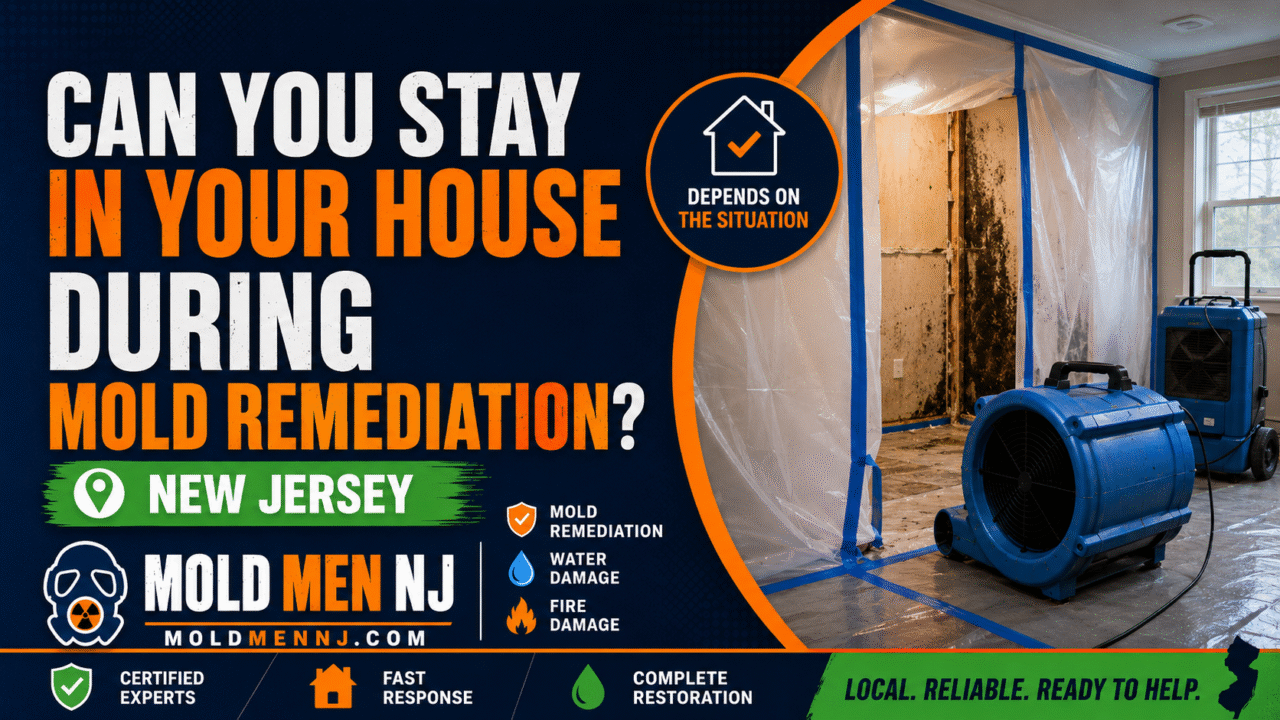
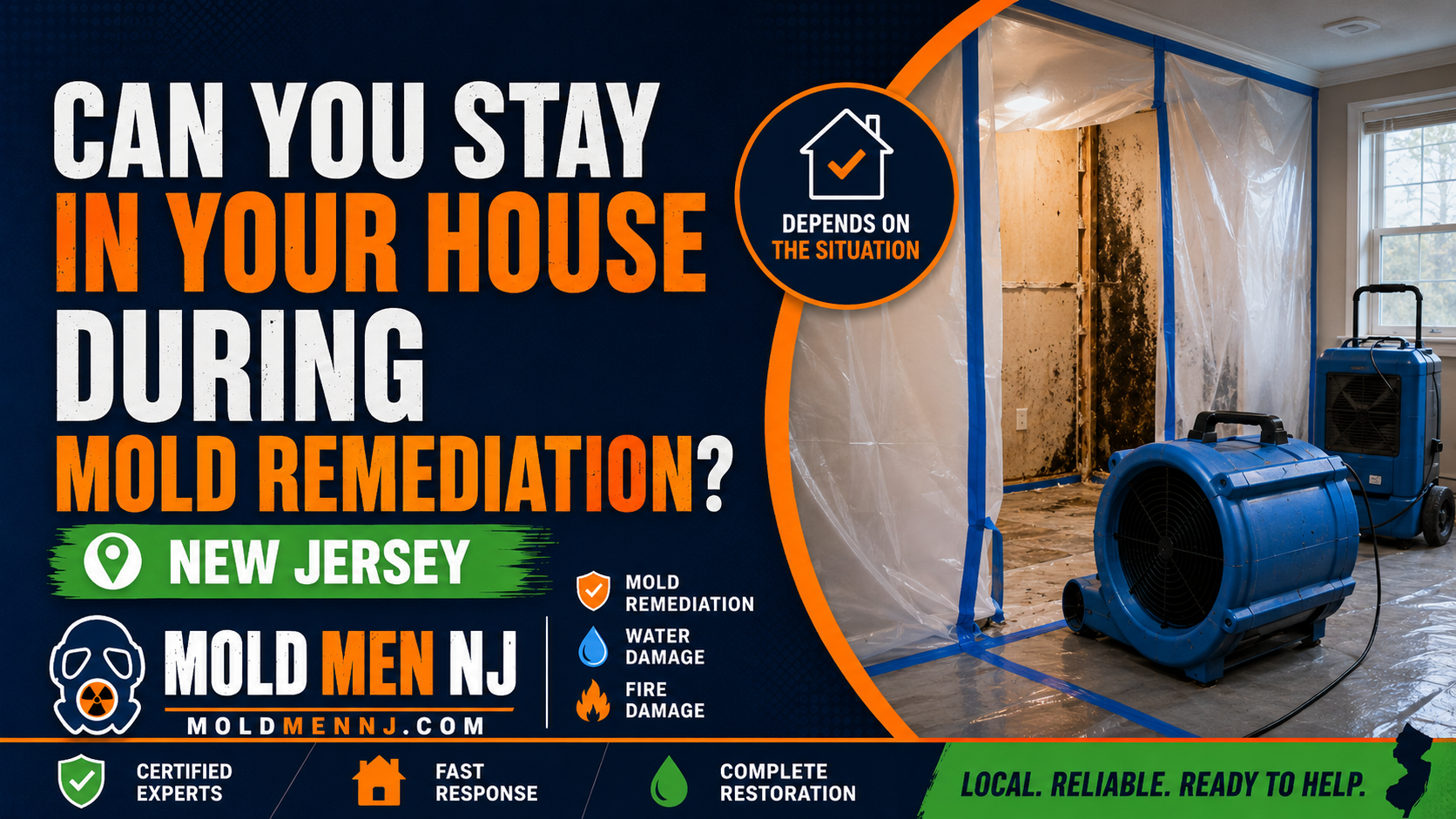
Depending on the project, containment may include plastic sheeting, sealed openings, covered vents, controlled entry points, air-filtration equipment, and negative air pressure.
When the work zone can be fully separated from occupied rooms, homeowners may be able to use the rest of the property. If the building’s layout makes effective containment difficult, temporarily leaving may be recommended.
Occupants, children, pets, and visitors should not enter or disturb an active containment area.
HVAC Involvement
Heating, ventilation, and air-conditioning systems can move air between different areas of a house.
Vents inside the remediation area may need to be sealed so particles are not pulled into the ductwork and distributed elsewhere.
If mold affects the HVAC system, the system may need to remain off until the contamination has been addressed. This may affect whether the home remains comfortable and suitable for occupancy, especially during very hot or cold New Jersey weather.
Homeowners should not turn vents or equipment back on without approval from the remediation team.
Type of Work Being Completed
Some mold-remediation projects involve limited cleaning. Others require the removal of drywall, insulation, flooring, cabinets, ceiling materials, or other porous building components.
Material removal may create dust, noise, equipment traffic, and temporary restrictions within the home. Drying and filtration equipment may also need to operate continuously.
These conditions can make staying in the property inconvenient even when occupied areas are separated from the work zone.
Health and Sensitivity of Occupants
The health and comfort of everyone in the property should be considered before deciding to stay.
People with asthma, chronic obstructive pulmonary disease, weakened immune systems, allergies, respiratory conditions, or concerns about mold exposure should speak with a licensed healthcare provider for guidance based on their individual circumstances.
Children and pets may also have difficulty staying away from containment barriers, tools, equipment, and work areas.
When Staying in the House May Be Possible
Remaining in the home may be possible when the mold is limited to a small, isolated area and the work zone can be separated from occupied spaces.
Conditions that may support continued occupancy include:
- The moisture source has been identified and corrected.
- Containment fully separates the work area.
- Occupants do not need to enter or pass through the remediation zone.
- The HVAC system serving occupied rooms is not contaminated.
- Debris-removal routes do not pass through heavily used areas.
- Essential bedrooms, bathrooms, and kitchen areas remain available.
- Children and pets can be kept completely away from the work.
- The remediation company confirms that the occupancy plan is appropriate.
- No occupant has a health condition that makes remaining inadvisable.
These conditions do not guarantee that staying is appropriate. Every mold-remediation project should be evaluated individually.
When Temporary Relocation May Be Recommended
Leaving the home may be recommended when the project is extensive, difficult to isolate, or likely to interfere with essential living areas.
Temporary relocation may be appropriate when:
- Mold affects several rooms or levels.
- Bedrooms are close to the remediation area.
- The kitchen or primary bathroom cannot be used.
- Extensive drywall, flooring, insulation, or cabinetry must be removed.
- The HVAC system is contaminated or must remain off.
- Containment cannot fully separate the work area.
- Occupants must regularly pass through the remediation zone.
- Water damage has affected a substantial portion of the property.
- Dust, noise, odors, or equipment make the house difficult to occupy.
- A healthcare provider recommends avoiding the property.
- Someone in the home has asthma, COPD, a weakened immune system, or another respiratory concern.
The contractor should explain why relocation is recommended and estimate how long important areas of the property will remain unavailable.
What Should Homeowners Expect During Remediation?
Before work begins, the remediation company should explain which parts of the property will be restricted and whether occupants may remain elsewhere in the home.
The project may include:
Correcting the Moisture Source
The plumbing leak, roof problem, humidity issue, drainage concern, or other source should be corrected so mold is less likely to return.
Setting Up Containment
The affected area may be enclosed and separated from occupied portions of the property.
Air Filtration
Filtered air equipment may operate during the project to help manage airborne particles inside the controlled area.
Removing Affected Materials
Porous materials that cannot be properly cleaned may need to be removed and sealed before being carried out of the property.
Cleaning and Drying
Remaining surfaces may be cleaned using methods appropriate for the materials involved. Drying equipment may operate until affected materials reach acceptable moisture levels.
Final Review
The work area may be inspected to confirm that the planned remediation steps were completed and the moisture source was addressed.
Questions to Ask Before Deciding to Stay
Before remediation begins, ask the contractor:
- Which rooms will be contained?
- Can occupants use the remaining parts of the house?
- Will the HVAC system remain operational?
- How will vents, doors, and openings be protected?
- Where will workers enter and exit?
- How will removed materials leave the property?
- Will any bedrooms, bathrooms, kitchens, or stairways be unavailable?
- How long is the project expected to take?
- Will filtration or drying equipment operate overnight?
- Should children, pets, older adults, or sensitive occupants stay elsewhere?
- What conditions might require occupants to leave after work begins?
- When can the contained area be used again?
Clear answers can help homeowners plan lodging, transportation, pet care, meals, work schedules, and access to important belongings.
When temporary relocation is recommended, collect medications, identification, clothing, chargers, work materials, pet supplies, and other essential items before containment is installed.
Do not enter an active containment area later to retrieve belongings without authorization from the remediation team.
Can You Work From Home During Remediation?
Working from home may still be possible when the office is far from the contained area and the project does not affect internet service, electricity, HVAC operation, or important entrances.
However, air-filtration equipment, material removal, and construction activity can create noise and interruptions. Workers may also need access to hallways, electrical outlets, water, driveways, or exterior doors.
Ask about the daily work schedule before deciding whether the property will remain suitable for remote work.
How Long Does Mold Remediation Take?
The length of mold remediation depends on the size of the affected area, the location of the mold, the materials involved, the moisture source, containment requirements, and whether structural drying or restoration is needed.
A smaller and easily accessible project may be completed relatively quickly. A larger project involving wall cavities, flooring, insulation, basements, attics, or HVAC components may take longer.
Mold Men NJ created a video explaining the factors that influence mold-remediation timelines in New Jersey:
Why New Jersey Homes May Require Special Planning
New Jersey homes may experience moisture from humid summers, heavy rain, snow, roof damage, basement seepage, plumbing leaks, sump pump failures, and seasonal condensation.
Many properties also have finished basements, older foundations, narrow stairways, connected HVAC systems, or limited routes for removing affected materials.
In communities such as Kinnelon, Wayne, Parsippany, Montville, Butler, Pequannock, and surrounding North Jersey areas, the building layout and moisture history may influence both the remediation plan and whether occupants can remain in the property.
Local experience can help identify common moisture patterns and plan containment around the way New Jersey homes are constructed and occupied.
Why Professional Help Matters
The decision to stay in a home during remediation should not be based only on whether mold is visible.
A professional evaluation can help determine the extent of the affected area, whether hidden materials are involved, how the work should be contained, whether the HVAC system may spread contaminants, and which rooms must remain unavailable.
Professional guidance is especially important when mold is extensive, the moisture source is unclear, contaminated materials must be removed, or occupants have health concerns.
Protecting occupants and remediation workers should remain the highest priority throughout the project.
FAQ
Can you stay in your house during mold remediation?
Possibly. Some homeowners may remain in an unaffected part of the property when the work area is limited, properly contained, and separated from occupied rooms. Larger or more complex projects may require temporary relocation.
Is it safe to sleep in a house during mold remediation?
It depends on the location and extent of the work, the effectiveness of containment, HVAC involvement, and the health of the occupants. Sleeping in the property may not be appropriate when bedrooms are close to the work area or contaminated air could reach occupied rooms.
Who should avoid staying in a moldy home?
People with asthma, COPD, weakened immune systems, respiratory conditions, or other health concerns should speak with a licensed healthcare provider before deciding whether to remain in the property.
Can pets stay home during mold remediation?
Pets may need to stay elsewhere when they cannot be kept completely away from containment, equipment, workers, and material-removal routes. Discuss the property layout and pet arrangements with the remediation company before work begins.
How long will I need to stay somewhere else?
The relocation period depends on the project size, materials being removed, drying requirements, HVAC conditions, and when occupied areas can be used again. Ask the contractor for an estimated schedule before remediation begins.
Key Takeaway
Whether you can stay in your house during mold remediation depends on the size and location of the mold problem, the ability to contain the work area, HVAC involvement, the materials being removed, and the needs of the occupants.
Some limited projects may allow homeowners to remain in an unaffected portion of the property. Extensive remediation, contaminated HVAC systems, disrupted living areas, or health concerns may make temporary relocation the better option.
Discuss occupancy before the project begins, follow all containment instructions, and speak with a healthcare provider when individual health concerns may affect the decision.
About Mold Men NJ
Mold Men NJ is a veteran-owned, licensed, certified, and insured company serving residential and commercial customers throughout New Jersey. Services include mold remediation, water damage restoration, fire restoration, and lead remediation.
Contact Mold Men NJ
Mold Men NJ
36 Banta Rd, Kinnelon NJ 07405
(201) 729-3220
moldmennewjersey@gmail.com
https://moldmennj.com/contact/
Disclaimer: This article is informational only. Mold and indoor moisture conditions may affect people differently. For health concerns, contact a licensed healthcare provider. For mold, moisture, or property concerns, contact Mold Men NJ.
