
How Fast Can Mold Grow After Water Damage in New Jersey?
Water damage can create the conditions mold needs to develop inside a home or commercial property. After a plumbing leak, roof leak, flood, appliance failure, or basement seepage, New Jersey property owners often wonder how quickly mold may begin to grow.
Mold does not appear at the same speed in every situation. The timeline depends on the amount of water present, the indoor temperature, humidity levels, airflow, the materials affected, and how quickly the area is dried.
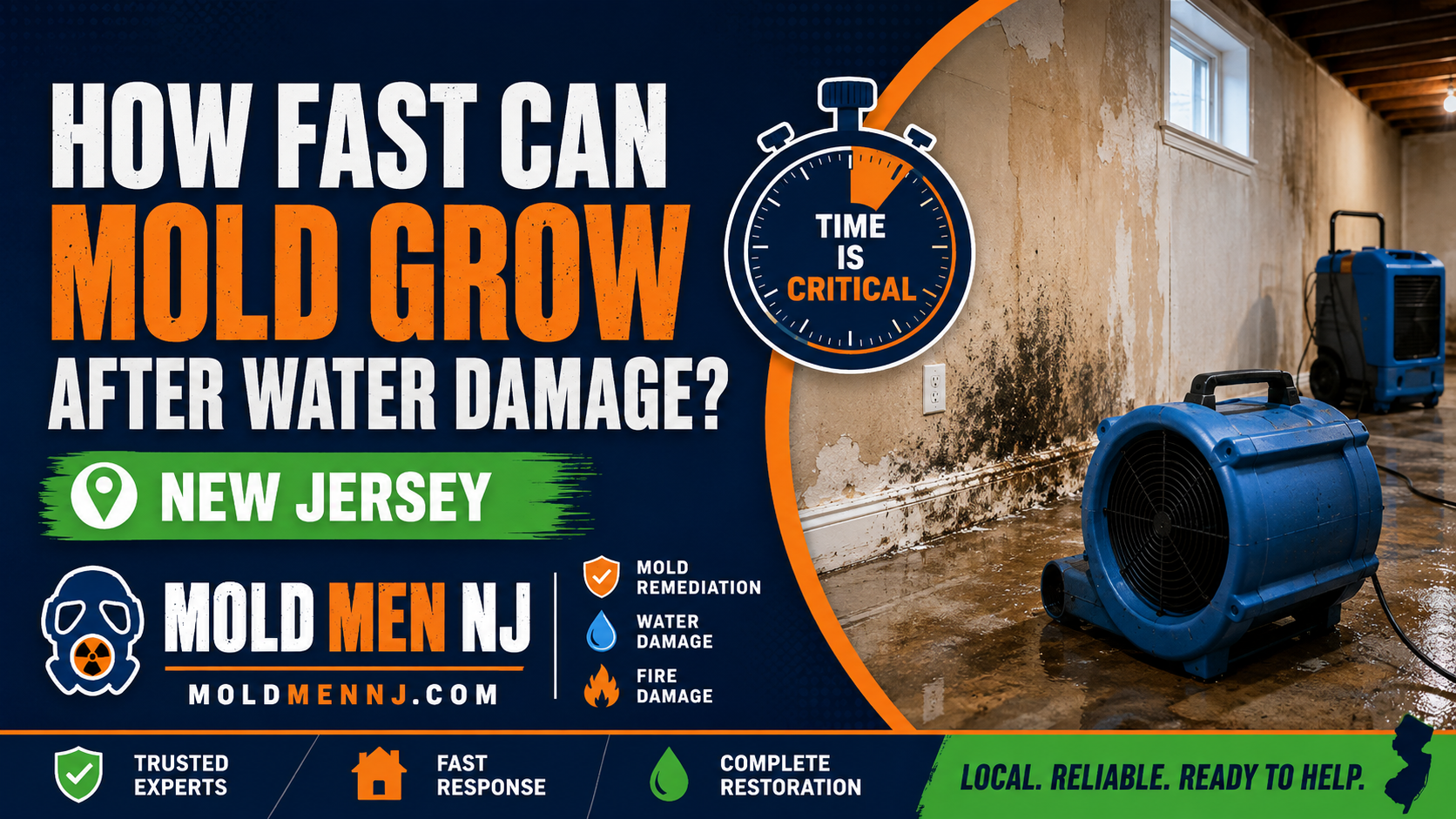
Under favorable conditions, mold may begin developing within approximately 24 to 48 hours after materials become wet. Visible growth may take longer to appear, but moisture can begin affecting drywall, insulation, wood, carpeting, and other porous materials before a homeowner notices an obvious problem.
For New Jersey properties with basements, older plumbing, seasonal humidity, roof wear, storm exposure, or previous water damage, fast action can help limit the extent of the damage.
Mold Men NJ helps residential and commercial property owners throughout New Jersey address water damage, identify moisture problems, and complete professional mold remediation when needed.
What Happens After Water Damage?
When water enters a building, it can spread beyond the area that appears wet. Water may travel underneath flooring, behind baseboards, inside walls, through insulation, or into lower levels of the property.
Even after the visible water is removed, building materials may remain damp. Drywall, wood, insulation, carpet padding, ceiling tiles, and other porous materials can absorb and hold moisture.
If these materials are not dried properly, the damp environment may support mold growth. The longer moisture remains, the greater the chance that additional areas may become affected.
How Quickly Can Mold Begin to Grow?
Mold may begin developing within approximately 24 to 48 hours when moisture, suitable temperatures, and an available food source are present.
This does not mean that every wet surface will immediately develop visible mold. Some materials dry quickly, while others trap moisture. Mold growth may also remain hidden behind a wall, underneath flooring, or inside insulation.
A homeowner may not notice visible discoloration or a musty odor until several days or weeks after the original water event. By that time, moisture may have spread beyond the originally affected area.
The safest approach is to begin water extraction and structural drying as soon as possible rather than waiting for visible mold to appear.
Why the First 24 to 48 Hours Matter
The first one or two days after water damage can be important because fast drying may reduce the chance of mold growth and prevent moisture from spreading farther into the building.
During this period, property owners should focus on stopping the water source, removing standing water, improving airflow, lowering humidity, and checking nearby materials for hidden moisture.
Simply drying the surface may not be enough. A wall, floor, or ceiling can feel dry on the outside while insulation, framing, subflooring, or other concealed materials remain damp.
If the water damage is extensive or involves hidden areas, professional drying equipment and moisture testing may be needed.
What Affects How Fast Mold Grows?
Several conditions can influence how quickly mold develops after water damage.
Amount of Water
A small spill that is cleaned and dried immediately may create less risk than a major plumbing leak, flood, or sump pump failure.
Type of Material
Porous materials such as drywall, carpet padding, insulation, ceiling tiles, cardboard, and untreated wood can absorb moisture and may be more difficult to dry.
Indoor Humidity
High humidity can slow the drying process. New Jersey’s humid summer weather may make basements, crawlspaces, bathrooms, and lower levels especially difficult to dry.
Temperature
Warm indoor conditions can support faster microbial growth when moisture is present.
Airflow
Closed rooms, wall cavities, closets, basements, and other poorly ventilated spaces may remain damp longer than open areas with good airflow.
Length of Exposure
Materials that remain wet for several days are more likely to develop mold than materials that are dried quickly.
Cleanliness of the Water
Water from a clean supply line is different from water involving sewage, flooding, or contaminated sources. Contaminated water may require additional safety precautions and professional cleanup.
Common Water-Damage Situations in New Jersey Homes
New Jersey properties may experience water damage from many different sources.
Basement Seepage
Heavy rain, foundation cracks, drainage problems, or sump pump failures can allow water to enter basements and affect walls, flooring, stored items, and finished materials.
Plumbing Leaks
Leaking pipes, supply lines, drains, toilets, and plumbing fixtures may release water behind walls or underneath cabinets before the problem is discovered.
Roof Leaks
Damaged shingles, flashing problems, clogged gutters, or storm damage may allow water to enter attics, ceilings, insulation, and wall cavities.
Appliance Failures
Washing machines, water heaters, refrigerators, dishwashers, and HVAC systems can leak and affect nearby flooring, drywall, and cabinetry.
Bathroom Moisture
Leaks near tubs, showers, toilets, vanities, and plumbing connections may remain hidden behind finished surfaces.
Window and Door Leaks
Damaged seals, flashing issues, and wind-driven rain may allow water to enter around windows and exterior doors.
Storm and Flood Damage
Heavy rain and severe weather can cause rapid water intrusion, especially in basements and lower levels.
Where Mold May Develop After Water Damage
Mold does not always grow in open or immediately visible areas. After water damage, moisture may become trapped in locations that are difficult to inspect.
Common areas may include:
Behind Drywall
Water may enter a wall cavity through a roof leak, plumbing leak, window leak, or flooding.
Under Flooring
Carpet padding, subflooring, laminate, and other flooring materials may hold moisture even when the surface appears dry.
Inside Insulation
Wet insulation may lose effectiveness and remain damp for an extended period.
Around Baseboards
Water can collect behind trim and affect the lower sections of walls.
Inside Cabinets
Leaks under sinks or near appliances may damage cabinets, walls, and flooring.
In Basements and Crawlspaces
Limited airflow and high humidity can slow drying and allow moisture-related problems to continue.
In Attics
Roof leaks and condensation may affect roof decking, framing, insulation, and ceiling materials.
Signs Mold May Be Developing After Water Damage
Visible mold is not always the first warning sign. Property owners should pay attention to changes that develop after a leak, flood, or other water event.
Possible signs include a musty odor, dark spotting, discoloration, peeling paint, bubbling drywall, warped flooring, damp materials, soft wood, stained ceilings, increased indoor humidity, or water marks that continue spreading.
An area should also be investigated if it remains damp several days after the water source was corrected.
Covering stains with paint or installing new materials before the structure is completely dry may trap moisture and allow the problem to continue behind the surface.
What New Jersey Property Owners Can Do First
1. Stop the Water Source
Repair the plumbing leak, roof problem, appliance failure, drainage issue, or other source before beginning restoration work.
2. Remove Standing Water
Standing water should be extracted as quickly as possible. Large amounts of water may require professional equipment.
3. Start Drying the Area
Use appropriate air movement and dehumidification to reduce moisture. Avoid spreading potentially contaminated dust or mold into unaffected areas.
4. Remove Wet Items
Move wet rugs, cardboard boxes, fabrics, furniture, and stored materials away from the affected area when it is safe to do so.
5. Check Hidden Areas
Inspect underneath flooring, behind baseboards, inside cabinets, around plumbing fixtures, and near wall or ceiling stains.
6. Monitor Humidity and Moisture
A surface may look dry while moisture remains inside the material. Professional moisture meters can help identify damp areas that are difficult to detect visually.
7. Avoid Painting Over Damage
Paint does not correct mold growth or trapped moisture. The source should be addressed and affected materials should be properly cleaned, removed, or dried before restoration.
8. Schedule a Professional Evaluation
Professional help may be appropriate when the affected area is large, water entered wall cavities, materials remained wet for several days, mold is visible, or the source of the moisture is unclear.
Can Mold Grow Before the Area Looks Wet?
Yes. Moisture can be present inside building materials without creating an obvious wet surface.
For example, a slow pipe leak may keep the back of drywall damp while the painted side appears normal. Water underneath flooring may also remain hidden until the material begins to warp, discolor, or produce an odor.
This is why moisture testing can be important after leaks involving walls, ceilings, floors, basements, or other concealed areas.
Can Drying the Area Stop Mold Growth?
Drying the area quickly can reduce the chance of mold developing, but drying alone may not correct an existing mold problem.
If mold has already developed, affected materials may need to be cleaned or removed. The correct response depends on the materials involved, the size of the affected area, the water source, and how long the materials remained wet.
The moisture source must also be corrected. Mold may return when leaks, humidity, condensation, or drainage problems continue.
Why Professional Help Matters
Water damage and mold are often more extensive than they appear on the surface.
A professional evaluation may help identify hidden moisture, affected building materials, the source of the water, the extent of the damage, and whether containment or remediation is needed.
Professional water-damage restoration may involve water extraction, moisture testing, structural drying, dehumidification, removal of damaged materials, cleaning, and continued monitoring.
When mold is present, remediation may also require containment, air filtration, careful material removal, HEPA cleaning, and verification that the moisture problem has been corrected.
How Long Does Mold Remediation Take?
If mold develops after water damage, the remediation timeline depends on the size of the affected area, the location of the mold, the amount of material involved, drying conditions, and whether repairs are needed.
A small and accessible area may be completed relatively quickly. Larger projects involving wall cavities, flooring, insulation, basements, crawlspaces, or extensive water damage may require additional time.
Mold Men NJ created a video explaining the factors that affect the mold-remediation timeline in New Jersey.
Why Local Experience Matters in New Jersey
Local experience matters because New Jersey properties face changing weather, humid summers, heavy rain, snow, aging foundations, finished basements, coastal conditions in some areas, and older plumbing or roofing systems.
In North Jersey communities such as Kinnelon, Wayne, Parsippany, Montville, Butler, Pequannock, and nearby areas, homes may have below-grade spaces, older construction materials, drainage concerns, or a history of water intrusion.
A company familiar with New Jersey properties can recognize common moisture patterns and help determine whether the problem may be connected to storms, foundation seepage, plumbing, roofing, humidity, condensation, or ventilation.
FAQ
How fast can mold grow after water damage?
Mold may begin developing within approximately 24 to 48 hours when wet materials, suitable temperatures, and humidity are present. The exact timeline varies depending on the conditions and materials involved.
Will every water leak cause mold?
No. A leak does not automatically mean mold will grow. The risk may be reduced when the water source is corrected and affected materials are cleaned and dried quickly.
Can mold grow behind drywall after a leak?
Yes. Water may become trapped inside a wall cavity and affect drywall, insulation, and wood framing. Mold growth may remain hidden until an odor, stain, or other sign develops.
How do I know whether materials are completely dry?
A surface may feel dry while moisture remains inside it. Moisture meters and professional inspections can help determine whether walls, floors, ceilings, or other materials are still damp.
Should wet drywall always be removed?
Not every situation is the same. The decision depends on how wet the drywall became, how long it remained wet, the water source, whether mold is present, and whether the material can be dried safely.
When should I call a mold or water-damage professional?
Consider professional help when water damage is extensive, the area remained wet for more than a day or two, mold is visible, a musty odor develops, moisture entered hidden spaces, or the affected materials are not drying properly.
Key Takeaway
Mold may begin developing within approximately 24 to 48 hours after water damage when conditions are favorable. The exact timeline depends on the materials involved, humidity, temperature, airflow, and how quickly the area is dried.
New Jersey property owners should stop the water source, begin drying as quickly as possible, inspect hidden areas, and avoid closing walls or installing new materials before the structure is dry. Fast action can help limit damage and reduce the chance that a small water problem becomes a larger mold-remediation project.
About Mold Men NJ
Mold Men NJ is a veteran-owned, licensed, certified, and insured company serving residential and commercial customers throughout New Jersey. Services include mold remediation, water damage restoration, fire restoration, and lead remediation.
Contact Mold Men NJ
Mold Men NJ
36 Banta Rd, Kinnelon NJ 07405
(201) 729-3220
moldmennewjersey@gmail.com
https://moldmennj.com/contact/
Disclaimer: This article is informational only. Mold and indoor moisture conditions may affect people differently. For health concerns, contact a licensed healthcare provider. For mold, moisture, or property concerns, contact Mold Men NJ.
