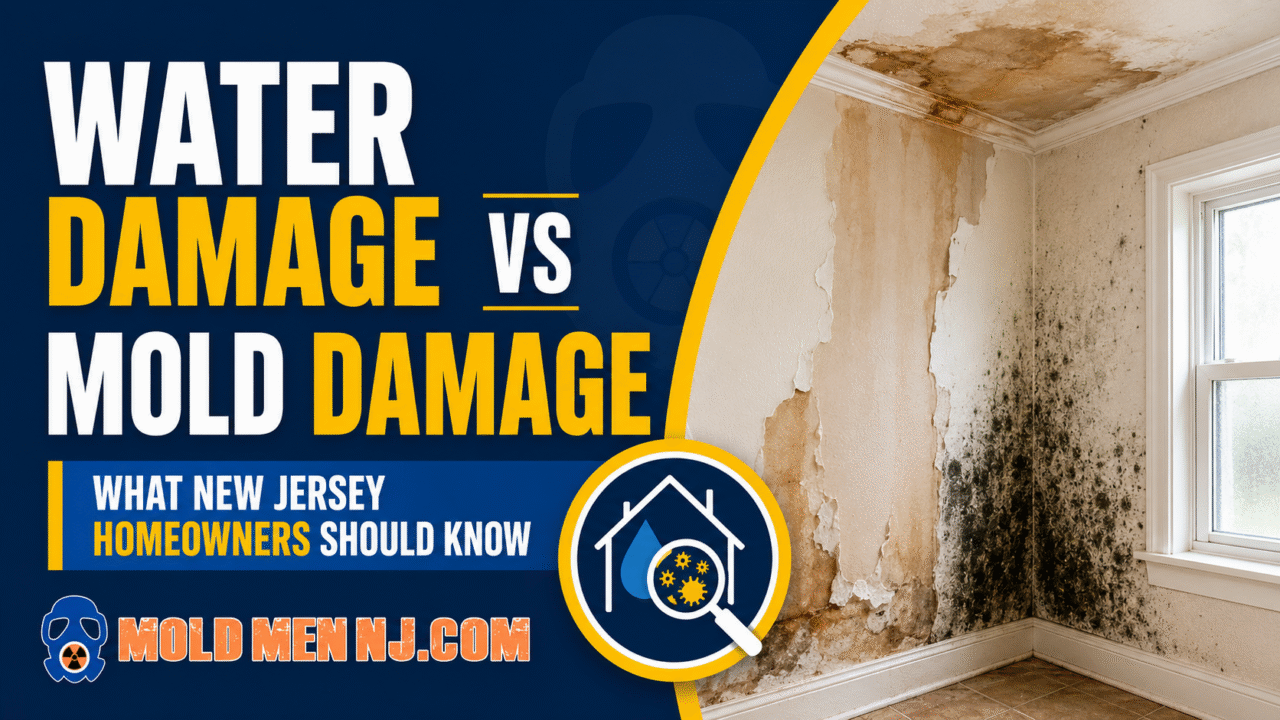
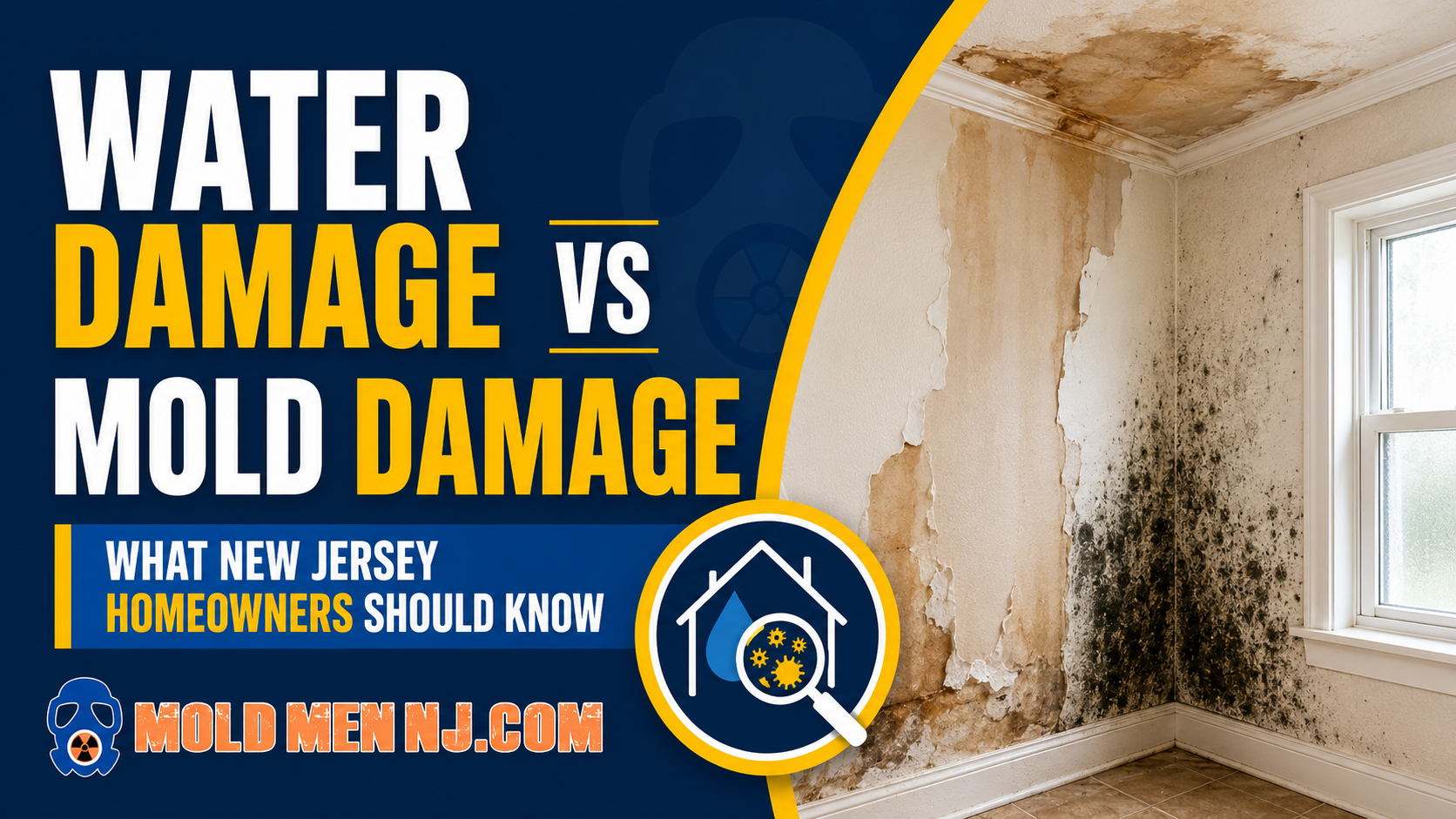
Water Damage vs Mold Damage: What New Jersey Homeowners Should Know
Many homeowners notice a stain on the ceiling, warped flooring, peeling paint, or a musty smell and ask the same question: is this water damage or mold damage?
The truth is that water damage and mold damage are often connected, but they are not the same problem. Water damage usually happens first. If moisture remains untreated, mold may begin growing later.
Understanding the difference of water damage vs mold damage can help New Jersey homeowners act faster, prevent larger repairs, and choose the right professional service.
Mold Men NJ helps residential and commercial property owners throughout New Jersey handle both water damage restoration and mold remediation after leaks, flooding, and moisture problems.
What Is Water Damage?
Water damage happens when unwanted water enters or affects building materials. This can occur suddenly or slowly over time.
Common causes include:
- Burst pipes
- Roof leaks
- Basement flooding
- Appliance leaks
- Toilet overflows
- Storm intrusion
- Foundation seepage
- Condensation
Water damage can affect:
- Drywall
- Flooring
- Wood framing
- Insulation
- Cabinets
- Furniture
- Personal belongings
What Is Mold Damage?
Mold damage happens when moisture remains long enough for mold to grow on materials. Mold may spread across surfaces or develop in hidden spaces like walls, attics, crawlspaces, or under flooring.
Mold often affects:
- Drywall paper backing
- Wood surfaces
- Carpet padding
- Ceiling materials
- Stored cardboard items
- Insulation
- Trim and baseboards
According to United States Environmental Protection Agency guidance, moisture control is one of the most important parts of preventing indoor mold growth.
The Biggest Difference Between Water Damage and Mold Damage
Water Damage Is the Moisture Event
Leaks, flooding, seepage, or spills introduce water into the property.
Mold Damage Is the Result of Ongoing Moisture
If materials stay damp long enough, mold may begin developing.
In simple terms:
Water damage can happen without mold.
Mold usually requires moisture first.
Signs of Water Damage
Common warning signs include:
- Ceiling stains
- Bubbling paint
- Warped wood
- Soft drywall
- Wet carpet
- Standing water
- Peeling trim
- Swollen cabinets
These issues often appear soon after leaks or flooding.
Signs of Mold Damage
Common warning signs include:
- Musty odors
- Visible dark spotting
- Repeated mold returning after cleaning
- Damp smells in hidden areas
- Discoloration near leaks
- Allergy-like symptoms indoors
- Growth behind stored items
Can Water Damage Turn Into Mold Damage?
Yes. If wet materials are not dried properly, mold may begin growing later.
Examples include:
- Wet drywall after a roof leak
- Damp carpet after basement flooding
- Moisture under laminate flooring
- Hidden wall leaks behind cabinets
- Bathroom ceiling moisture from poor ventilation
That is why fast drying matters.
How Fast Can Mold Develop After Water Damage?
Growth may begin relatively quickly when moisture remains trapped and airflow is poor. The longer materials stay wet, the greater the risk of mold spreading.
Common New Jersey Causes of Water and Mold Damage
Homes in New Jersey often deal with:
Heavy Rainstorms
Water intrusion through roofs, windows, or basements.
Snow Melt
Groundwater pressure and seepage in late winter or spring.
Humid Summers
High moisture levels may worsen hidden damp areas.
Older Homes
Aging plumbing, roofs, drainage systems, or ventilation issues.
Sump Pump Failures
Basement flooding is a common trigger for both water and mold damage.
Which Problem Should Be Addressed First?
Usually, the moisture source should be corrected first.
That may mean:
- Fixing a roof leak
- Repairing plumbing
- Stopping seepage
- Removing standing water
- Drying wet materials
If moisture continues, mold may keep returning.
Do You Need Water Damage Restoration or Mold Remediation?
That depends on the situation.
Water Damage Restoration May Be Best When:
- Flooding just happened
- Materials are wet
- Standing water is present
- Drying is urgent
- No visible mold yet
Mold Remediation May Be Best When:
- Musty odors remain
- Visible mold is present
- Hidden moisture existed for some time
- Mold keeps returning
- Materials show mold growth
Sometimes Both Services Are Needed
Flooding or long-term leaks may require drying first, then mold remediation.
Why Delaying Can Increase Costs
Waiting may lead to:
- More damaged drywall
- Floor replacement
- Hidden wall mold
- Structural damage
- Larger remediation areas
- More expensive restoration later
Early action often saves money.
Why Local Experience Matters in New Jersey
Homes in Kinnelon, Wayne, Parsippany, Montville, Butler, Pequannock, and surrounding North Jersey communities often deal with:
- Basement seepage
- Storm runoff
- Humidity shifts
- Roof wear
- Winter pipe issues
- Older construction materials
A local company familiar with these regional patterns can often identify causes faster.
FAQ
What is the difference between water damage and mold damage?
Water damage is caused by unwanted moisture. Mold damage happens when moisture remains long enough for mold growth.
Can water damage cause mold?
Yes. If wet materials are not dried properly, mold may develop.
Is a ceiling stain always mold?
Not always. It may be water staining, but professional evaluation can determine if mold is also present.
Do I need mold remediation after a leak?
Not always. It depends on how long materials stayed wet and whether mold developed.
Which is more serious, water damage or mold damage?
Both can become serious if ignored. Water damage often leads to mold when untreated.
Key Takeaway
Water damage vs mold damage is often a timeline issue. Water usually comes first, and mold may follow if moisture remains. Acting quickly after leaks or flooding is the best way to protect your home and reduce repair costs.
About Mold Men NJ
Mold Men NJ is a veteran-owned, licensed, certified, and insured company serving residential and commercial customers throughout New Jersey. Services include mold remediation, water damage restoration, fire restoration, and lead remediation.
Contact Mold Men NJ
Mold Men NJ
36 Banta Rd, Kinnelon NJ 07405
(201) 729-3220
moldmennewjersey@gmail.com
Disclaimer: Mold may affect people differently. This article is informational only. For health concerns, contact a healthcare provider. For mold concerns, contact Mold Men NJ.
