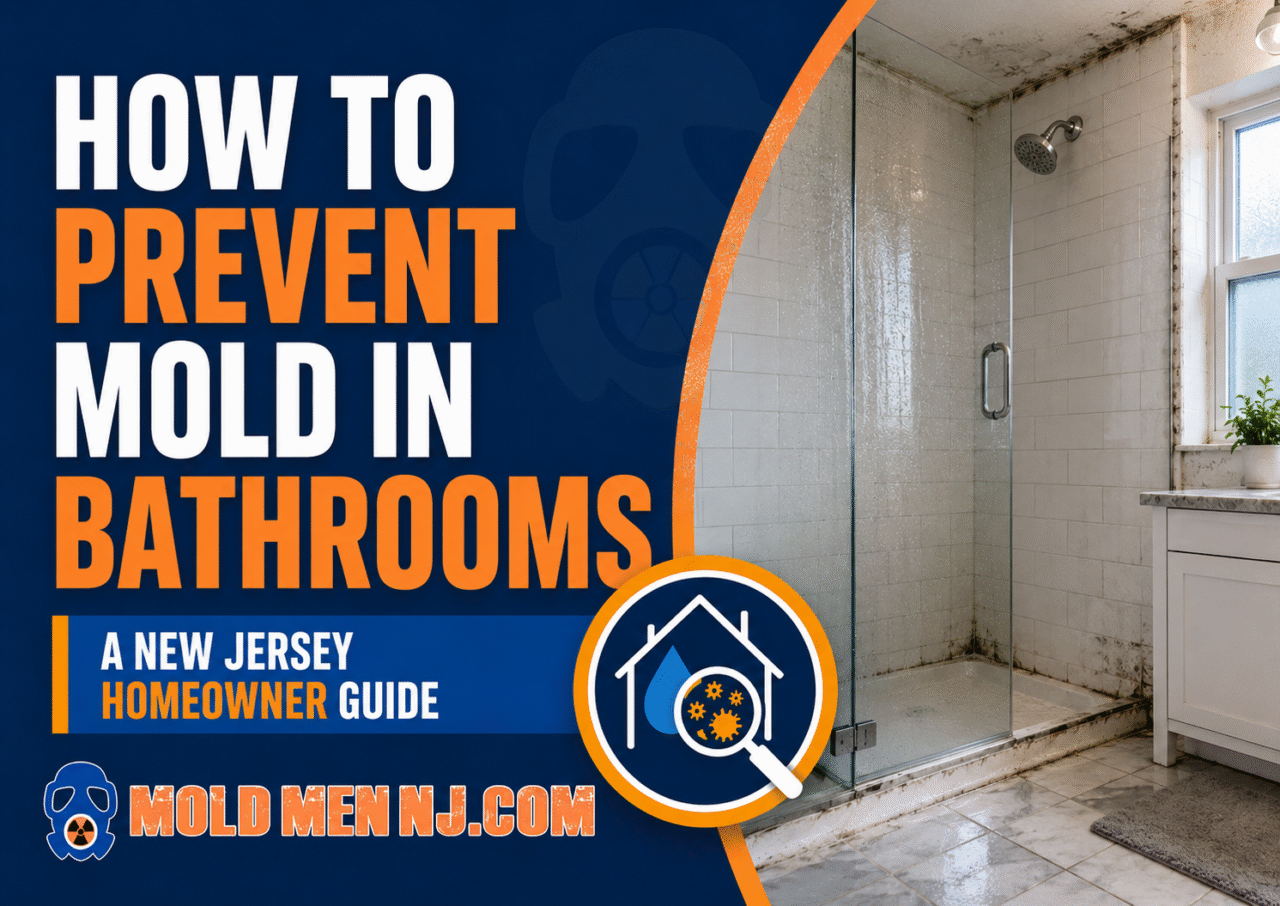
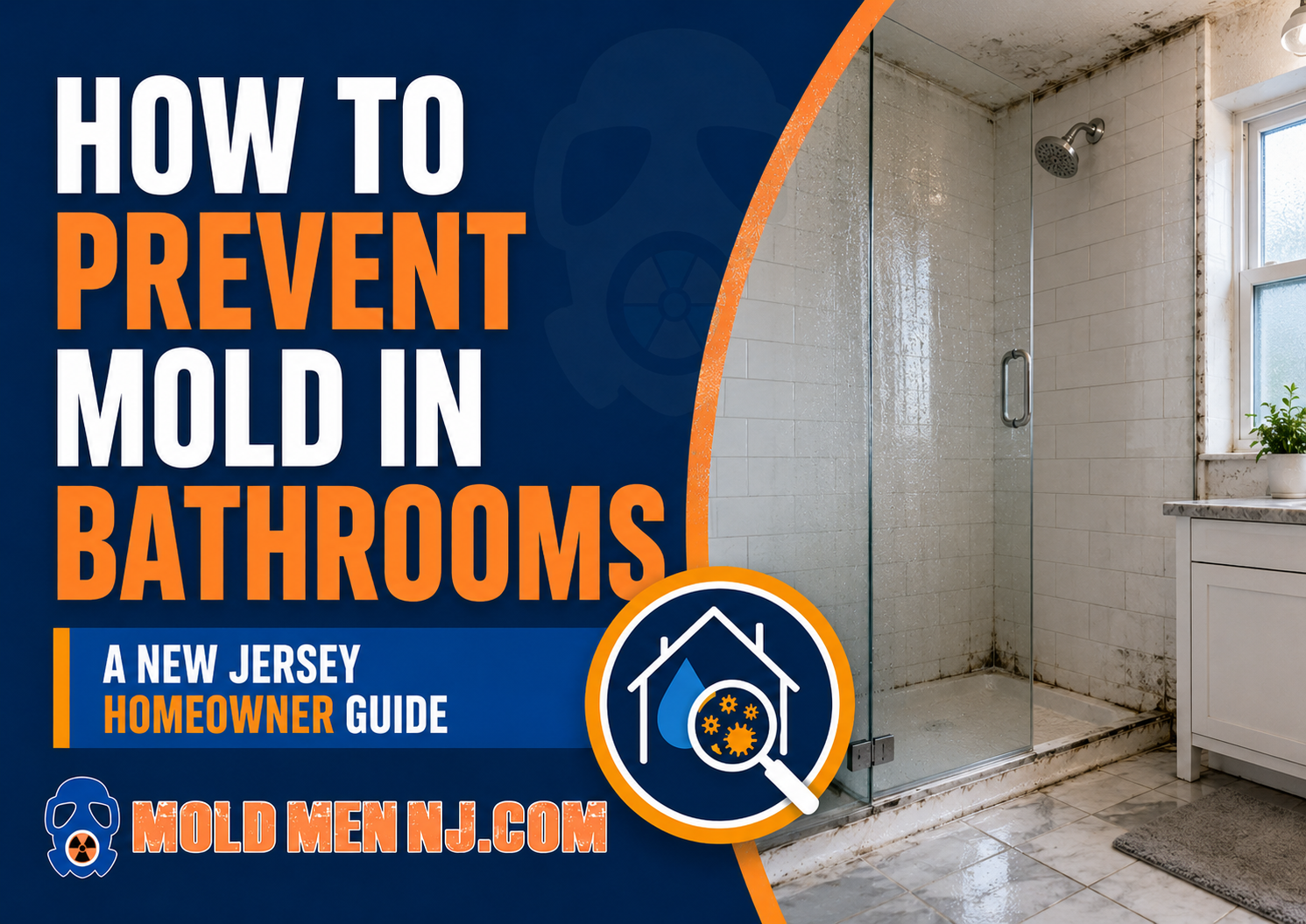
How to Prevent Mold in Bathrooms: A New Jersey Homeowner Guide
Bathrooms are one of the most common places in a home for mold to develop. Warm steam, daily moisture, wet surfaces, and limited airflow can create the ideal environment for recurring mold problems.
Many homeowners only focus on cleaning visible mold after it appears. A better strategy is learning how to prevent mold in bathrooms before it becomes a larger issue.
For New Jersey homeowners, bathroom mold prevention is especially important because humid summers, winter condensation, and older ventilation systems can make moisture harder to control.
Mold Men NJ helps residential and commercial property owners throughout New Jersey identify moisture issues, correct mold problems, and restore safer indoor environments.
Why Bathrooms Are So Prone to Mold
Bathrooms create moisture every day through:
- Showers
- Baths
- Sinks
- Wet towels
- Steam
- Humidity buildup
When that moisture stays on ceilings, grout, caulk, drywall, wood trim, or behind walls, mold may begin to grow.
According to United States Environmental Protection Agency guidance, controlling moisture is one of the most important ways to prevent indoor mold growth.
Best Ways to Prevent Mold in Bathrooms
1. Use the Exhaust Fan Every Time
An exhaust fan is one of the most effective tools for bathroom mold prevention.
Run the fan:
- During showers
- During baths
- For additional time afterward
This helps remove steam and humidity before moisture settles on surfaces.
2. Keep the Bathroom Door Open After Use
If privacy allows, leaving the door open after showers can improve airflow and speed drying.
3. Dry Wet Surfaces
Use a towel or squeegee on:
- Shower walls
- Glass doors
- Counters
- Bathtub edges
- Wet floors
Less standing moisture means fewer mold opportunities.
4. Fix Leaks Quickly
Even small leaks can feed mold growth over time.
Watch for leaks around:
- Toilets
- Faucets
- Shower valves
- Sink drains
- Plumbing below vanities
5. Replace Old Caulk
Cracked or worn caulk traps moisture and may allow water behind walls or tubs.
Fresh caulk can help seal vulnerable areas.
6. Clean Grout Regularly
Tile grout can hold moisture and soap residue. Regular cleaning helps reduce buildup that supports mold.
7. Reduce Humidity in the Home
If the entire house feels humid, bathrooms may stay damp longer.
Use air conditioning, dehumidifiers, or improved ventilation during humid New Jersey summers.
8. Wash Bath Mats and Towels Often
Damp fabrics can contribute to moisture and odors in small bathrooms.
9. Keep Shower Curtains Clean and Dry
Curtains and liners often hold moisture and can develop mildew if ignored.
Signs Bathroom Mold May Be Starting
Watch for early warning signs such as:
- Musty smells
- Dark spotting on caulk
- Ceiling discoloration
- Peeling paint
- Damp corners
- Repeated condensation
- Mold returning after cleaning
Addressing these issues early can prevent larger repairs later.
Common Mold Areas in Bathrooms
Bathroom Ceiling
Often caused by steam and poor ventilation.
Around Shower Caulk
Moisture collects in seams and corners.
Tile Grout
Porous grout may hold moisture.
Under Vanities
Small plumbing leaks can go unnoticed.
Around Windows
Winter condensation may create damp surfaces.
Why New Jersey Bathrooms Need Extra Attention
Homes in Kinnelon, Wayne, Parsippany, Montville, Butler, Pequannock, and surrounding North Jersey communities often deal with:
- Humid summers
- Cold winters
- Condensation on windows
- Older bathroom fans
- Smaller enclosed bathrooms
- Aging plumbing systems
These local conditions can increase recurring bathroom mold risk.
Can Mold Keep Coming Back After Cleaning?
Yes. Many homeowners clean visible mold but do not fix the moisture source.
If humidity, leaks, or hidden dampness remain, mold may return quickly.
When Professional Help May Be Smart
Consider professional help when:
- Mold keeps returning
- Ceiling stains appear
- Walls feel soft
- Musty odors continue
- Large areas are affected
- Hidden leaks are suspected
Why Professional Evaluation Helps
A professional evaluation may identify:
- Ventilation issues
- Hidden plumbing leaks
- Moisture behind walls
- Ceiling damage
- Recurring humidity problems
Fixing the cause is often more important than cleaning the symptom.
FAQ
How do I prevent mold in my bathroom?
Use the exhaust fan, reduce humidity, dry wet surfaces, and fix leaks quickly.
Why does mold keep coming back in my bathroom?
Usually because moisture, humidity, or hidden leaks were never fully corrected.
Does an exhaust fan really help?
Yes. Proper ventilation is one of the best mold prevention steps.
Should I replace bathroom caulk?
Yes, especially if it is cracked, loose, or mold stained.
Is bathroom ceiling mold common?
Yes. Steam and poor ventilation often cause ceiling mold.
Key Takeaway
How to prevent mold in bathrooms starts with moisture control. Improve ventilation, dry surfaces, fix leaks quickly, and act early when warning signs appear. Preventing humidity buildup is often the best long-term solution.
About Mold Men NJ
Mold Men NJ is a veteran-owned, licensed, certified, and insured company serving residential and commercial customers throughout New Jersey. Services include mold remediation, water damage restoration, fire restoration, and lead remediation.
Contact Mold Men NJ
Mold Men NJ
36 Banta Rd, Kinnelon NJ 07405
(201) 729-3220
moldmennewjersey@gmail.com
Disclaimer: Mold may affect people differently. This article is informational only. For health concerns, contact a healthcare provider. For mold concerns, contact Mold Men NJ.
