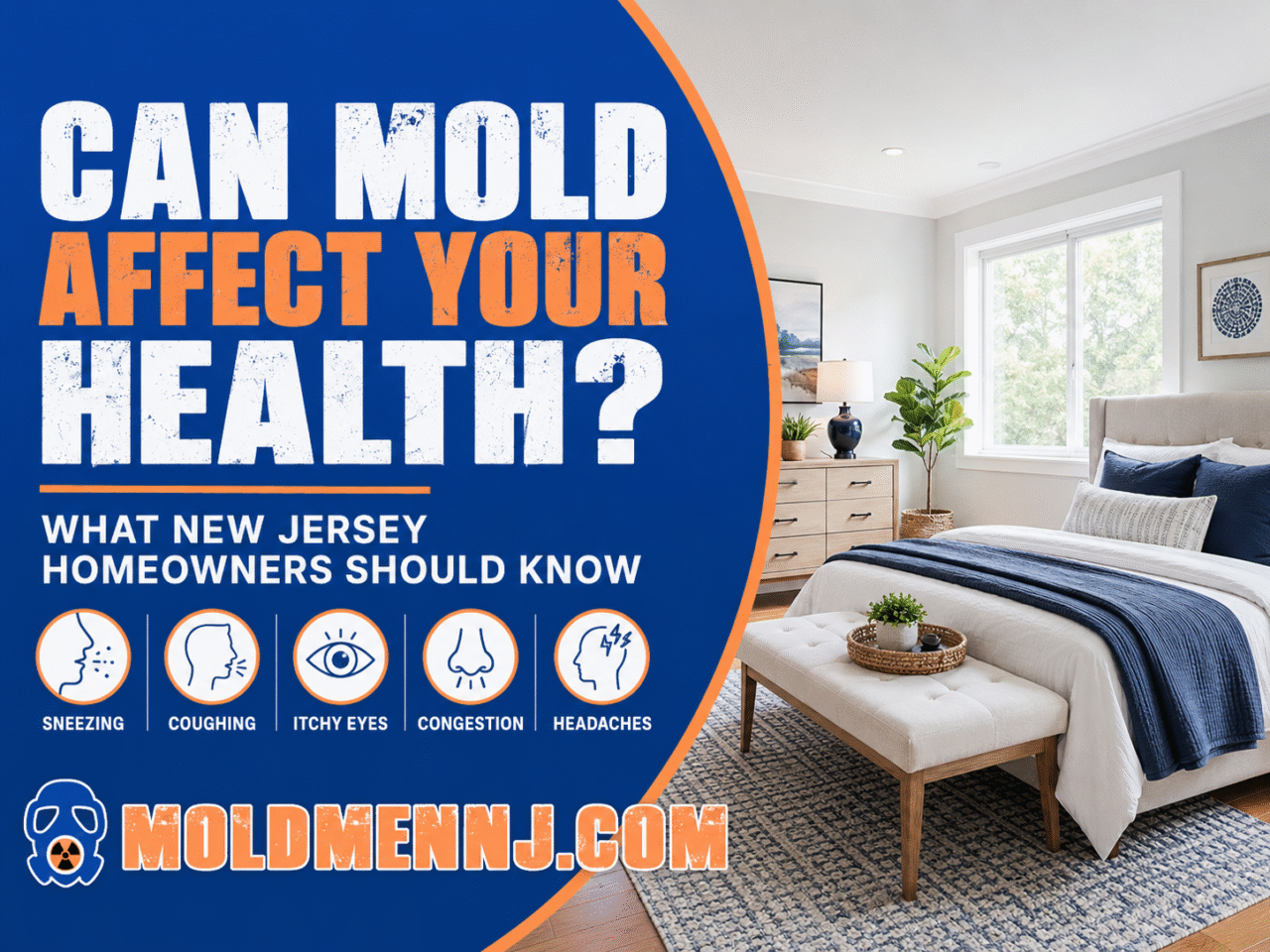
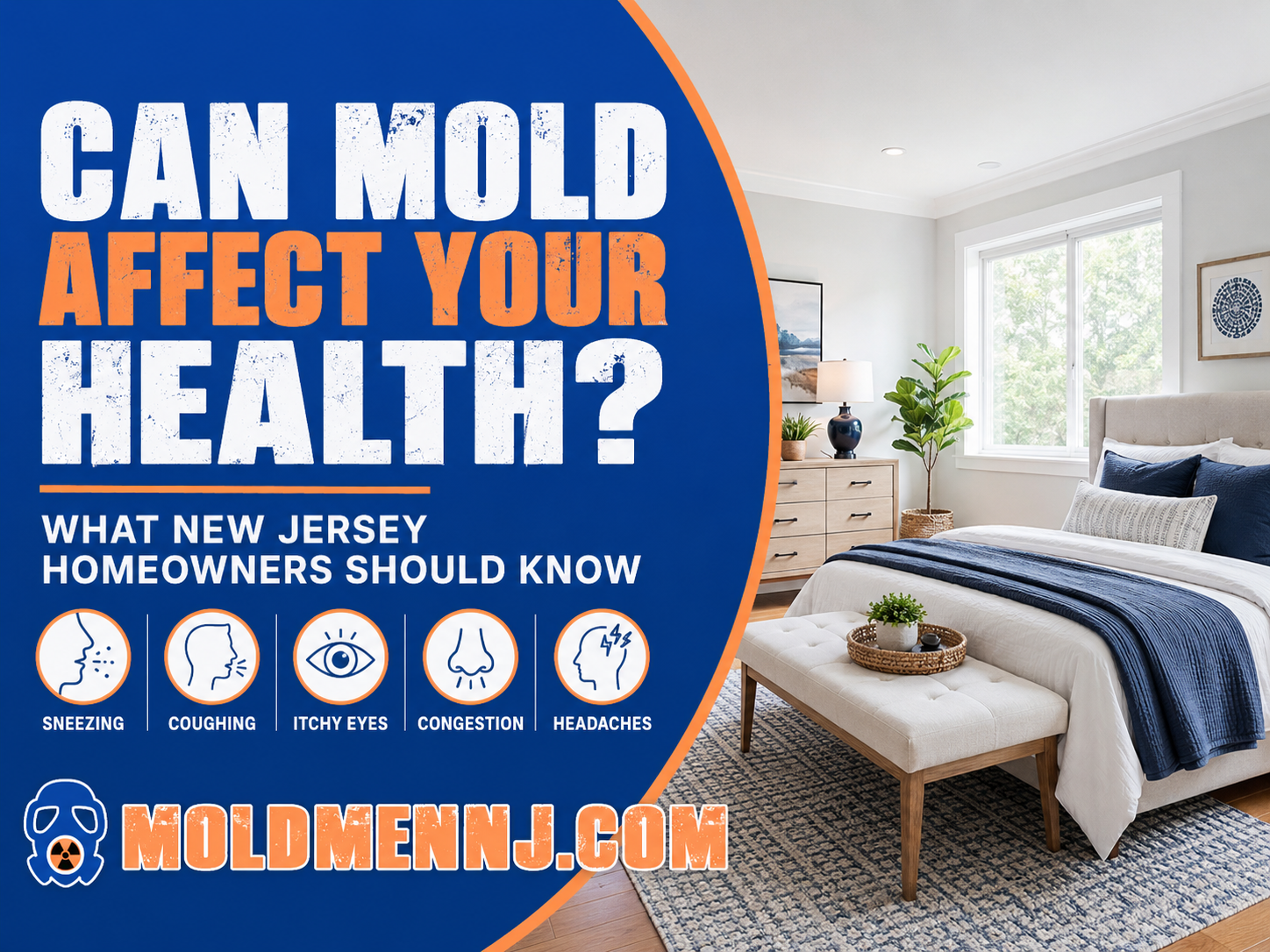
Can Mold Affect Your Health? What New Jersey Homeowners Should Know
Many homeowners ask the same question after noticing a musty smell, water stain, or damp basement: can mold in your home affect your health?
For many New Jersey families, the concern is real and understandable. Mold inside a home can impact indoor air quality and may cause irritation or discomfort for some individuals. While reactions vary from person to person, visible mold growth or ongoing moisture problems should never be ignored, especially when children, older adults, or people with allergies or asthma live in the home.
Because New Jersey experiences humid summers, heavy rain, basement moisture, winter condensation, and seasonal storms, homes across the state often face conditions where mold can grow if water issues are not handled quickly.
Mold Men NJ helps homeowners and businesses throughout New Jersey identify mold issues, correct moisture sources, and restore healthier indoor environments.
Can Mold Affect Your Health?
Mold reproduces by releasing microscopic spores into the air. Outdoors, mold is common and natural. Indoors, mold becomes a problem when it grows on drywall, wood, insulation, carpet, ceiling materials, or furniture due to moisture.
For some people, mold exposure in home environments may contribute to:
- Sneezing
- Nasal congestion
- Coughing
- Throat irritation
- Watery or itchy eyes
- Skin irritation
- Headaches for some individuals
- Worsened allergy symptoms
- Increased discomfort for people with asthma
Not everyone reacts the same way. Some people may notice symptoms quickly, while others may notice no issues at all.
According to Centers for Disease Control and Prevention and United States Environmental Protection Agency guidance, moisture control and prompt cleanup are important parts of reducing indoor mold problems.
Who May Be More Sensitive to Mold?
Children
Children often spend more time indoors and may be more affected by poor indoor air quality. Many parents become concerned when coughing or irritation seems worse inside the home.
Older Adults
Older adults may already have respiratory sensitivities that make indoor environmental conditions more important.
People With Allergies or Asthma
Those with asthma or allergies may notice symptoms become more noticeable in damp indoor spaces.
Individuals With Weakened Immune Systems
People managing certain health conditions may prefer to address mold concerns quickly.
Common Hidden Mold Signs in a Home
Mold is not always visible. In many homes, it grows behind walls, under flooring, inside basements, attics, or crawlspaces.
Watch for these hidden mold warning signs:
- Musty or earthy odors
- Water stains on ceilings or drywall
- Bubbling paint or peeling surfaces
- Warped flooring or trim
- Condensation on pipes or windows
- Previous leaks or flooding
- Persistent dampness
- Allergy-like symptoms that improve when leaving home
If you notice multiple signs, it may be time for a professional inspection.
Why Mold Is Common in New Jersey Homes
New Jersey homes face several local conditions that can lead to mold growth.
Humid Summers
Warm, humid air can create condensation and moisture buildup.
Finished Basements
Finished basements are common in North Jersey and may hide water intrusion behind walls or flooring.
Winter Condensation
Cold weather and indoor heating can create condensation on windows, pipes, and poorly insulated surfaces.
Storm Damage
Heavy rain and summer storms can cause roof leaks, flooding, or sump pump failures.
Older Housing Stock
Some older homes may have aging roofs, drainage issues, or outdated ventilation systems.
Can Black Mold Affect Your Health?
Many homeowners search online for black mold health concerns. The truth is that color alone does not determine severity. Different types of mold can appear dark or black.
What matters more is:
- How much mold is present
- Whether moisture is ongoing
- Whether the mold is hidden in building materials
- How long the issue has existed
- Whether anyone in the property is sensitive to exposure
Any large or spreading mold issue should be professionally evaluated.
What To Do If You Suspect Mold in Your Home
1. Identify the Moisture Source
Mold needs moisture to grow. Look for plumbing leaks, roof leaks, condensation, flooding, or humidity problems.
2. Dry Wet Materials Quickly
Fast drying helps reduce the chance of continued mold growth.
3. Improve Airflow
Use bathroom fans, exhaust systems, and dehumidifiers where needed.
4. Avoid Disturbing Large Areas
Scrubbing or opening walls may spread spores into other areas of the property.
5. Schedule a Professional Evaluation
A qualified inspection can determine the extent of the problem and the safest next steps.
Mold Inspection vs Mold Remediation
Many homeowners ask whether they need an inspection or full remediation.
Mold Inspection
Best when:
- You smell mold but cannot see it
- There was past water damage
- You want to locate hidden growth
- You are buying or selling a home
Mold Remediation
Best when:
- Visible mold is present
- Materials are damaged
- Growth is spreading
- Moisture problems continue
Why Professional Mold Remediation Matters
Small surface spotting may be manageable in limited situations, but widespread or hidden mold often requires professional handling.
Proper remediation may include:
- Full inspection and moisture assessment
- Containment of affected areas
- Safe removal of damaged materials
- HEPA air filtration
- Drying and humidity control
- Surface treatment where appropriate
- Final review and prevention guidance
Without correcting the moisture source, mold may return.
Why Local Experience Helps
Homes in Kinnelon, Wayne, Parsippany, Montville, Butler, Pequannock, and surrounding North Jersey communities often face basement dampness, grading issues, roof wear, or seasonal humidity changes.
Working with a local New Jersey company can help identify common regional causes faster and recommend practical solutions.
What Homeowners Can Do Today
If you are worried about mold right now:
- Check under sinks and around appliances
- Inspect basement corners and storage areas
- Look for stains near windows or ceilings
- Run bathroom fans after showers
- Use a dehumidifier in damp rooms
- Address leaks immediately
- Schedule an inspection if odors persist
FAQ
Can mold in your home affect your health?
Yes, mold may affect some individuals, especially those with allergies, asthma, or sensitivities.
Can mold make children sick?
Some children may be more sensitive to mold exposure and indoor air quality issues.
Can mold grow behind walls?
Yes. Mold often grows in hidden areas after plumbing leaks or moisture intrusion.
Should I remove the mold myself?
Small isolated areas may be manageable in some cases, but widespread or hidden mold often benefits from professional remediation.
Can mold come back after removal?
Yes. If the source of moisture is not corrected, mold can return.
How do I know if I need a mold inspection?
If you notice musty odors, past flooding, water stains, or suspect hidden growth, an inspection may help.
Key Takeaway
Can mold in your home affect your health? It can for some people, especially when moisture issues continue and mold growth is widespread. The best response is to address water problems quickly, improve drying and ventilation, and seek professional help when mold is hidden or spreading.
About Mold Men NJ
Mold Men NJ is a veteran-owned, licensed, certified, and insured company serving residential and commercial customers throughout New Jersey. Services include mold remediation, water damage restoration, fire restoration, and lead remediation.
Contact Mold Men NJ
Mold Men NJ
36 Banta Rd, Kinnelon NJ 07405
(201) 729-3220
moldmennewjersey@gmail.com
https://moldmennj.com/contact/
Disclaimer: Mold may affect people differently. This article is informational only. For health concerns, contact a healthcare provider. For mold concerns, contact Mold Men NJ.
