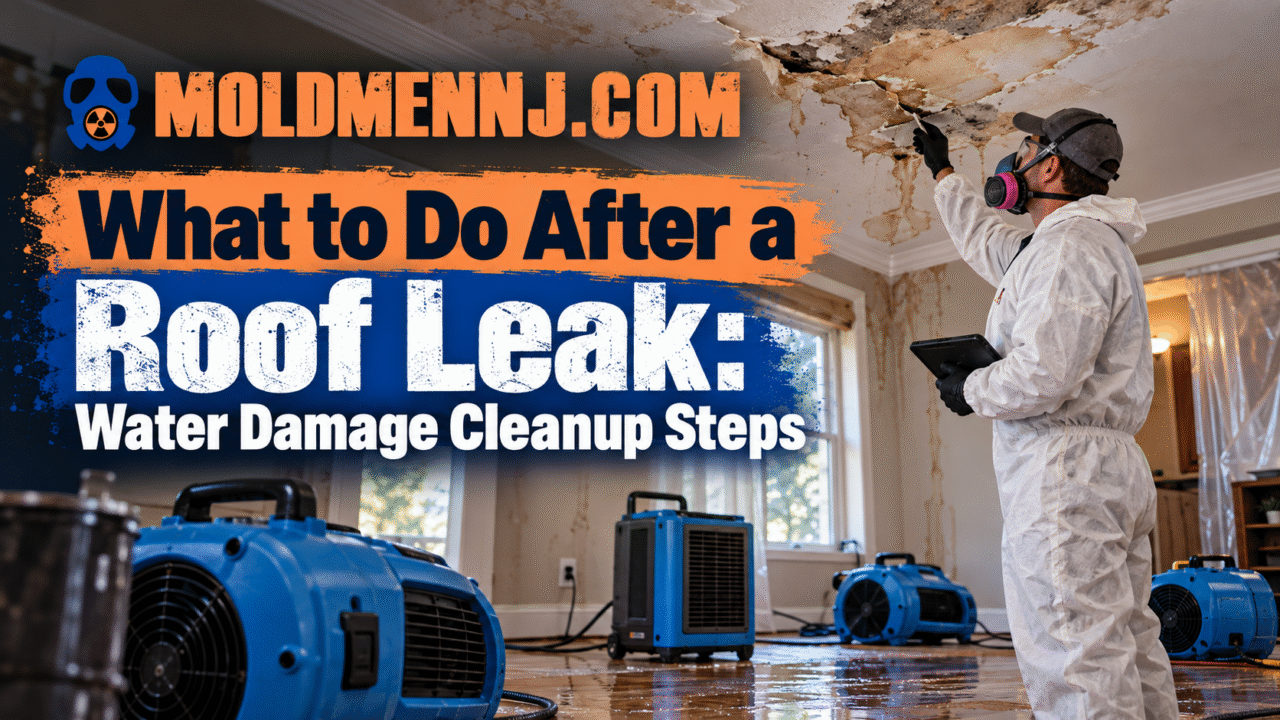
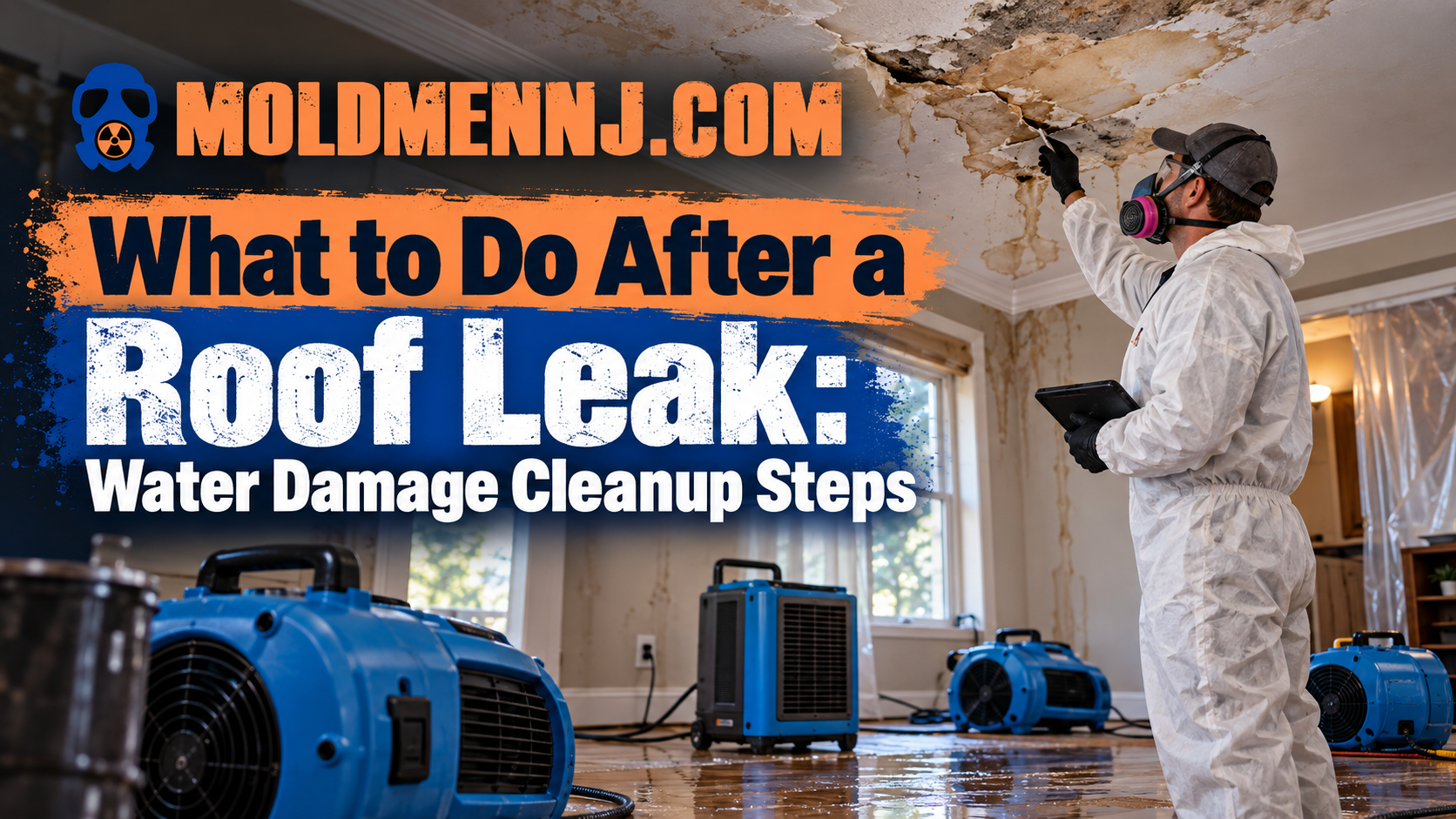
What to Do After a Roof Leak: Water Damage Cleanup Steps
A roof leak can cause much more than a visible stain on the ceiling. Water may travel through attic insulation, drywall, framing, wall cavities, flooring, and other materials before the full extent of the damage becomes obvious.
Whether the leak is caused by damaged shingles, flashing problems, storm damage, ice, or another roofing issue, acting quickly can help limit additional damage. The most important steps are stopping the water intrusion, identifying how far the moisture traveled, removing damaged materials when needed, and properly drying the affected areas.
1. Control the Source of the Roof Leak
The first priority is preventing additional water from entering the property.
If the source of the leak is known, contact an appropriate roofing professional to inspect and repair the damaged area. Temporary measures may sometimes be needed until permanent repairs can be completed.
Do not climb onto a wet, damaged, or unsafe roof yourself. Roof leaks that occur during storms, high winds, or freezing conditions can create additional hazards.
Interior cleanup can begin once the area is safe, but drying the inside of a property will not solve the problem if water is continuing to enter through the roof.
2. Check for Immediate Safety Hazards
Water can create hazards when it reaches electrical wiring, outlets, light fixtures, appliances, or an electrical panel.
If water is dripping through a ceiling fixture or has reached electrical components, avoid the affected area until it has been evaluated and made safe.
Sagging ceilings can also be dangerous. Water trapped above drywall or ceiling materials can add significant weight and may cause sections to collapse.
Do not stand directly beneath a visibly sagging or heavily saturated ceiling.
3. Document the Water Damage
Before significant cleanup or demolition begins, take photographs and videos of the affected areas when it is safe to do so.
Document visible conditions such as:
- Ceiling stains
- Wet drywall
- Damaged insulation
- Water on floors
- Affected furniture or belongings
- Roof or attic damage
- Peeling or bubbling paint
- Warped materials
If you plan to contact your insurance company, keep records of emergency services, roofing repairs, water extraction, drying, demolition, and restoration work.
Insurance coverage varies depending on the policy and the cause of the roof leak, so property owners should verify coverage directly with their insurer.
4. Determine How Far the Water Traveled
The visible stain is not always the full extent of roof leak water damage.
Water may travel along rafters, framing, pipes, wiring, or other structural components before appearing somewhere inside the home.
Moisture may be present:
- In attic insulation
- Behind drywall
- Above ceilings
- Inside wall cavities
- Around windows
- Beneath flooring
- Around framing
- In adjoining rooms
This is why simply repainting a water stain is not enough.
A proper assessment should determine which materials were affected and whether moisture is still present in concealed areas.
5. Remove Standing or Pooled Water
If water has collected on floors or other surfaces, it should be removed as soon as practical once the area is safe.
Smaller amounts of water may be manageable with basic cleanup methods, while larger water losses may require professional extraction equipment.
Prompt water removal can help reduce the amount of time flooring, drywall, insulation, trim, and other building materials remain saturated.
For substantial leaks, professional water mitigation or emergency water extraction may be appropriate.
6. Assess Damaged Building Materials
Once the obvious water has been addressed, affected materials should be evaluated carefully.
Some materials may be able to dry in place. Others may be too damaged, saturated, or deteriorated to remain.
Materials that may need evaluation include:
- Sheetrock
- Insulation
- Ceiling materials
- Flooring
- Trim
- Cabinetry
- Wood framing
- Attic materials
The condition of each material, how long it remained wet, and how deeply moisture penetrated all affect what should happen next.
7. Remove Damaged Materials if Needed
Demolition is not required for every roof leak, but affected materials may need to be removed when they cannot be properly cleaned or dried.
For example, saturated Sheetrock, damaged insulation, or other porous materials may need to be removed to provide access to wet framing or concealed wall and ceiling cavities.
Removing damaged materials when necessary can also make structural drying more effective by exposing areas where moisture would otherwise remain trapped.
The amount of demolition should be based on the actual conditions found rather than assuming every water loss requires the same approach.
8. Begin Structural Drying and Dehumidification
Removing wet materials and visible water does not necessarily mean the structure is dry.
Moisture can remain in framing, subfloors, wall cavities, ceilings, and other building materials.
Structural drying may involve:
- Air movement
- Dehumidification
- Moisture monitoring
- Drying exposed framing
- Managing indoor humidity
Drying time varies depending on how much water entered the property, which materials were affected, how long they remained wet, and whether moisture reached concealed areas.
Professional structural drying and dehumidification can be especially important after larger roof leaks.
9. Watch for Signs of Hidden Moisture
Even after the initial cleanup, continue watching for signs that moisture may still be present.
Potential warning signs include:
- Persistent water staining
- Soft drywall
- Peeling paint
- Bubbling finishes
- Warped flooring
- Musty odors
- Damp insulation
- Discoloration
- Elevated indoor humidity
These conditions do not automatically mean there is a major problem, but they can indicate that the affected area needs further evaluation.
10. Understand the Risk of Mold After a Roof Leak
Mold growth is associated with excess moisture, so roof leaks that leave building materials damp can create conditions that support mold development.
This does not mean every roof leak will result in mold.
The risk depends on factors such as how much water entered, how long materials remained wet, indoor conditions, and whether the affected areas were properly dried.
Correcting the roof leak, removing damaged materials when needed, and drying affected areas are important steps for reducing ongoing moisture problems.
If visible mold is discovered, professional mold remediation may also be appropriate depending on the extent and location of the growth.
Water Mitigation vs. Roof Repair
Roof repair and water mitigation solve two different parts of the problem.
Roof Repair
Roof repair addresses the source of the water intrusion.
This may involve repairing or replacing:
- Shingles
- Flashing
- Roof penetrations
- Damaged roofing materials
- Other exterior components
Water Mitigation
Water mitigation addresses the damage that occurred inside the property.
This may include:
- Water extraction
- Moisture assessment
- Removal of affected materials if needed
- Structural drying
- Dehumidification
- Monitoring moisture conditions
Fixing the roof does not automatically dry the materials that became wet inside the building.
When Should You Call a Water Damage Restoration Company?
Professional water damage restoration may be appropriate when:
- Water has entered multiple rooms
- Ceilings or walls are heavily saturated
- Water has reached insulation
- Moisture is present behind walls or ceilings
- Flooring has become wet or warped
- Materials need to be removed
- Structural drying equipment is needed
- You are unsure how far the water traveled
- Mold or persistent moisture is suspected
A water damage restoration company can assess the affected materials, remove damaged materials when necessary, extract water, dry the structure, and help determine what restoration steps may still be needed.
Roof Leak Water Damage Cleanup
Mold Men NJ provides water damage restoration, water mitigation, emergency water extraction, structural drying, and related cleanup services for properties affected by roof leaks and other water losses.
The process may include evaluating affected materials, removing damaged Sheetrock or other materials when needed, addressing standing water, drying structural components, and monitoring moisture conditions.
Mold Men NJ serves properties throughout New Jersey, with a primary focus on North Jersey.
For larger losses, acting promptly can help limit how far the water spreads and reduce the amount of time building materials remain wet.
Key Takeaway
A roof leak should be treated as both a roofing problem and a potential water damage problem.
Stopping the leak is the first step, but the interior of the property also needs to be evaluated for hidden moisture, damaged materials, and drying needs. Water may travel well beyond the visible stain, so checking ceilings, walls, insulation, flooring, and structural materials is an important part of the cleanup process.
When damaged materials cannot remain in place, demolition and removal may be necessary before the affected areas can be properly dried and restored.
About Mold Men NJ
Mold Men NJ is a veteran-owned, licensed, certified, and insured company serving residential and commercial customers throughout New Jersey. Services include mold remediation, water damage restoration, fire restoration, and lead remediation.
Contact Mold Men NJ
Mold Men NJ
36 Banta Rd, Kinnelon NJ 07405
(201) 729-3220
moldmennewjersey@gmail.com
https://moldmennj.com/contact/
Disclaimer: This article is informational only. Mold and indoor moisture conditions may affect people differently. For health concerns, contact a licensed healthcare provider. For mold, moisture, or property concerns, contact Mold Men NJ.
