Can You Remove Mold Yourself or Should You Call a Professional?
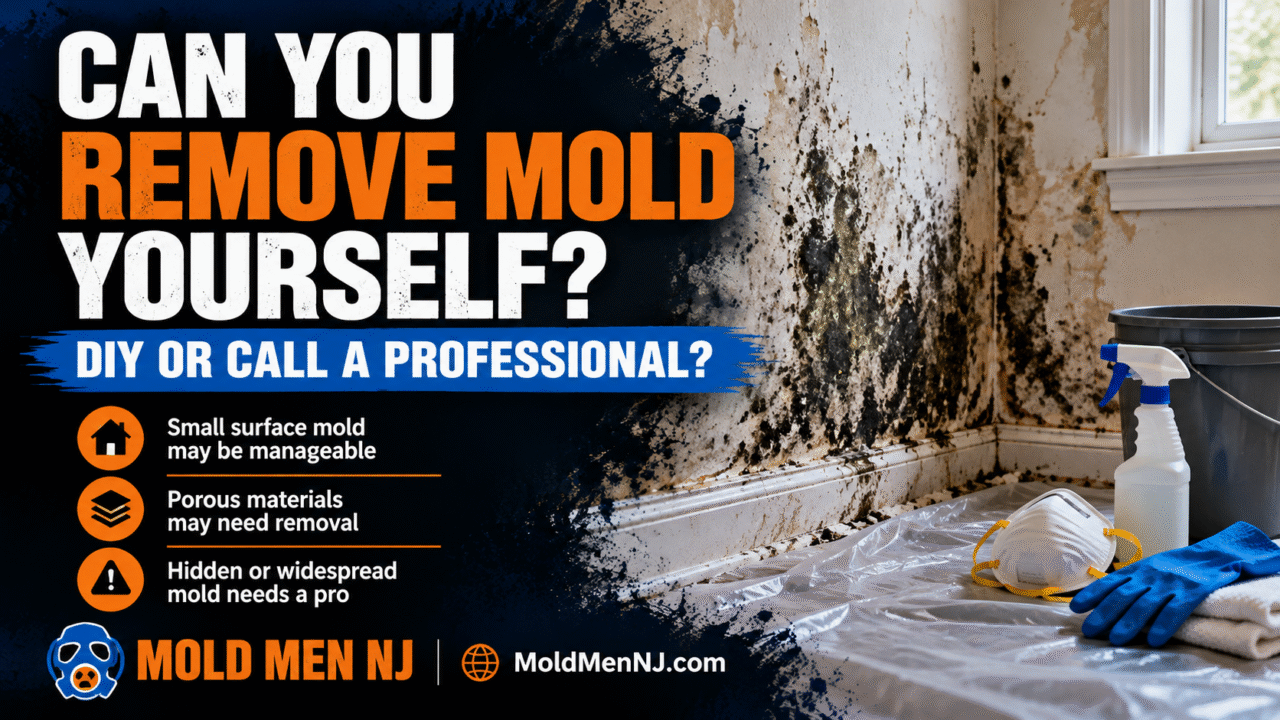
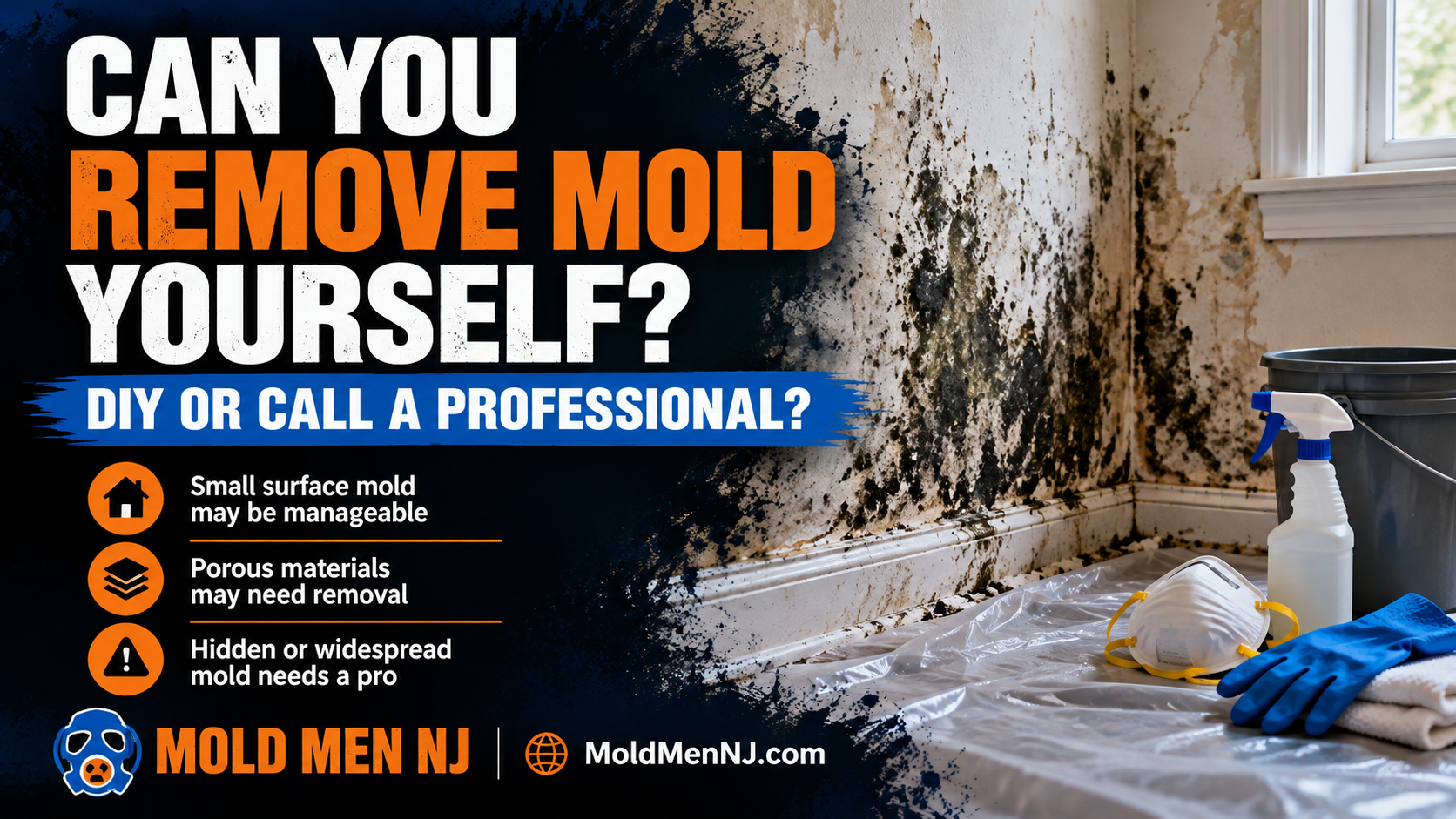
Finding mold in your home raises an immediate question: can you remove mold yourself, or should you call a professional?
The answer depends on the size of the affected area, where the mold is growing, what caused the moisture problem, and whether building materials have been damaged.
Some small surface mold problems may be manageable for homeowners. Larger, recurring, hidden, or water damaged areas often require a more thorough evaluation.
Mold Men NJ provides professional mold remediation and mold removal services for residential and commercial properties throughout New Jersey.
When Can You Remove Mold Yourself?
A small amount of mold on an accessible surface does not always require professional remediation.
DIY cleanup may be reasonable when:
• The affected area is small
• The moisture source has been identified and corrected
• Mold is limited to an accessible surface
• Surrounding materials are not significantly damaged
• There is no sewage or contaminated water involved
For example, a small amount of surface mold caused by bathroom condensation may sometimes be addressed through cleaning, improved ventilation, and moisture control.
The important part is correcting the reason the mold developed. Cleaning the visible surface without addressing moisture can allow the problem to return.
How Much Mold Is Too Much for DIY Cleanup?
The Environmental Protection Agency generally states that homeowners can often handle mold areas smaller than about 10 square feet.
That does not mean every small mold problem should automatically become a DIY project.
The location of the mold, the materials involved, the amount of water damage, and the possibility of hidden moisture should also be considered.
When mold covers a larger area, follows significant water damage, or appears to extend into walls, ceilings, flooring, or insulation, professional evaluation may be more appropriate.
When Should You Call a Mold Professional?
Professional mold remediation may be worth considering when:
• Mold covers a larger area
• Mold keeps returning after cleaning
• There has been significant water damage
• Mold may be hidden behind walls or flooring
• Drywall, insulation, carpet, or other porous materials are affected
• The problem involves sewage or contaminated water
• A persistent musty odor remains without an obvious source
• The extent of the moisture problem is unclear
A professional assessment can help determine how far the problem extends and which materials can remain.
Why Does Mold Keep Coming Back After Cleaning?
Recurring mold usually means the underlying moisture problem has not been fully corrected.
Possible causes include:
• Plumbing leaks
• Roof leaks
• Basement moisture
• Condensation
• High indoor humidity
• Appliance leaks
• Hidden water damage
Surface cleaning alone will not correct these conditions.
Moisture control is one of the most important parts of preventing mold from returning.
Can Mold Be Hidden Behind Walls or Flooring?
Yes.
One limitation of DIY mold cleanup is that homeowners can usually only address what they can see.
Moisture can travel into:
• Wall cavities
• Flooring systems
• Insulation
• Cabinets
• Ceilings
• Baseboards and trim
Warning signs may include musty odors, staining, warped flooring, soft drywall, bubbling paint, or recurring mold around the same area.
When hidden moisture is suspected, the affected area should be evaluated before deciding how to clean or repair it.
Can Moldy Drywall Be Cleaned?
Sometimes, but it depends on the condition of the material.
Drywall is porous, which means moisture and mold can sometimes extend beyond the visible surface.
The affected materials should be assessed to determine how far the problem has spread.
Sheetrock, insulation, flooring, framing, and surrounding materials should be evaluated to determine what can remain and what may need removal.
When necessary, affected drywall or other damaged materials may need to be removed to expose concealed areas and allow proper cleaning, mold remediation, or structural drying.
Not every mold project requires demolition.
Removal should be based on the actual condition of the affected materials.
What About Mold After Water Damage?
Water damage can make mold problems more complicated because moisture may travel beyond the area that looks wet.
A burst pipe, roof leak, appliance leak, flooding event, or other water problem can affect walls, flooring, insulation, ceilings, cabinets, and structural materials.
The affected area should be assessed to determine:
• How far the water traveled
• Which materials became wet
• Whether materials can be properly dried
• Whether hidden moisture remains
• Whether damaged materials need removal
If Sheetrock or other materials cannot be adequately cleaned or dried, demolition and removal may be necessary.
Acting quickly after water damage can reduce the chance of larger moisture and mold problems developing.
Hard Surfaces and Porous Materials Are Different
Not every material can be treated the same way.
Hard, nonporous surfaces may often be easier to clean and dry.
Porous materials such as drywall, insulation, carpet padding, ceiling tiles, and some flooring products can absorb moisture below the surface.
When mold or water damage affects porous materials, cleaning only what is visible may not be enough.
The condition of the material should determine whether it can remain or needs to be removed.
Do Not Simply Paint Over Mold
Painting over mold does not correct the underlying problem.
Before painting or repairing an affected area:
• Correct the moisture source
• Address visible mold
• Evaluate damaged materials
• Allow affected areas to dry properly
Fresh paint may temporarily hide staining, but it does not remove hidden moisture or mold.
Safety Matters During DIY Mold Cleanup
Anyone attempting small mold cleanup should take appropriate precautions.
Protective gloves, eye protection, and suitable respiratory protection may be appropriate depending on the work being performed.
Cleaning products should also be used carefully. Never mix bleach with ammonia or other cleaning chemicals.
People with health concerns should speak with a healthcare professional before attempting mold cleanup.
What Happens During Professional Mold Remediation?
Professional mold remediation involves more than cleaning a visible stain.
Depending on the property and extent of the problem, the process may include:
- Evaluating mold and moisture conditions
- Assessing affected and damaged materials
- Establishing containment where appropriate
- Removing affected materials when necessary
- Cleaning and remediating affected areas
- Drying and controlling moisture
- Reviewing the completed work
When damaged materials need removal, affected Sheetrock and other materials may be removed to expose concealed areas and allow proper remediation or structural drying.
The goal is to determine what can remain and what may need removal based on actual conditions.
DIY Mold Removal or Professional Remediation?
A small, accessible mold problem with a clear moisture source may sometimes be manageable for a homeowner.
Professional help becomes more important when the problem is larger, hidden, recurring, connected to significant water damage, or affecting porous building materials.
When you are unsure how far the problem extends, an evaluation can help identify hidden moisture and avoid both unnecessary demolition and incomplete cleanup.
Frequently Asked Questions
Can I remove a small patch of mold myself?
In some situations, yes. Small surface mold problems may be manageable when the moisture source has been corrected and the affected surface can be safely cleaned and dried.
When should I call a mold remediation company?
Consider professional help when mold covers a larger area, keeps returning, follows significant water damage, may be hidden, or affects multiple building materials.
Can moldy drywall stay in place?
Sometimes. The drywall should be assessed to determine whether it can be adequately cleaned and dried. Damaged or heavily affected material may need removal.
Why does mold return after cleaning?
Recurring mold often means moisture is still present. Leaks, humidity, condensation, or hidden water damage may continue supporting mold growth.
Should I worry about mold if I smell it but cannot see it?
A persistent musty odor may indicate concealed moisture or mold. Further evaluation may help locate the source and determine whether hidden materials are affected.
Key Takeaway
Can you remove mold yourself? Sometimes.
Small surface problems may be manageable when the moisture source is corrected and materials can be properly cleaned and dried.
Larger areas, recurring mold, hidden moisture, significant water damage, or affected porous materials may require professional evaluation.
The most important step is addressing both the visible mold and the moisture conditions that allowed it to develop.
About Mold Men NJ
Mold Men NJ is a veteran owned, licensed, certified, and IICRC certified company serving residential and commercial properties throughout New Jersey.
Services include mold remediation, mold removal, water damage restoration, fire damage restoration, and related property restoration services.
Mold Men NJ also provides 24 hour emergency service for urgent property damage situations.
Contact Mold Men NJ
Mold Men NJ
36 Banta Rd
Kinnelon, NJ 07405
Phone: (201) 279-6078
Email: moldmennewjersey@gmail.com
Website: moldmennj.com
Disclaimer: Mold may affect people differently. This article is informational only. For health concerns, contact a healthcare provider. For mold concerns, contact Mold Men NJ.
