Mold Around Air Vents: What New Jersey Homeowners Should Know
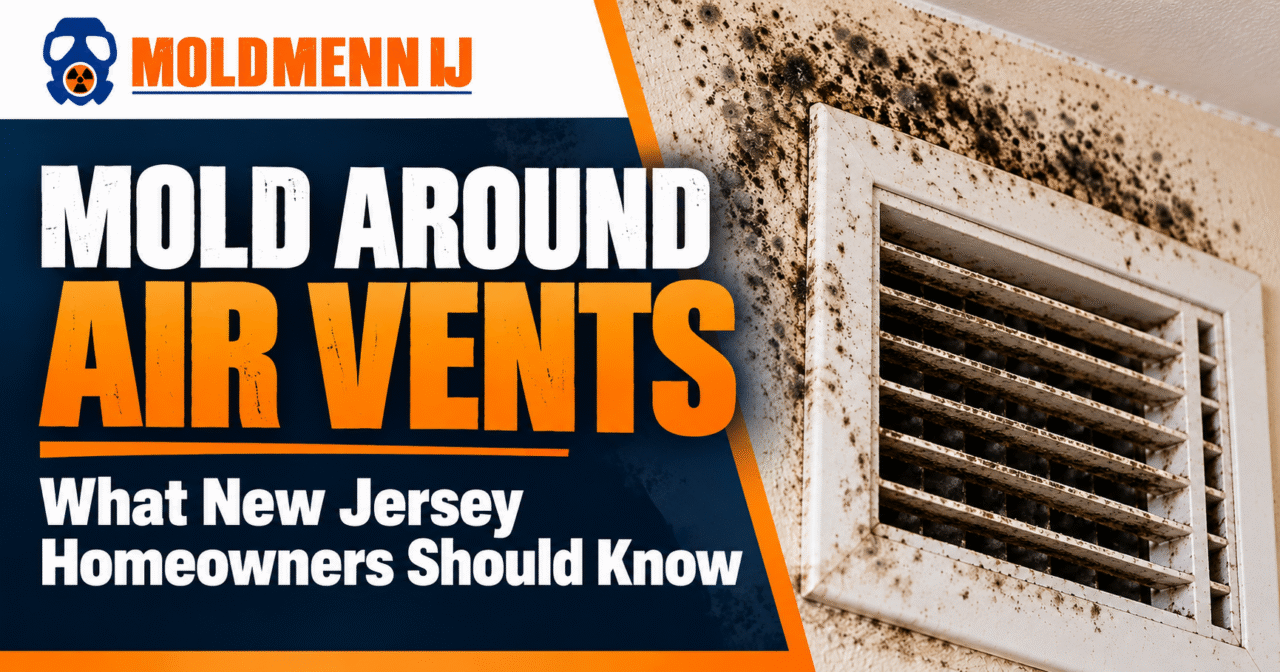
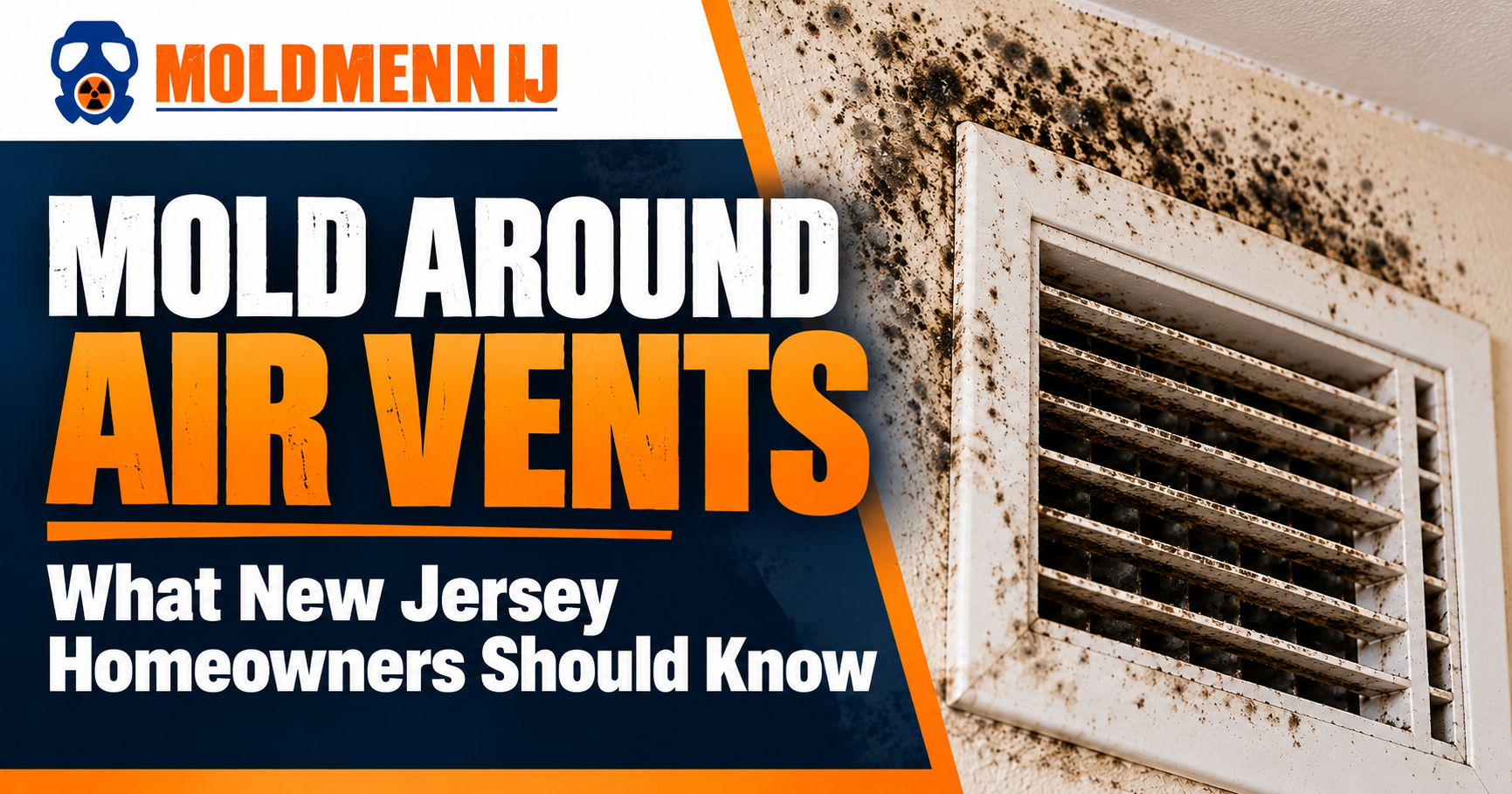
Noticing dark spots or discoloration around an air vent can raise an important question: is it mold, ordinary dust, or a sign of a larger moisture problem?
Mold around air vents can develop when moisture collects on nearby surfaces. Condensation, high indoor humidity, water leaks, or HVAC drainage problems may contribute to these conditions.
However, a dark stain around a vent does not automatically mean mold is present or that the entire air duct system is contaminated.
For New Jersey homeowners, understanding what causes the problem and when further evaluation is appropriate can help prevent unnecessary repairs and overlooked moisture damage.
Why Does Mold Develop Around Air Vents?
Mold needs moisture to grow. Air vents and nearby building materials may sometimes become damp enough to support mold growth.
Possible contributing factors include:
-
Condensation: Cool vent surfaces may collect moisture when they come into contact with humid indoor air.
-
High indoor humidity: Excess humidity can leave surfaces damp for extended periods.
-
HVAC drainage problems: Clogged condensate drains or overflowing drain pans can contribute to nearby moisture.
-
Insulation problems: Poorly insulated ductwork may create conditions that encourage condensation.
-
Water leaks: Roof leaks, plumbing leaks, or other hidden moisture problems may affect surrounding walls and ceilings.
Identifying the moisture source is essential. Cleaning a visible stain without correcting the underlying condition may allow mold to develop again.
Is It Mold or Just Dust Around the Vent?
Not every dark mark surrounding an air vent is mold.
Dust and airborne particles can accumulate around registers as air moves through the HVAC system. These deposits may create dark streaks or discoloration.
Visible mold may also appear near vents when moisture remains on surrounding materials.
Warning signs worth investigating include:
-
Recurring discoloration after cleaning
-
Visible growth on damp surrounding surfaces
-
Condensation collecting around vent openings
-
Water stains on nearby drywall or ceilings
-
Softened or deteriorating building materials
-
Persistent musty odors
-
Evidence of moisture inside the vent opening
Appearance alone cannot reliably identify a substance as mold. When the cause is unclear, further evaluation may be appropriate.
Can Mold Around an Air Vent Mean Mold Is Inside the HVAC System?
Possibly, but not necessarily.
Mold growing on drywall surrounding a vent does not automatically mean mold is growing throughout the ductwork.
The problem may be limited to condensation around the vent opening. In other situations, moisture may affect duct insulation, air-handling equipment, or concealed materials.
An assessment should help determine whether the concern involves:
-
The vent cover or register
-
Nearby drywall or ceiling materials
-
Insulation around the duct
-
Moisture inside the ductwork
-
The HVAC system itself
If contamination inside the HVAC system is known or suspected, avoid operating the affected system until it has been appropriately evaluated. The Environmental Protection Agency advises that operating a mold-contaminated HVAC system can spread contamination through a building.
See the EPA’s guidance on air duct cleaning and mold.
Can You Clean Mold Around Air Vents Yourself?
Some small surface problems may be manageable, depending on the material and the extent of the moisture.
For example, a limited amount of surface contamination on an accessible, nonporous vent cover may sometimes be addressed through appropriate cleaning and drying.
However, homeowners should avoid assuming that wiping down a vent resolves a larger mold problem.
Professional evaluation may be more appropriate when:
-
Mold or moisture appears to extend into drywall or insulation
-
Discoloration keeps returning
-
The surrounding material is soft, wet, or deteriorating
-
A persistent musty odor is present
-
Significant water damage has occurred
-
Contamination inside the HVAC system is suspected
Do not disturb suspected mold inside ductwork or apply cleaning chemicals directly into an HVAC system without qualified guidance.
If the HVAC system itself may be contaminated, consult a qualified professional experienced with HVAC contamination and remediation.
What Happens When Mold Affects Drywall Around an Air Vent?
Drywall and insulation can absorb moisture, making the problem more complicated than surface staining.
When moisture enters these materials, damage may extend beyond the visible area.
An appropriate assessment should examine affected building materials, potentially including:
-
Sheetrock or drywall
-
Ceiling materials
-
Insulation
-
Framing
-
Surrounding trim
-
Adjacent wall cavities
The purpose is to determine how far the moisture or mold extends and whether materials can be adequately cleaned and dried.
Demolition and removal of affected materials may be necessary when the materials cannot be properly cleaned or dried.
For example, removing damaged Sheetrock or wet insulation when needed may expose concealed areas for cleaning, mold remediation, and drying.
Not every mold problem around an air vent requires demolition. The decision should depend on actual site conditions.
Does Air Duct Cleaning Remove Mold?
Air duct cleaning and mold remediation are related but are not automatically the same service.
The EPA does not recommend routine duct cleaning for every home. Instead, it recommends considering duct cleaning in certain circumstances, including substantial visible mold growth inside hard-surface ducts or on HVAC components.
The type of material involved matters.
Bare metal ductwork may sometimes be cleaned using appropriate professional methods. Wet or mold-contaminated porous duct insulation may require removal and replacement because it cannot always be effectively cleaned.
Simply cleaning the ducts without correcting the moisture source may allow the problem to return.
Homeowners should also be cautious about claims that spraying chemicals or sealing duct interiors will permanently resolve mold contamination.
The appropriate solution depends on the source, extent of contamination, duct materials, and condition of the HVAC system.
How Can You Prevent Moisture Problems Around Air Vents?
Reducing excess moisture can help limit conditions that support mold growth.
Some useful preventive steps include:
-
Control indoor humidity. Use ventilation and dehumidification when appropriate to reduce excessive moisture.
-
Watch for condensation. Repeated water buildup around vents may indicate a problem that needs further investigation.
-
Maintain HVAC equipment. Have qualified HVAC professionals inspect drainage, condensate pans, coils, and insulation as needed.
-
Address water leaks promptly. Water damage from plumbing, roofing, or other sources should not be ignored.
-
Inspect surrounding materials. Watch for staining, peeling paint, soft drywall, and musty odors.
-
Avoid covering up the problem. Painting over discoloration without addressing moisture does not correct the underlying condition.
Proper maintenance and moisture control are more useful than repeatedly cleaning the same stain.
When Should You Call a Mold Remediation Professional?
Professional assistance may be appropriate when mold around air vents involves more than a small, accessible surface.
This is particularly important when the problem appears to involve hidden moisture, recurring growth, deteriorating drywall, or water-damaged insulation.
A professional evaluation can help assess the affected building materials and determine whether cleaning, containment, removal, or drying may be necessary.
When the HVAC equipment or duct system is affected, a qualified HVAC professional experienced in contamination issues may also be needed.
Mold Men NJ provides professional mold remediation for residential and commercial properties throughout New Jersey.
The appropriate scope of work should be determined by evaluating the affected area and materials rather than assuming every vent-related problem requires extensive removal.
Frequently Asked Questions
Does black discoloration around an air vent always mean mold?
No. Dark discoloration may result from dust accumulation, staining, or microbial growth. Appearance alone is not enough to determine whether mold is present.
Can condensation around air vents cause mold?
Yes. Condensation can create damp conditions that support mold growth on nearby surfaces, particularly when moisture remains for extended periods.
Should I turn off my HVAC system if I suspect mold?
If you know or suspect that the HVAC system itself is contaminated with mold, the EPA recommends avoiding operation until the situation has been properly evaluated.
Does mold around a vent mean the drywall needs replacement?
Not necessarily. The affected drywall should be assessed to determine whether it can be properly cleaned and dried. Material removal may be necessary when damage extends beneath the surface or the material cannot be adequately restored.
Will cleaning my air ducts stop mold from returning?
Not necessarily. If condensation, leaks, or other moisture problems remain, cleaning alone may not prevent recurring mold growth.
Final Thoughts
Mold around air vents should not automatically be dismissed as dust, but it also does not necessarily indicate widespread HVAC contamination.
The most important steps are determining whether mold is present, finding the moisture source, and assessing the affected materials.
Small surface problems may require limited cleaning and moisture control. Larger, recurring, or concealed problems may require professional evaluation and remediation.
Taking action based on the actual conditions can help homeowners address moisture damage without unnecessary demolition or incomplete cleanup.
About Mold Men NJ
Mold Men NJ is a veteran-owned, licensed, certified, and IICRC-certified restoration company serving residential and commercial properties throughout New Jersey.
The company provides mold remediation, mold removal, water damage restoration, fire damage restoration, and related property restoration services.
Mold Men NJ also offers 24-hour emergency service for urgent property damage situations.
Contact Mold Men NJ
Mold Men NJ
36 Banta Rd
Kinnelon, NJ 07405
Phone: (201) 279-6078
Email: moldmennewjersey@gmail.com
Website: https://moldmennj.com/
For concerns about suspected mold or moisture damage, contact Mold Men NJ to discuss the affected area.
Disclaimer: This article is for informational purposes only. Mold and indoor moisture conditions may affect people differently. For health concerns, consult a qualified healthcare professional. HVAC equipment and ductwork should be evaluated or serviced by appropriately qualified professionals when necessary.
