Can Wet Carpet Grow Mold? What New Jersey Homeowners Should Do
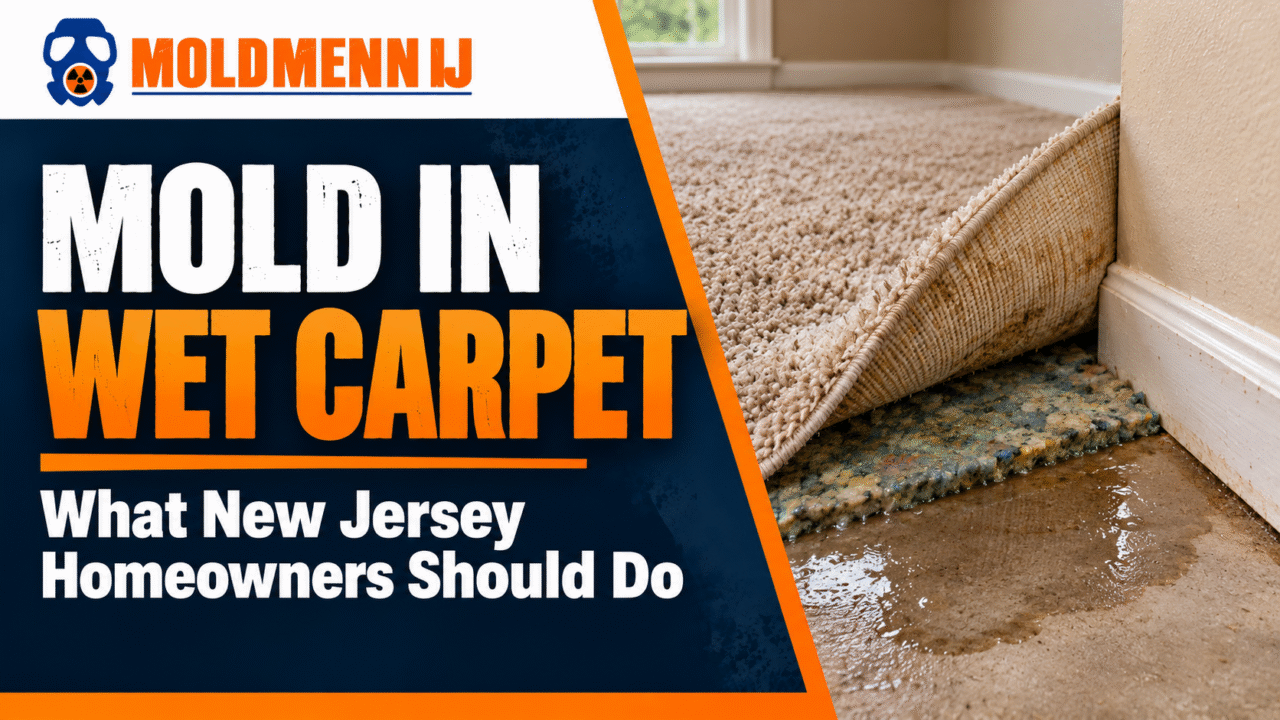
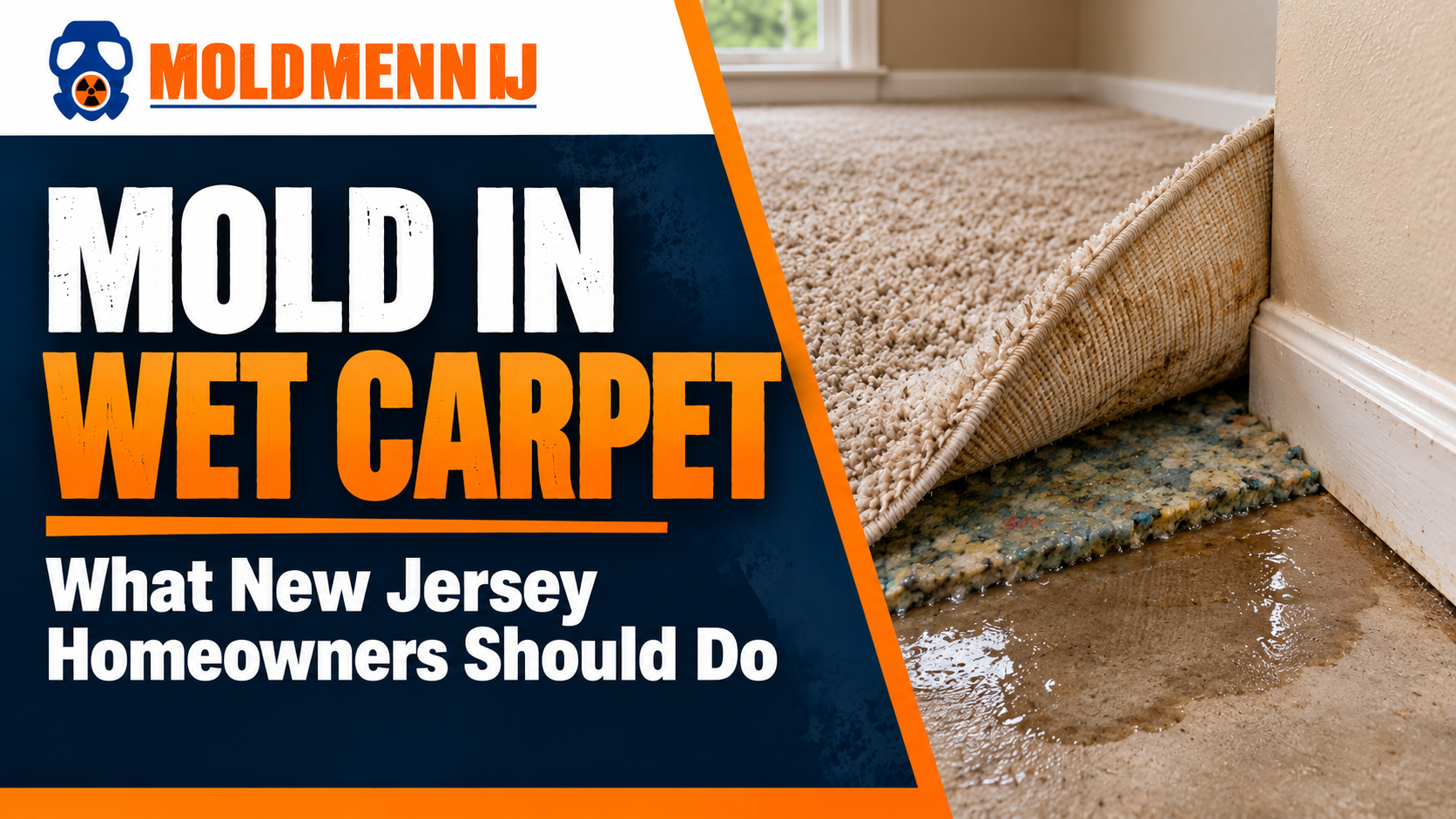
A carpet may feel dry on top while its padding and the floor beneath it remain wet. After a pipe leak, appliance failure, or flood, that hidden moisture can make it difficult to tell whether drying is enough or the carpet needs to be removed.
Wet carpet does not automatically mean mold is present. What matters is where the water came from, how far it spread, and whether every affected layer can be dried thoroughly.
Mold Men NJ helps homeowners and businesses throughout New Jersey assess water damage, identify affected materials, and address mold when remediation is needed.
Why Wet Carpet Needs Prompt Attention
Carpet has several layers. Water can pass through the visible fibers into the backing, padding, and subfloor. Drying the surface alone may leave moisture underneath.
The U.S. Environmental Protection Agency recommends drying carpet and backing within 24 to 48 hours after clean water damage. Its guidance also says the subfloor must be cleaned and dried. That time frame is a guide for prompt action, not a guarantee that mold will or will not grow. EPA water damage guidance epa.gov
A small spill caught immediately is different from water that has soaked a room overnight. The first step is to stop the water source and find out how much of the floor is affected.
Can Wet Carpet Be Saved?
Sometimes. Carpet affected by a limited amount of clean water may be salvageable if the carpet, backing, padding, and subfloor can all be dried promptly and completely.
Professional water extraction and drying may be appropriate when water has reached a large area or moved beneath the carpet. The carpet may need to be lifted so the layers below it can be checked. A fan aimed at the top of the carpet does not confirm that the padding is dry. The EPA specifically notes that carpet padding must be dried too. EPA mold course epa.gov
Whether the carpet can remain depends on its condition and the condition of the materials underneath. An assessment can help determine what can be cleaned and dried and what, if anything, needs removal.
When Might Carpet or Padding Need to Be Removed?
Removal may be necessary when carpet or padding has visible mold, remains damp after drying efforts, or cannot be thoroughly cleaned. The water source also matters. Water from a sewage backup or another potentially contaminated source requires a different response from a clean supply-line leak.
Do not use fans on carpet affected by water that may be contaminated until the situation has been assessed. EPA guidance recommends consulting an experienced professional for contaminated water damage and notes that its quick-drying guidance applies to clean water. epa.gov
Even when the carpet must come out, the work should not stop there. The padding, subfloor, baseboards, and nearby wall materials should be assessed for moisture and damage. Demolition or removal of affected materials may be needed if they cannot be adequately cleaned and dried. The scope depends on what the assessment finds.
Signs Moisture May Still Be Trapped Under Carpet
A damp feeling or visible stain is an obvious reason to investigate, but hidden moisture can be less clear. Watch for a musty odor that persists after cleanup, discoloration near baseboards, a change in how the carpet feels underfoot, or a patch that seems to dry and then becomes damp again.
These signs do not prove mold is present. They do suggest that the carpet and the materials below it deserve a closer look. For more on concealed floor damage, read Can Mold Grow Under Flooring?.
What Should You Do After Carpet Gets Wet?
First, stop the leak or water intrusion if you can do so safely. If water is near electrical equipment or outlets, avoid entering the affected area until it is safe.
Next, identify the water source. A clean-water leak, rainwater intrusion, and sewage backup should not be treated as the same cleanup job. Move dry belongings away from the affected area and arrange water extraction and drying as soon as possible.
Check beyond the visible wet patch. Water may have traveled under the carpet, toward adjoining rooms, or into nearby walls. If the area is extensive, the source is uncertain, or the carpet has remained wet, a professional can assess the affected materials and the drying needed.
Mold Men NJ’s water damage restoration service addresses water removal and drying. If mold is found, the mold remediation service can address the affected area and its moisture source.
Frequently Asked Questions
Does wet carpet always grow mold?
No. Mold growth is not inevitable. Promptly stopping the water source and thoroughly drying the carpet, padding, and subfloor can reduce the risk.
Is carpet dry if it feels dry on top?
Not necessarily. Padding and the subfloor may still hold moisture after the carpet surface feels dry.
Can I shampoo a carpet that got wet from a leak?
Shampooing does not remove trapped water from the padding or subfloor. Find and correct the water source, then assess and dry every affected layer before deciding how to clean the carpet.
Does the padding need to be replaced?
That depends on the water source, how long the padding stayed wet, and whether it can be adequately dried and cleaned. An assessment can determine whether replacement is needed.
When should I call a professional?
Call when water has spread across a large area, may be contaminated, remains trapped under the carpet, or has caused a persistent odor or visible growth. Professional help is also useful when nearby walls or floors may be affected.
Key Takeaway
Wet carpet requires attention beneath the surface. After stopping the water source, assess the carpet, padding, and subfloor together. Quick, complete drying may save some materials; contaminated water, persistent moisture, or mold may require removal and remediation.
About Mold Men NJ
Mold Men NJ is a veteran-owned company serving residential and commercial properties throughout New Jersey. Its services include water damage restoration and mold remediation.
Contact Mold Men NJ
Mold Men NJ
36 Banta Rd
Kinnelon, NJ 07405
(201) 279-6078
moldmennewjersey@gmail.com
Contact Mold Men NJ
This article provides general information. The appropriate cleanup depends on the water source and the materials affected. For health concerns, consult a healthcare provider.
