ATTIC MOLD REMOVAL · NEW JERSEY
Attic mold
removal in NJ.
Look beyond the stain.
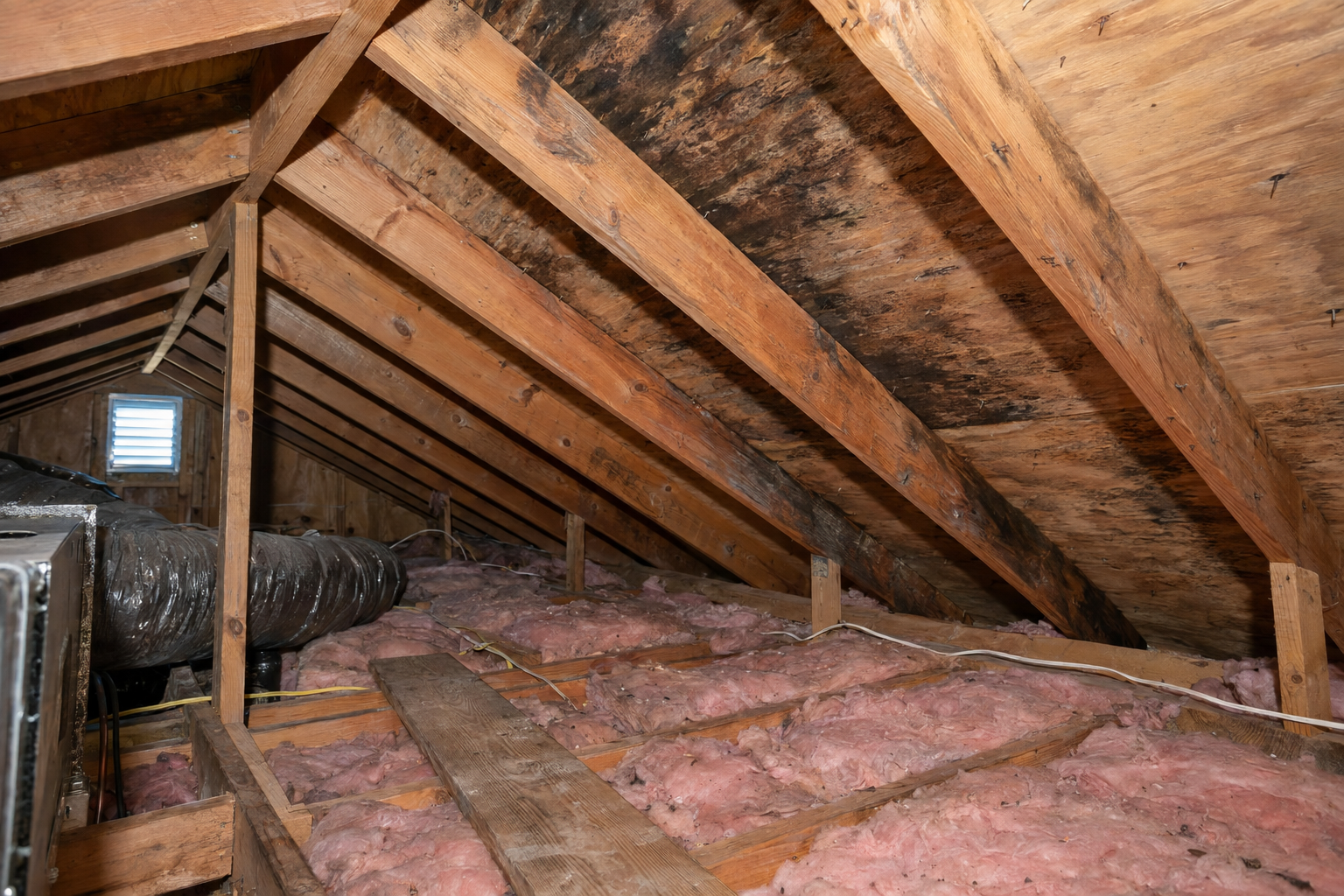
Attic staining can point to a moisture problem above your living space. Our veteran-owned team helps New Jersey property owners assess the concern, address affected materials, and plan the next steps for attic mold remediation.
Assess. Contain. Remove. Restore.
GET HELP WITH YOUR PROPERTY
Request an appointment.
Tell us about your issue. Our team will help you understand the next step.
- Veteran owned
- Certified team
- NJ based
CAREFUL WORK. CLEAR NEXT STEPS.
WHY ATTICS DEVELOP MOLD
The cause often starts above your ceiling.
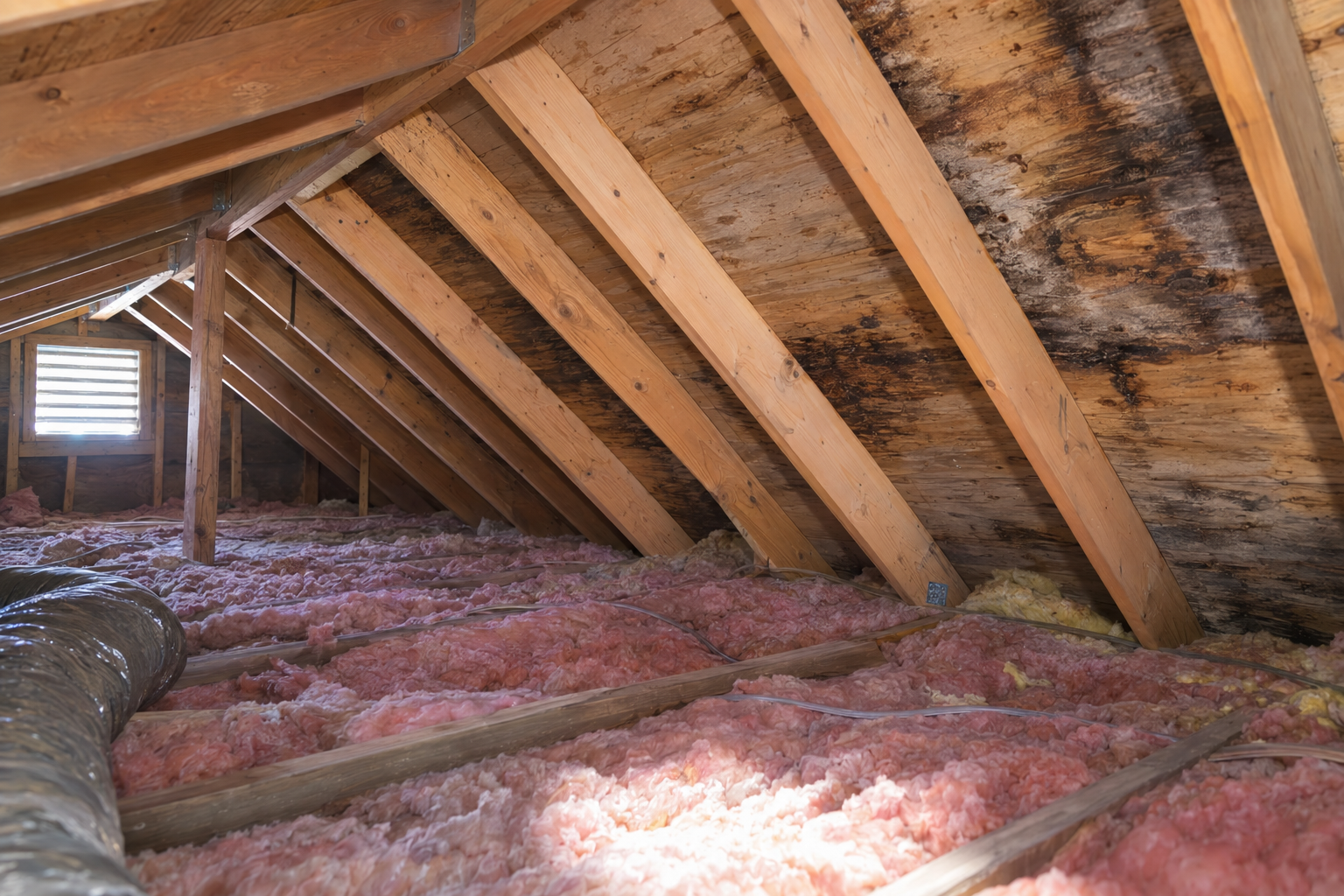
Small roof leaks, condensation, blocked or inadequate ventilation, damp insulation, and exhaust fans venting into the attic can create conditions for mold. A problem may develop out of sight before it becomes noticeable in the rooms below.
Removing visible growth without addressing moisture can leave those conditions in place. We assess the attic, the affected materials, and the signs of moisture so the remediation plan fits the property.
Mold Men NJ provides licensed, certified restoration services throughout New Jersey, with a strong focus on North Jersey. When attic mold is connected to water damage, drying and related cleanup may also be part of the project.
UNDERSTAND YOUR PROPERTY
Signs worth a closer look.
01
Stained sheathing or rafters
Dark spotting or staining on roof decking and framing may indicate mold activity or past moisture exposure. Mold species cannot be identified by color alone.
02
Musty odors upstairs
Odors near attic access, upper-floor closets, ceilings, or HVAC areas can be a reason to investigate moisture above the living space.
03
Damp or damaged insulation
Compressed, damp, stained, or displaced insulation may point to roof leaks, condensation, or ventilation concerns that need assessment.
04
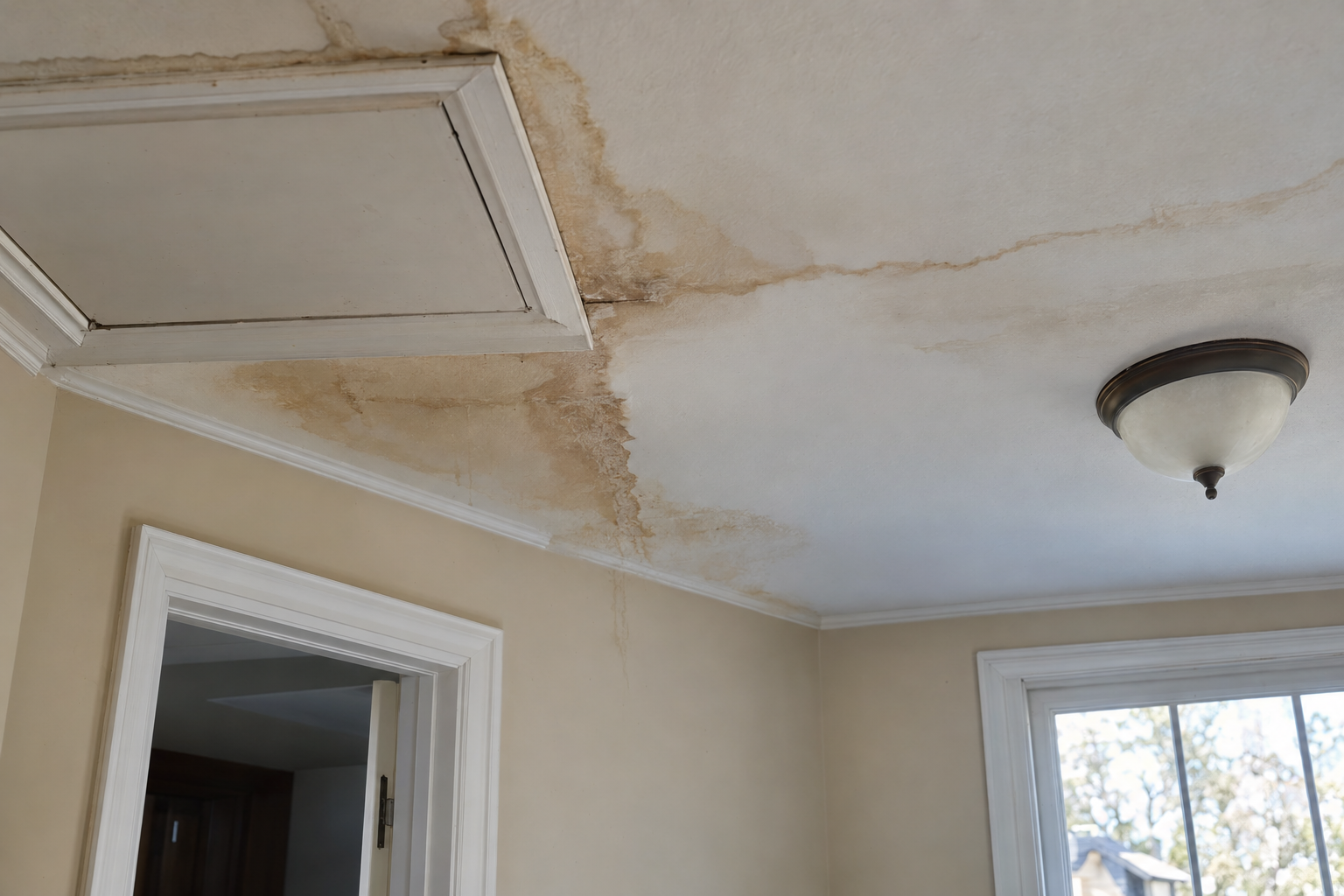
Marks on the ceiling below
Peeling paint, water stains, or recurring moisture marks below the attic can be connected to leaks or condensation above.
HOW WE APPROACH THE WORK
A clear process.
A way forward.
The scope is tailored to your property, the affected materials, and the source of moisture.
01
Assess the attic
We inspect accessible affected areas and review the condition of sheathing, rafters, insulation, and other materials, along with signs of moisture entry or buildup.
02
Plan containment
Containment and work-area preparation are tailored to the attic and the remediation scope, helping limit the movement of dust and mold particles during the work.
03
Remove and clean
We address affected materials and surfaces according to their condition and the extent of the damage. Not every material requires the same treatment or removal.
04
Dry and stabilize
Drying and moisture control address damp conditions. Roof leaks, exhaust routing, or ventilation defects also need attention as part of a plan to reduce recurrence.
05
Review the work
We review the remediation and discuss remaining moisture concerns, related repairs, or other next steps. The plan should address the conditions that contributed to the problem.

VETERAN OWNED. NEW JERSEY FOCUSED.
Certified. Licensed.
Ready to help.
Based in Kinnelon, our team serves New Jersey homes and businesses with careful work, clear communication, and respect for your property.

LOOK AT THE WHOLE PROPERTY
Connected concerns.
Coordinated care.
Roof leaks can affect sheathing, rafters, insulation, ceilings, and wall cavities. Mold Men NJ also provides cleanup, drying, and restoration for roof-leak water damage. Remediation and correction of the underlying leak or ventilation defect are separate parts of the plan. Insurance coverage varies by policy and cause of loss.
ANSWERS BEFORE YOU CALL
A few things to know.
What causes mold to grow in attics?
Common contributing conditions include roof leaks, condensation on cold roof decking, high humidity, insufficient ventilation, and exhaust fans that discharge into the attic. The source of the moisture matters as much as the visible staining.
Can attic mold grow on roof sheathing and rafters?
Yes. Attic wood can be affected when it stays damp. Staining alone does not tell you the mold species or the full extent of the problem; the material and moisture conditions need to be assessed.
Can poor attic ventilation contribute to mold growth?
Yes. Inadequate ventilation can leave warm, moist air trapped in the attic and contribute to condensation on cooler surfaces. Ventilation should be considered alongside other possible moisture sources, including roof leaks and improperly routed exhaust fans.
Does attic mold mean the roof sheathing must be replaced?
Not automatically. The condition of the material, the extent of damage, and the remediation scope help determine whether cleaning or removal is appropriate. Damaged building materials may also require repair.
Can attic mold come back after remediation?
It can if moisture returns or contributing conditions remain unresolved. A plan should address leaks, condensation, ventilation, or exhaust issues as well as the affected materials.
Does attic mold always mean the roof is leaking?
No. A roof leak is one possible cause. Attic mold can also be associated with condensation, high humidity, inadequate ventilation, or bathroom and kitchen exhaust fans that discharge into the attic. An assessment helps distinguish the contributing conditions.
LET’S TAKE THE NEXT STEP
Ready when you need us.
Call our team or request an appointment online.
Veteran-owned mold remediation
and water damage restoration.
(201) 279-6078
moldmennewjersey@gmail.com
36 Banta Rd, Kinnelon, NJ 07405