CRAWL SPACE MOLD REMOVAL
Crawl space mold
removal in NJ.
Below the surface.
Musty odors, damp framing, or recurring mold beneath your property deserve a closer look. Mold Men NJ provides crawl space mold removal and remediation throughout New Jersey, with a focus on North Jersey.
Assess. Contain. Remove. Restore.
GET HELP WITH YOUR PROPERTY
Request an appointment.
Tell us about your issue. Our team will help you understand the next step.
- Veteran owned
- Certified team
- NJ based
CAREFUL WORK. CLEAR NEXT STEPS.
HIDDEN MOISTURE. REAL CONCERNS.
Look beneath the floor. Understand the source.
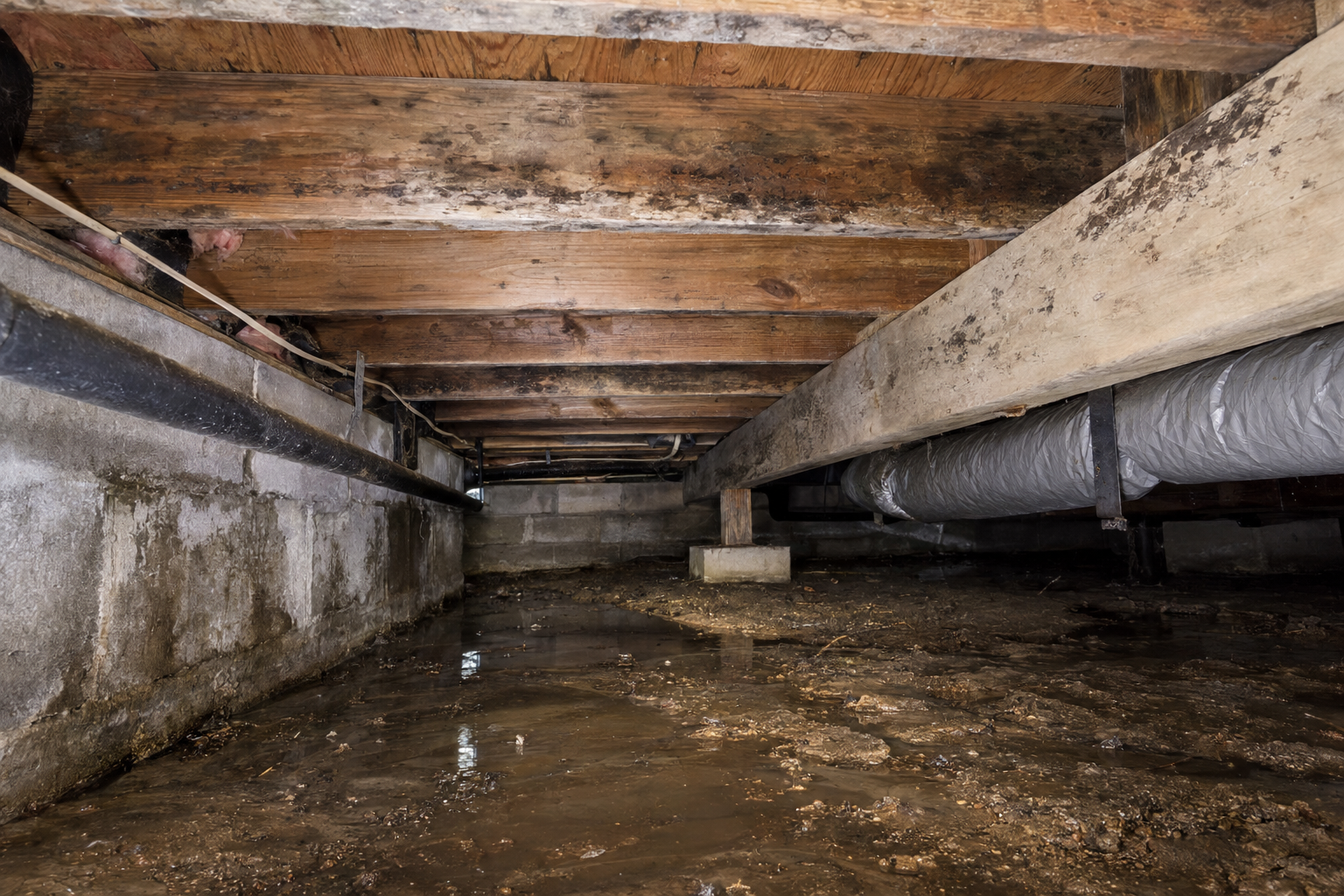
Crawl spaces can hold moisture where it is easy to miss. Ground moisture, foundation seepage, plumbing leaks, condensation, wet insulation, and inadequate vapor control can contribute to mold on wood, insulation, and other materials.
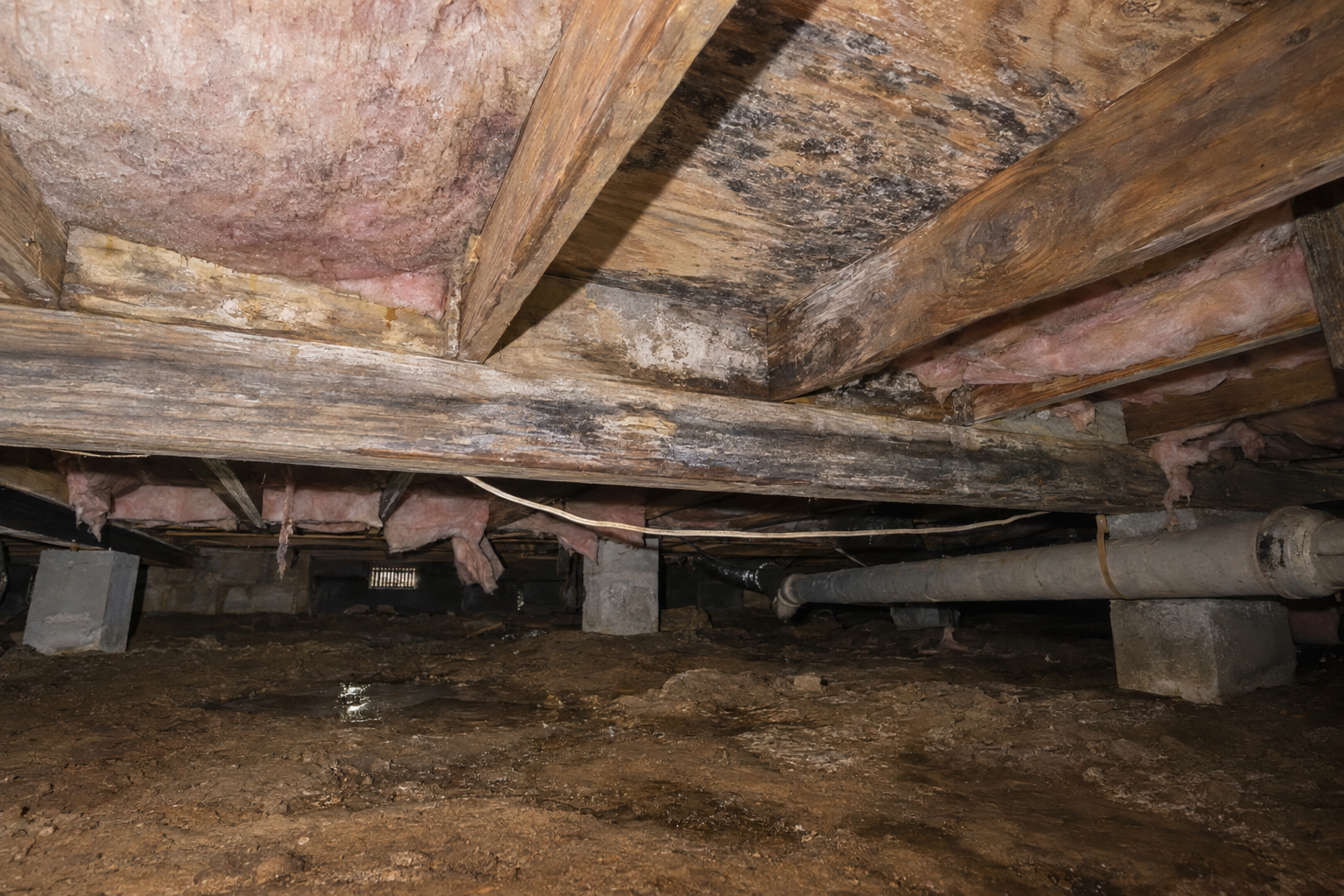
The first signs may appear above the crawl space: a persistent musty smell, recurring humidity, or dampness in lower-level rooms. Below the floor, sagging insulation, damp framing, soft materials, or visible staining can point to a problem that needs attention.
Mold Men NJ evaluates the affected area and the moisture conditions before recommending a scope of work. The goal is to address the mold concern and understand what is keeping the space damp.
UNDERSTAND YOUR PROPERTY
Know what to look for below your home.
01
Musty odors
An odor that persists in lower-level rooms may be connected to moisture or mold activity beneath the floor system.
02
Growth or staining
Spotting, staining, or fuzzy growth on joists, subflooring, beams, or insulation should be evaluated. Color alone does not identify mold.
03
Excess moisture
Wet soil, standing water, condensation, and damp insulation can keep the crawl space from drying out.
04
A problem that returns
If mold comes back after surface cleaning, an unresolved moisture source may still be contributing to the problem.
HOW WE APPROACH THE WORK
A clear process.
A way forward.
The scope is tailored to your property, the affected materials, and the source of moisture.
01
Assess the crawl space
Review the affected materials, visible moisture conditions, and possible sources of dampness to understand the extent of the concern.
02
Set up containment
Plan containment for the affected area and the work involved, with attention to surrounding spaces and material handling.
03
Remove affected materials
Clean or remove mold-affected materials according to the condition of the area and the agreed scope of remediation.
04
Dry and review moisture control
Address drying needs and identify moisture conditions that require attention, including leaks, seepage, humidity, or vapor control.
05
Review the work and next steps
Review the remediated area and discuss remaining moisture concerns or repairs that may need to be addressed separately.

VETERAN OWNED. NEW JERSEY FOCUSED.
Certified. Licensed.
Ready to help.
Based in Kinnelon, our team serves New Jersey homes and businesses with careful work, clear communication, and respect for your property.

LOOK AT THE WHOLE PROPERTY
Connected concerns.
Coordinated care.
Crawl space mold often starts with a moisture problem. If leaks, seepage, or flooding are involved, cleanup and drying may need to be part of the plan. Remediation and correcting the source of water intrusion are related tasks, and the scope should be clear.
ANSWERS BEFORE YOU CALL
A few things to know.
What causes mold to grow in crawl spaces?
Persistent moisture is a common contributing factor. Ground moisture, foundation seepage, poor drainage, plumbing leaks, condensation, wet insulation, and elevated humidity can create damp conditions where mold can develop.
Can crawl space mold grow on floor joists and subflooring?
Yes. Mold concerns can involve wood joists, beams, subflooring, insulation, and other damp materials. An assessment helps determine the affected areas and which materials require cleaning, removal, or further review.
Can a vapor barrier help with crawl space moisture?
A vapor barrier can help reduce moisture from exposed soil in some crawl spaces. It does not remove existing mold or correct every moisture source. Leaks, drainage, seepage, and humidity should also be evaluated when planning the work.
Does crawl space mold always mean there is a plumbing leak?
No. A plumbing leak is one possible source, but ground moisture, foundation seepage, condensation, and other humidity issues can also contribute. Finding the source matters when planning remediation.
Can crawl space mold come back after remediation?
Recurring moisture can contribute to another mold problem. Addressing the conditions behind the dampness, alongside the affected materials, helps reduce the chance of recurrence. Ask about any moisture-control or repair work that falls outside the remediation scope.
LET’S TAKE THE NEXT STEP
Ready when you need us.
Call our team or request an appointment online.
Veteran-owned mold remediation
and water damage restoration.
(201) 279-6078
moldmennewjersey@gmail.com
36 Banta Rd, Kinnelon, NJ 07405