BASEMENT MOLD REMOVAL · NEW JERSEY
Basement mold
removal in NJ.
Find the cause.
Musty odors, stained walls, or recent flooding deserve a closer look. Our veteran-owned team helps New Jersey homeowners and businesses understand basement moisture concerns and move forward with a practical mold remediation plan.
Assess. Contain. Remove. Restore.
GET HELP WITH YOUR PROPERTY
Request an appointment.
Tell us about your issue. Our team will help you understand the next step.
- Veteran owned
- Certified team
- NJ based
CAREFUL WORK. CLEAR NEXT STEPS.
WHY BASEMENTS DEVELOP MOLD
Start with the moisture beneath the problem.
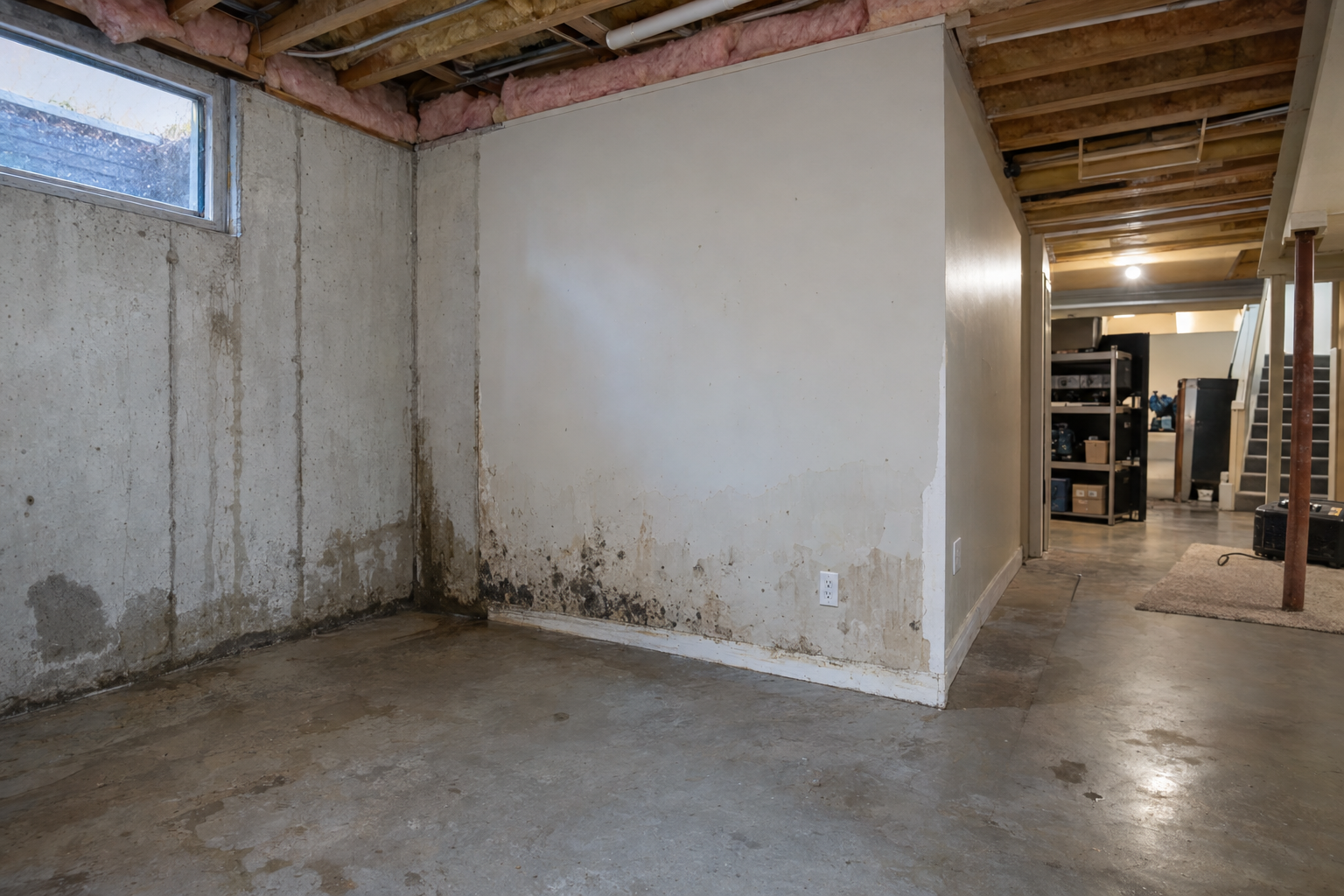
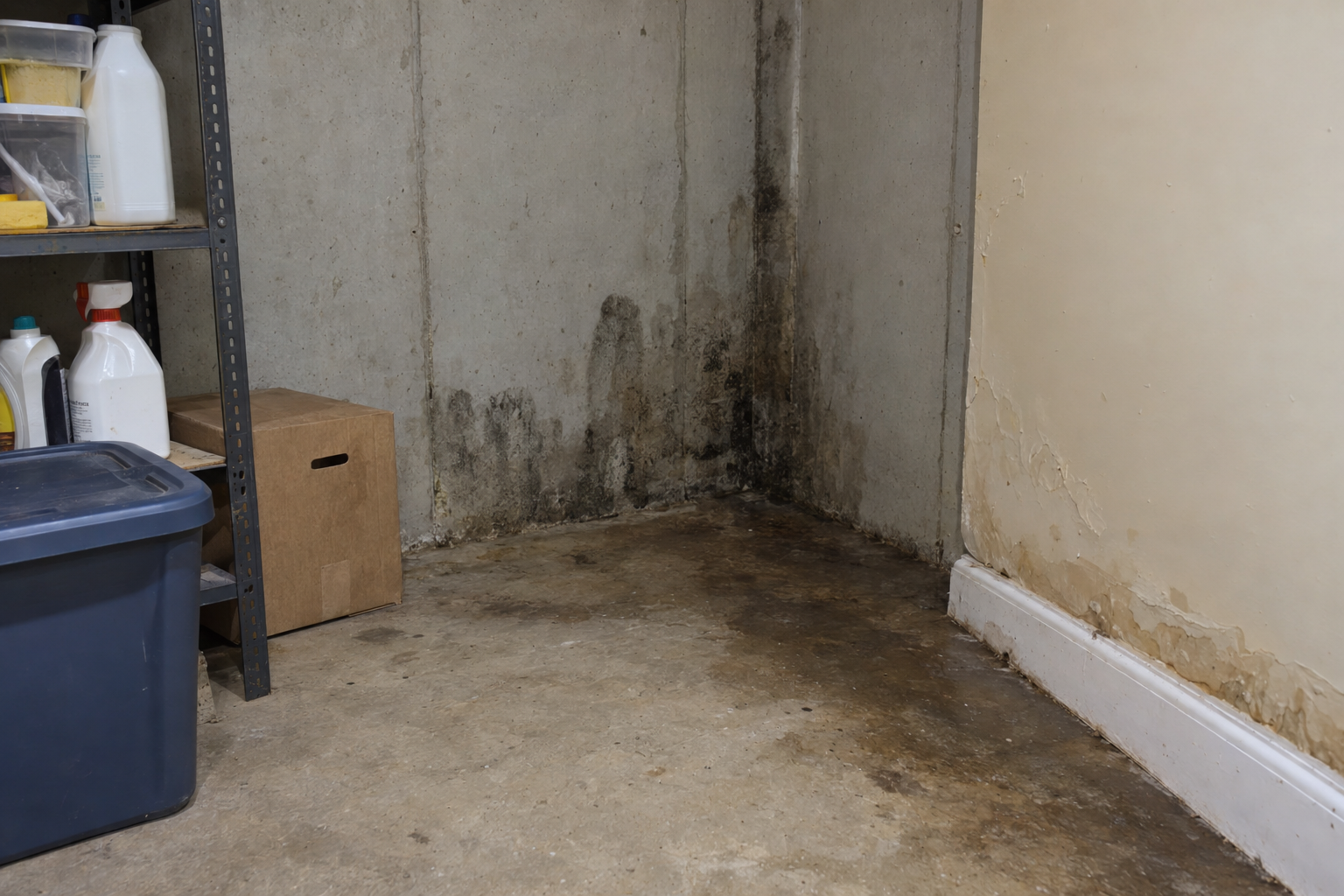
Basements sit below or partly below ground, making them vulnerable to seepage, foundation cracks, sump pump problems, window wells, plumbing leaks, and flooding. High humidity and limited airflow can also keep materials damp—even when there is no standing water.
Mold can affect finished walls, framing, flooring, insulation, and stored belongings. Cleaning a visible spot may leave moisture or affected materials behind it. We assess the condition of your basement and build the scope around the area, materials, and moisture concerns involved.
Mold Men NJ provides licensed, certified restoration services for homes, rental properties, and commercial buildings throughout New Jersey, with a strong focus on North Jersey communities near Kinnelon.
UNDERSTAND YOUR PROPERTY
What your basement may be telling you.
01
A persistent musty smell
Odors around finished walls, stored items, flooring, or mechanical equipment can be a reason to investigate hidden dampness.
02
Staining or visible growth
Discoloration on drywall, framing, trim, carpet, or foundation walls may indicate moisture activity. Color alone does not identify a mold species.
03
Materials that stay damp
Soft drywall, swollen baseboards, warped flooring, peeling paint, or damp insulation may signal a problem beyond the surface.
04
Recent water intrusion
Flooding, sewer backups, water heater leaks, burst pipes, and repeated storm seepage can leave materials wet after visible water is gone.
HOW WE APPROACH THE WORK
A clear process.
A way forward.
The scope is tailored to your property, the affected materials, and the source of moisture.
01
Assess mold and moisture
We review the affected areas, the condition of the materials, and likely moisture sources. Testing may be useful in some situations, but every project does not require it.
02
Contain the work area
Containment is planned around the affected space to help limit the movement of dust and mold particles into other areas during remediation.
03
Remove and clean
The scope may include removing mold-affected porous materials and cleaning appropriate surfaces. The approach depends on the material and the extent of the damage.
04
Dry and address moisture
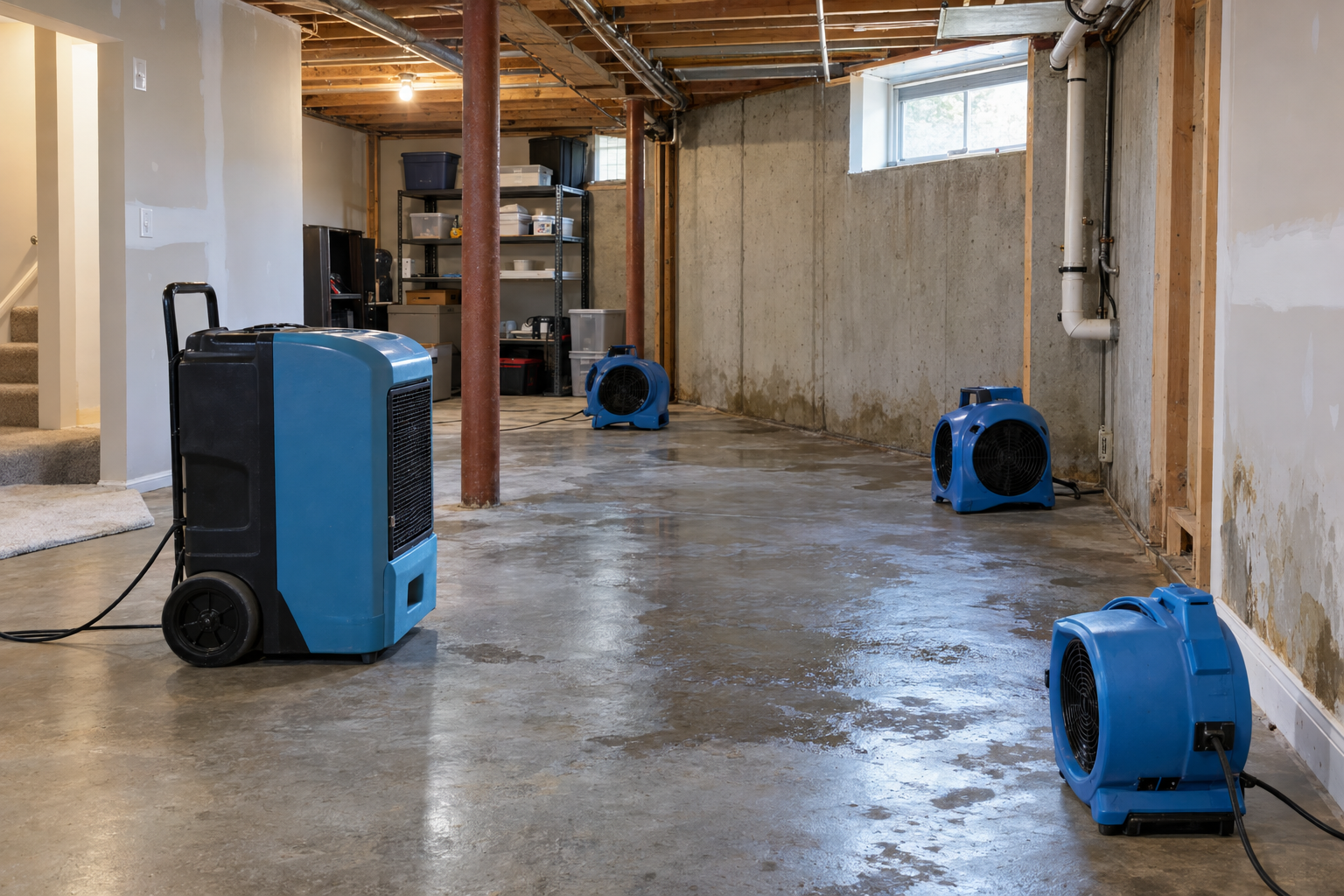
Drying and humidity control help address damp conditions. Recurring seepage, leaks, or drainage concerns also need attention to reduce the chance of another problem.
05
Review the next steps
We review the completed remediation work and discuss remaining moisture concerns, repairs, or other steps relevant to your basement.

VETERAN OWNED. NEW JERSEY FOCUSED.
Certified. Licensed.
Ready to help.
Based in Kinnelon, our team serves New Jersey homes and businesses with careful work, clear communication, and respect for your property.

LOOK AT THE WHOLE PROPERTY
Connected concerns.
Coordinated care.
Basement mold often follows water damage. Prompt extraction, drying, and humidity control matter because drywall, carpet padding, insulation, and framing can stay wet after standing water is gone. Insurance coverage varies by policy and cause of loss; confirm coverage directly with your insurer.
ANSWERS BEFORE YOU CALL
A few things to know.
What causes mold to grow in basements?
Mold concerns often begin with moisture from seepage, plumbing or appliance leaks, flooding, condensation, or high humidity. Poor airflow can keep materials damp. The source needs to be understood as part of the remediation plan.
Can basement mold grow behind drywall?
Yes. Moisture can reach wall cavities, insulation, framing, and the back of drywall. Musty smells, recurring staining, or damaged materials can justify an assessment even when the full affected area is not visible.
Can a dehumidifier get rid of basement mold?
A dehumidifier can help manage humidity, but it does not remove existing mold or repair a leak. Existing growth and affected materials still need assessment. Remediation and moisture control address different parts of the problem.
Does moldy basement drywall need to be removed?
It depends on the extent of the growth, moisture damage, and the condition of the drywall. Porous materials that are significantly affected or cannot be adequately cleaned may need removal. A professional assessment helps determine the appropriate scope.
Can basement mold come back after remediation?
It can if damp conditions return or a moisture source remains unresolved. Addressing leaks, seepage, humidity, and other contributing conditions is an important part of reducing recurrence.
Does every basement mold project require testing?
No. Testing may be helpful depending on the situation and the questions that need to be answered. The assessment helps determine whether testing would add useful information to the remediation plan.
LET’S TAKE THE NEXT STEP
Ready when you need us.
Call our team or request an appointment online.
Veteran-owned mold remediation
and water damage restoration.
(201) 279-6078
moldmennewjersey@gmail.com
36 Banta Rd, Kinnelon, NJ 07405