

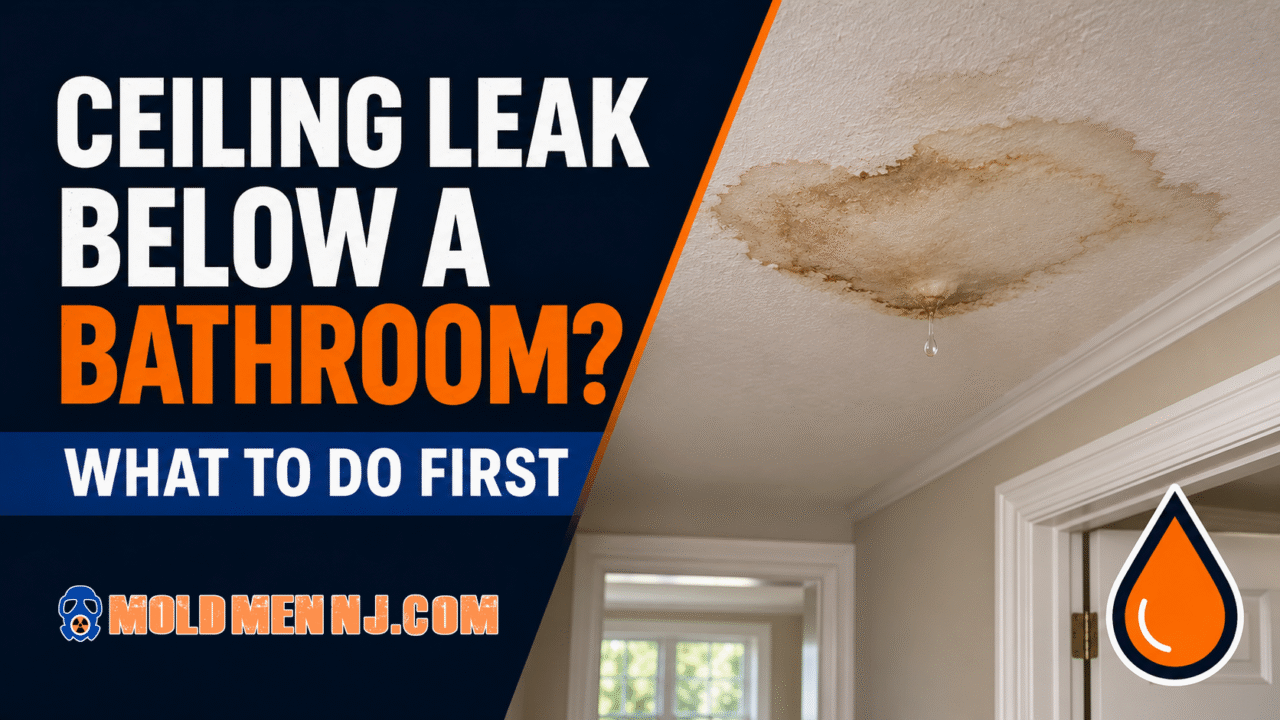
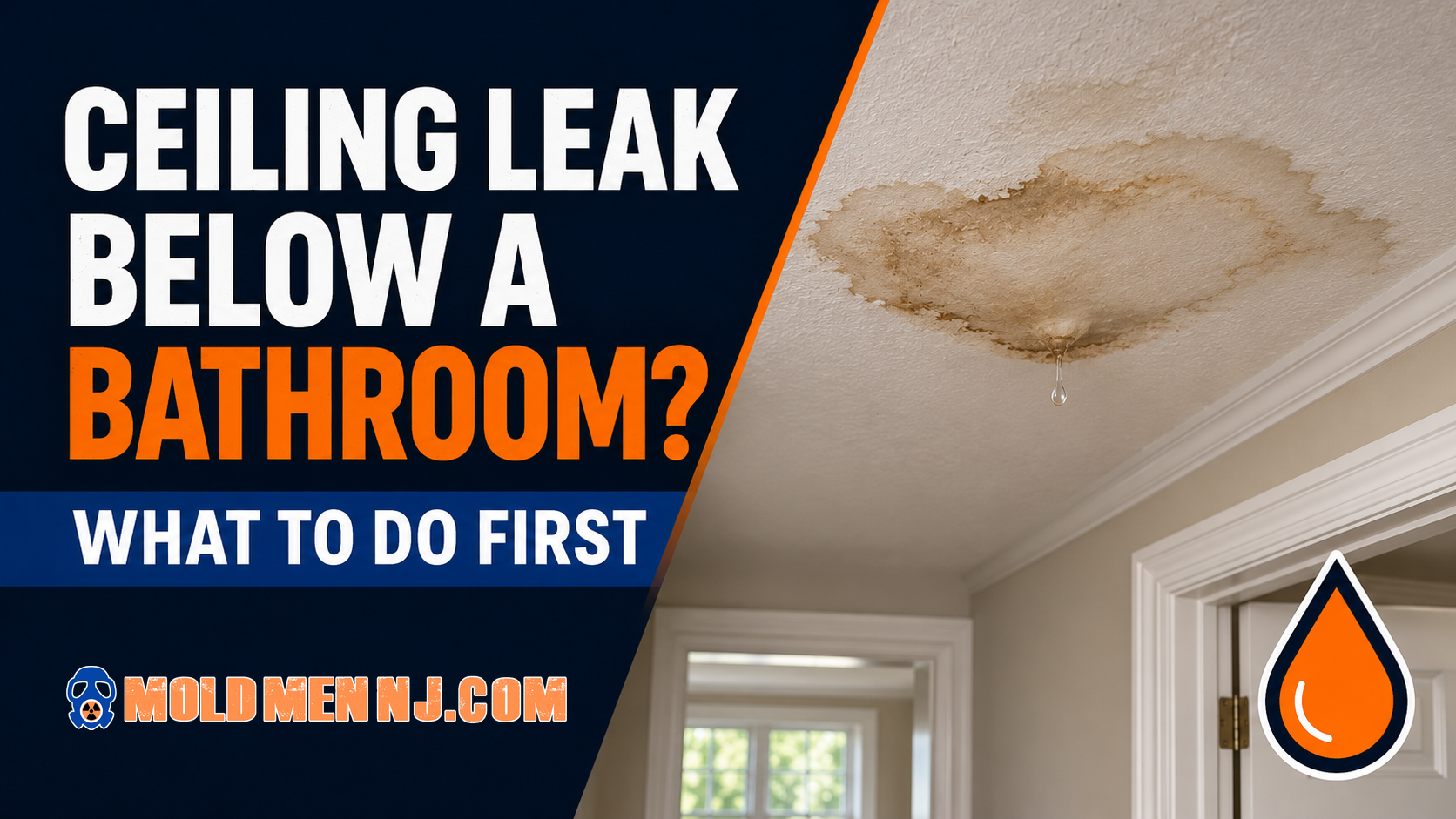
Ceiling Leak Below a Bathroom? What to Do First
If water is leaking through the ceiling below an upstairs bathroom, stop using the bathroom and keep people away from the affected area. If water is still coming through and you can safely reach the shutoff valve, turn off the water. A ceiling stain that appears after every shower also needs attention, even when the ceiling looks dry later in the day.
The timing of the leak can help a plumber narrow down the source. Once the plumbing is repaired, the next step is finding out how far the water traveled and which materials are still wet.
What to do when water is coming through the ceiling
-
Keep clear of the damaged area. A bulging, sagging, or newly cracked ceiling can give way. If water is coming through a light fixture or ceiling fan, leave the switches and fixture alone. Shut off power at the main breaker only if the panel and the path to it are dry and safe to reach. Call an electrician if you cannot reach the panel safely or water has reached the wiring. See the CDC’s electrical safety guidance.
-
Stop using the upstairs bathroom If you can clearly see water leaking from a sink or toilet supply line and safely reach its shutoff valve, close it. If water keeps flowing or you cannot tell where it is coming from, use the home’s main water shutoff if it is safe to reach.
-
Record what you noticed. From a safe spot, take photos of the stain or drip. Write down which fixtures were used shortly before it appeared and whether the stain grew after use stopped. Those details can help a plumber trace an intermittent leak.
-
Arrange the repair and check the damage. A licensed plumber can find and repair the source. If water soaked the ceiling, traveled into another room, or reached the flooring, arrange for water damage restoration promptly.
What the timing can tell you about the leak
It happens during or after a shower. A plumber may check the drain connection, the waterproof base beneath the shower, or the plumbing behind the shower valve. Also mention whether water regularly escapes around the door or curtain. If the stain only appears after someone fills the bathtub, the tub’s overflow connection is worth checking.
It happens after the toilet is flushed. The seal under the toilet or a drain connection beneath the bathroom floor may be leaking. Tell the plumber if the toilet rocks, if there is water around the base, or if you have noticed a recurring stain directly below it.
It happens when the sink runs. Look inside the vanity from a dry, safe spot. Moisture beneath the drain or along the cabinet floor can help point to the source. A supply connection can also leak while the sink is unused.
It continues while the bathroom is unused. An active supply-line leak is one possibility. Water already trapped above the ceiling can also keep dripping after the source stops. Tell the plumber when the last fixture was used and whether the drip slowed after the water was shut off.
Water can follow a pipe or travel along framing before it reaches the ceiling surface. The wet spot may appear several feet from the source. If it grows after rain regardless of bathroom use, share that detail with the contractor and check the signs of a roof leak.
What to check after the plumber fixes the leak
A ceiling can stop dripping while the drywall, insulation, or wood above it still holds moisture. Check the room below for a stain that spreads, peeling paint, a musty smell, or water marks where the wall meets the ceiling. Upstairs, mention any loose tile, swollen trim, or damp vanity flooring to the restoration team. These details help them decide where to check for moisture.
The EPA recommends drying water-damaged areas and items within 24 to 48 hours to help prevent mold growth. Start the drying process as soon as the area is safe and the leak is under control. See the EPA’s guide to mold and moisture in the home.
A restoration team can use moisture readings to determine how far the water spread and assess the condition of drywall, insulation, framing, and flooring. Materials that remain sound and can be fully dried may stay in place. If drywall has softened, insulation is saturated, or trapped moisture cannot be reached, selective demolition or material removal may be needed. The goal is to dry the affected area and confirm the moisture levels before the ceiling is closed or refinished.
If a toilet overflow or backup caused the leak, tell the cleanup team when you call. The water source affects how they handle the materials it reached.
When to call a water damage restoration company
Get the damage assessed promptly if the ceiling is sagging, water reached more than one room, or the leak may have been going on for several days. A recurring stain or musty odor after the plumbing repair is also a reason to check the space above the ceiling. If visible mold appears, the condition of the affected materials will help determine whether the drywall needs to be removed.
For New Jersey homeowners, it can help to give the plumber and restoration team the same photos and timeline. Mention when the damage started, when the water was shut off, and what the plumber repaired. That gives the restoration team a better starting point for checking the ceiling below and the bathroom floor above.
Frequently asked questions
Can a toilet leak into the ceiling even if the bathroom floor looks dry?
Yes. A failed seal or a drain connection below the floor can send water directly into the space above the ceiling.
Can I use the bathroom again once the dripping stops?
Keep the bathroom out of use until a plumber confirms the source and tells you which fixtures are safe to use. A drain or shower leak can start again the next time you use the fixture.
Does a brown ceiling stain mean there is mold?
A brown stain shows where moisture reached the surface. A persistent musty smell, repeated dampness, or visible growth are reasons to have the area checked for hidden moisture and possible mold.
Can I paint over a ceiling stain after a leak?
Wait until the leak is repaired and the ceiling is confirmed dry. If the drywall is sound, a stain-blocking primer can cover remaining discoloration before repainting.
What if the leak is coming from the condo above mine?
Contact building management or emergency maintenance right away. Tell them where the water is coming through and whether it has reached a light fixture. They can coordinate access to the unit above and arrange for the source to be shut off.
About Mold Men NJ
Mold Men NJ is a veteran-owned water damage restoration and mold remediation company based in Kinnelon. We serve homes and businesses throughout New Jersey and offer 24/7 emergency service. If water has reached your ceiling, walls, or flooring, call (201) 279-6078 or request an appointment.
This article provides general information. A qualified professional can assess the conditions in your home.
